
Introduction
For B2B buyers, importers, and brand owners, quality issues in global sourcing are more than operational headaches. They are direct threats to revenue, customer trust, and brand reputation. A single batch of defective products can trigger costly returns, platform penalties, and delayed market entry. Most quality failures are not bad luck. They come from missing systems — no quality inspection process, no clear supplier agreements, no independent verification.
This article breaks down the five most common quality issues businesses face when sourcing internationally. It also gives you practical steps to prevent each one.
Why Product Quality Issues Are a Silent Profit Killer

The True Cost of Poor Quality in Global Sourcing
Most buyers focus on unit price when evaluating a supplier. Cost is visible and easy to compare. But when quality issues appear after shipment, the damage goes far beyond the product cost. Think about the full picture: return freight, rework fees, and re-production timelines. Add storage costs for unusable inventory and the loss of a key retail account.
Industry research shows that poor quality in manufacturing can consume 5% to 30% of total revenue. For a business with $2 million in annual imports, that is $100,000 to $600,000 lost. These losses do not come from bad purchasing decisions. They come from quality failures that a proper supplier quality control system could have caught early.
For businesses sourcing from China or other overseas markets, the stakes are higher. Distance adds weeks to any corrective action. By the time a defective shipment is identified and returned, the financial impact is severe. Reputational damage from negative reviews on Amazon or from B2B networks makes the cost even harder to quantify.
The supplier quality control gap is real. Many businesses still rely on supplier-provided sample photos or written assurances. That approach does not hold up in high-volume, cross-border trade. The incentives to cut corners are constant. Opportunities for oversight are limited.
Why Quality Problems Often Go Undetected Until It’s Too Late
Quality issues in sourcing tend to surface at the worst possible moment. They appear when goods arrive at a warehouse — or when end customers start complaining. Several factors explain why discovery happens so late.
First, many buyers rely on pre-production samples to judge quality. Samples are made with care, better materials, and experienced workers. They pass internal review easily. The bulk order goes through a different process. It involves compressed timelines, lower-grade inputs, and less oversight. The result often looks nothing like the sample.
Second, buyers who depend on supplier self-reporting have no objective way to detect manufacturing defects. Suppliers have a natural incentive to report positively on their own work. Without third-party verification, problems stay hidden.
Third, B2B supplier verification often stops at business registration checks. That tells you almost nothing about actual production capability or quality management systems. Many sourcing problems begin not with a dishonest supplier, but with one who lacks the systems to deliver consistent quality at scale.
Issue #1 — Inconsistency Between Samples and Bulk Orders

How This Happens and Who Is at Risk
This is one of the most widespread quality issues in global sourcing. A supplier sends a perfect sample — correct materials, clean finishing, precise dimensions. You approve it and place an order for 5,000 units. When the shipment arrives, the products look and feel different. Colors are slightly off. Stitching is irregular. A plastic component is thinner. The weight does not match.
This is not always intentional deception, though that does happen. More often, it reflects how factories allocate resources. Sample production uses senior workers, premium inputs, and careful review. Bulk production is driven by throughput targets and compressed margins. Workers may change. Materials may come from a cheaper source. Quality checkpoints that existed during sampling disappear under production pressure.
Brands selling through Amazon or wholesale networks are especially vulnerable. Manufacturing defects in bulk orders can lead to ASIN suspensions and chargeback penalties. They can also cost you retail partnerships that took years to build. The short-term savings from skipping independent quality oversight rarely outweigh the downstream cost.
How to Prevent and Resolve It
The best defense starts before production begins. Require a sealed reference sample — a physical unit both parties sign off on as the production benchmark. Store it and keep it dated. It becomes the enforceable standard for acceptance.
Do not wait until goods are packed to check quality. Implement a quality inspection process during production. Specifically, schedule a During Production (DUPRO) inspection by an independent third party when 20%–40% of the order is complete. This creates a window to catch material substitutions and workmanship issues while corrections are still possible.
Also make sure your purchase order includes clear language on defect tolerance levels, corrective action timelines, and cost responsibility for non-conforming goods. A PO that is vague on quality invites disputes. Specificity protects everyone.
Issue #2 — Manufacturing Defects and Below-Standard Workmanship
Common Types of Manufacturing Defects
Manufacturing defects fall into three main categories, each with different risk levels and responses:
| Defect Type | Examples | Risk Level |
|---|---|---|
| Cosmetic / Appearance | Scratches, color inconsistency, uneven stitching, surface blemishes | Medium |
| Functional | Wrong dimensions, missing components, poor assembly, misaligned parts | High |
| Safety | Non-compliant materials, sharp edges, electrical failures, toxic substances | Critical |
Cosmetic defects damage brand perception and drive return rates up. This is especially true in eCommerce, where customers judge quality visually. Functional defects lead to complaints and negative reviews. Safety defects are the most serious. They can trigger product recalls, regulatory investigations, and legal liability.
Understanding which defect types apply to your product category is the first step. It helps you build a realistic supplier quality control program. Electronics carry different risks than textiles. The quality inspection process you design should match your product’s actual risk profile.
Setting AQL Standards to Control Defect Rates
The most widely used framework for managing defect levels is the Acceptance Quality Limit (AQL). It is defined under international standard ISO 2859-1, also referenced as ANSI/ASQ Z1.4 in the United States. AQL gives buyers and suppliers a shared language for setting pass/fail thresholds during a quality inspection process. It avoids the need to inspect every unit.
Here is how AQL works in practice:
- Critical defects (safety risks, regulatory non-compliance): AQL = 0. Zero tolerance.
- Major defects (functional failures, significant appearance issues): AQL = 2.5 is the standard for general consumer goods.
- Minor defects (cosmetic issues that do not affect function): AQL = 4.0.
These numbers define the threshold at which a sampled batch passes or fails. They do not mean 2.5% of your products can be defective. Under General Inspection Level II — the default for most B2B sourcing — an inspector selects a calculated sample size. They then apply these thresholds to make an objective decision.
Here is a practical example. You order 2,000 units using General Inspection Level II with AQL 2.5 for major defects. The inspector checks 125 units. If 11 or fewer major defects are found, the batch passes. If 12 or more are found, it fails. Both sides know this upfront. There is no room for subjective disagreement.
Specifying AQL in your purchase order is one of the most practical steps to improve supplier quality control. It removes ambiguity and gives both parties a measurable standard that a third party can verify.
Issue #3 — Non-Compliance with Import Regulations and Product Standards
Common Compliance Failures That Block Shipments
Product compliance requirements are among the most underestimated risks when sourcing from China or other manufacturing hubs. Buyers focused on pricing often treat compliance as an afterthought. That changes fast. A shipment held at customs, a recalled product, or a cancelled order due to missing test reports — all of these hurt.
Common compliance failures include:
- Missing certifications — Products sold in the EU commonly require CE marking. Electronics sold in the US typically need FCC authorization. Food-contact products may require FDA compliance documentation. Without these, products can be denied entry at the border or pulled from shelves.
- Failed safety testing — Materials containing restricted substances like phthalates, heavy metals, or certain flame retardants will fail REACH or RoHS testing. These failures do not just affect one shipment. They can trigger broader regulatory scrutiny and damage your import record.
- Labeling non-compliance — Incorrect country-of-origin labels, missing allergen warnings, or non-compliant barcodes can cause customs delays and retailer chargebacks. This applies even when the product itself is safe and functional.
One critical point: the importer — not the factory — is legally responsible for meeting destination market regulations. Chinese manufacturers may claim CE or FDA compliance. But in many categories, these claims are not backed by verified lab reports. According to product certification industry resources, as few as 5% of Chinese suppliers can provide valid, verified documentation. This applies to CE, RoHS, or FCC standards in many categories. The risk defaults to you unless you verify it yourself.
How to Build a Compliance Checklist Before Placing Orders
The most reliable way to manage product compliance requirements is to build a checklist before placing any purchase order. Here is a practical starting framework:
- Identify the destination market’s regulatory requirements for your product category
- List all required certifications, test standards, and labeling rules
- Request test reports from your supplier and verify they are from an accredited lab (SGS, Bureau Veritas, TÜV, or Intertek)
- Confirm reports cover the exact materials in your specific order, not a different production run
- Require your supplier to disclose all raw material and component sources
- For regulated categories — electronics, toys, food-contact goods — run your own third-party testing before confirming the order
B2B supplier verification for compliance must go beyond paperwork. Documents must be current, applicable, and issued by a recognized authority. Building these checks into your pre-order process is essential. It separates buyers who clear customs consistently from those regularly surprised by holds and delays.
Issue #4 — Packaging Failures and Shipping Damage
Why Packaging Is a Quality Issue, Not Just a Logistics Issue
Many buyers treat packaging as a logistics concern. They hand it off to their freight team or leave it to the supplier. This leads to predictable, preventable losses. Packaging failure is a quality issue. It directly affects product integrity, customer experience, and platform compliance.
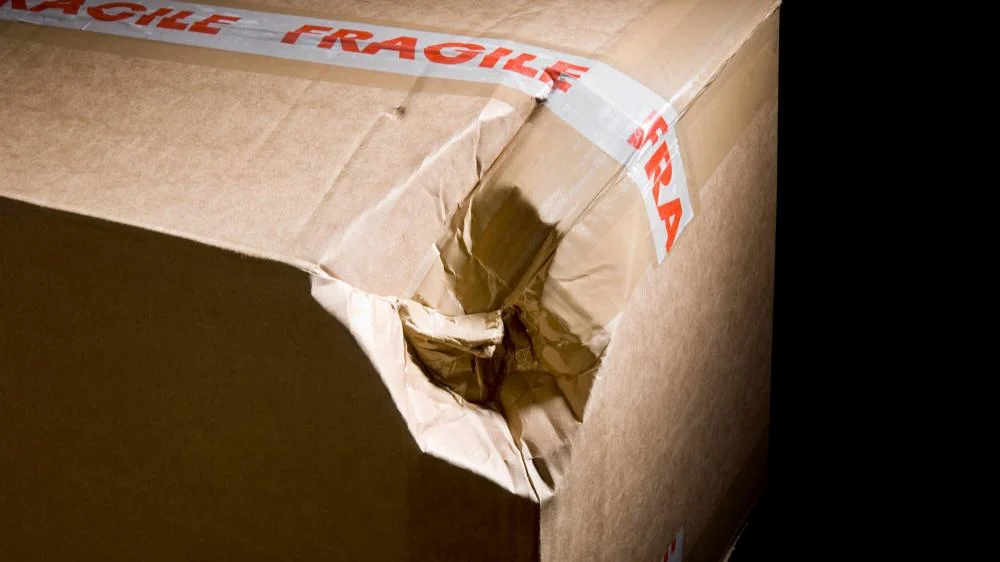
Products arriving with crushed cartons, poor cushioning, or moisture damage reflect poorly on your brand. This is true even when the actual product inside is intact. For eCommerce sellers using Amazon FBA, packaging non-compliance is costly. Amazon requires minimum box compression standards, poly-bag thickness of 2.0 mil or more, correct labeling placement, and readable barcodes. Shipments that fail these checks may be refused, charged prep fees, or returned at the seller’s cost.
For B2B buyers supplying retail chains, packaging failures can trigger chargeback fees deducted from invoice payments. These fees are set by the retailer’s compliance department. They can range from a fixed penalty per shipment to a percentage of the order value. They add up fast and often go untracked by sourcing teams focused on unit costs.
Packaging is also a key part of supplier quality control. It protects the product through every stage — factory floor, container loading, ocean freight, port handling, and last-mile delivery. A product that survives manufacturing but arrives damaged is still a defective product from the customer’s point of view.
Packaging Standards You Should Define in Your Purchase Order
Defining packaging standards in your purchase order is one of the highest-return investments in your quality inspection process. Most packaging failures happen because buyers never specified what they needed. Suppliers use whatever is available or cheapest. Buyers only find out it was inadequate when goods arrive.
Your PO should specify:
- Inner packaging: material type, padding thickness, poly-bag specs (thickness in mil, seal type), void fill for fragile items
- Outer carton: corrugated board grade (3-ply for light goods, 5-ply double-wall for heavy items), minimum compression test values in kgf or ECT rating
- Drop test: required drop height and face/edge/corner test specs based on gross weight
- Labeling: format, placement, barcode specs, country of origin marks, and retailer-specific compliance labels
- Moisture protection: desiccant requirements, stretch wrap for pallet stability, plastic lining for sea freight
After production, a pre-shipment packaging inspection should verify that all cartons meet agreed specs before the container is loaded. This step is minimal in cost and time compared to the expense of a damaged or rejected shipment.
Issue #5 — Supplier Substitution and Unauthorized Subcontracting
How Unauthorized Subcontracting Destroys Quality Consistency
This is one of the most serious — and most invisible — quality issues in global sourcing. You believe you know who is making your product. You have visited the factory and reviewed its capabilities. But at some point, your supplier takes on more orders than their capacity allows. Rather than declining your business, they quietly subcontract production to a factory you have never vetted, audited, or approved.
This is not a rare scenario. Research from QIMA and other supply chain organizations shows a clear pattern. Unauthorized subcontracting is systemic across manufacturing hubs in China, Vietnam, and Bangladesh. It is driven by capacity constraints, competitive pressure, and thin factory margins. As Supply and Demand Chain Executive notes, local suppliers fear losing clients. So they accept more work than they can handle and quietly redistribute it.
The quality consequences are serious. When production moves to an unapproved facility, every assumption made during B2B supplier verification may no longer hold. Equipment quality, worker training, process controls, and raw material sourcing all change. Sourcing risk consultancy Vectra International notes a key risk. Companies relying only on Tier-1 audits may find too late that compliance visibility ended at the approved factory gate.
Manufacturing defects from unauthorized subcontracting are also hard to trace. Production records become fragmented across multiple facilities. Batch traceability breaks down. When customer complaints or recalls arise, root cause analysis becomes nearly impossible — and corrective action even harder.
How to Detect and Prevent Supplier Substitution
Preventing unauthorized subcontracting requires both contractual controls and active operational monitoring. Neither alone is enough.
On the contract side:
- Include an explicit no-subcontracting clause in your supplier agreement
- Require written pre-approval before any production moves off-site
- Define penalties for unauthorized outsourcing, including order cancellation and cost recovery rights
- Require disclosure of all Tier-2 production partners and component suppliers during onboarding
On the operational side:
- Conduct unannounced factory inspections during active production runs
- Use production verification visits to confirm your order is being made at the agreed facility
- During the quality inspection process, have inspectors verify on-site factory details against approved records
- Monitor raw material procurement — sudden sourcing changes can signal a production shift
For supply chain visibility:
- Work with a sourcing partner who maintains direct, ongoing relationships with vetted factories
- Implement supplier scorecards tracking delivery performance, inspection results, and audit history over time
Building a Proactive Quality Control System

The Three-Stage Inspection Model
Addressing quality issues reactively — after a shipment arrives — is expensive, slow, and often too late. The industry-standard alternative is a proactive, three-stage inspection framework. It creates quality checkpoints throughout the production lifecycle. Professional sourcing teams use this model because it catches problems where they cost the least to fix.
Stage 1: Initial Production Check (IPC)
The IPC is conducted at the very start of manufacturing. It verifies that raw materials, components, and production setup match agreed specifications before full-scale production begins. This is the cheapest point to catch a problem. No finished goods have been made. No rework costs have been incurred. No delivery timeline has been affected. An IPC typically reviews material samples, color standards, dimension tolerances, and equipment calibration. For first-time orders with a new supplier, the IPC is especially valuable.
Stage 2: During Production Inspection (DUPRO)
The DUPRO takes place when 20%–40% of the order is complete. Inspectors check samples of finished and semi-finished products against your quality standards and sealed reference sample. This is the most strategically important stage in the quality inspection process. Problems found here — wrong materials, workmanship issues, assembly errors — can still be corrected for the remaining 60%–80% of production. The correction cost at this stage is a fraction of what it would be post-production.
Stage 3: Pre-Shipment Inspection (PSI)
The PSI is conducted when at least 80% of production is complete. Goods should be packed and ready for shipment. This is the final quality gate. Inspectors apply AQL sampling to evaluate defect rates. They verify product specifications, check packaging compliance, and confirm labeling accuracy. They also review product compliance requirements documentation. Only after a passing PSI should goods be approved for loading and dispatch.
Together, these three stages catch different types of problems at different points in the production cycle. Businesses sourcing from China, Vietnam, India, Bangladesh, or any other region can apply this framework across all product categories.
How UTSourcing Supports Your Quality Assurance Process
At UTSourcing, we work directly with B2B buyers, importers, and brand owners. Our goal is to build quality control systems that protect your investment and reduce sourcing risk at every stage.
Our services include:
| Service | What It Covers |
|---|---|
| Supplier Verification | Factory background checks, business license validation, production capability assessment |
| Factory Audits | On-site audits covering quality management, social compliance, and production capacity |
| Third-Party Quality Inspection | IPC, DUPRO, and PSI inspections aligned with your AQL standards |
| Compliance Support | Documentation review, test report verification, and product compliance guidance |
| Logistics Coordination | Freight management, customs documentation, and end-to-end delivery tracking |
Whether you are placing your first order or managing a high-volume, multi-SKU program, UTSourcing makes supplier quality control systematic rather than reactive. Our team has direct experience across multiple product categories and manufacturing regions. You do not have to build that knowledge from scratch.
Have you experienced any of the quality issues outlined in this article? Or do you want to prevent them before they happen? Connect with our team to discuss how we can support your sourcing operations.
Conclusion
The five quality issues covered in this article are the most common and costly problems B2B buyers face in global sourcing. They include sample-to-bulk inconsistency, manufacturing defects, compliance failures, packaging failures, and unauthorized subcontracting. They all share one thing: they are preventable. Every one of them can be caught or eliminated with the right quality inspection process.
The key is to move from reactive to proactive. Define quality standards upfront. Verify them independently. Enforce them consistently across every order. Quality risk management is not a one-time task. It is a system. Businesses that build that system early scale with confidence, protect their margins, and earn lasting trust.
Ready to strengthen your quality control process? Visit UTSourcing to learn how our team can help you source smarter, inspect better, and grow with less risk.