
The global home décor market is growing fast, and modern wall clocks are a consistent seller across retail, e-commerce, and interior design channels. For importers and brand owners looking to scale, China remains the world’s most capable sourcing destination — offering unmatched variety, competitive pricing, and end-to-end manufacturing capacity. This guide walks you through every step of the process, from finding the right supplier to clearing customs, so you can build a profitable wholesale wall clock business with confidence.
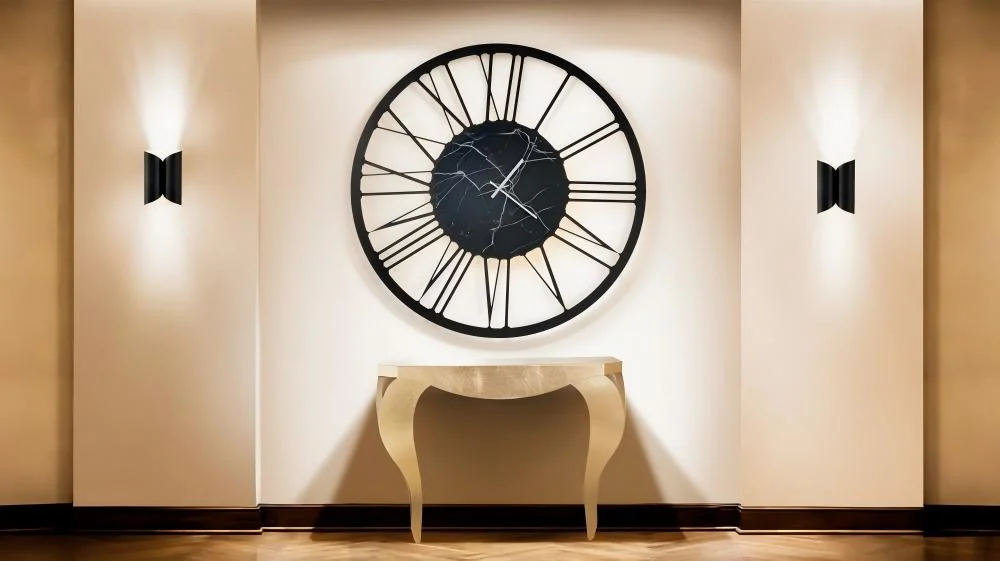
Why China Leads the Global Market for Modern Wall Clocks
China’s Position in the Global Wall Clock Manufacturing Industry
China’s dominance in clock manufacturing is backed by hard data. According to IBISWorld, the country’s clock and watch industry generates billions in annual export revenue, with export value expected to account for 92.4% of total industry revenue in 2024. Two coastal provinces — Guangdong and Fujian — together account for 91.9% of industry output, forming a dense ecosystem of factories, component suppliers, and logistics providers within a compact geographic area.
This concentration makes China extraordinarily efficient for wholesale wall clock sourcing. Buyers can access finished goods, raw materials, custom packaging, and third-party inspection services all within the same region. For international buyers placing bulk orders, that kind of supply chain density translates directly into shorter lead times and lower costs.
IndexBox data further confirms China’s scale: the country produced approximately 344 million wall clock units in 2024, representing around 86% of total Asia-Pacific output — more than ten times the volume produced by the second-largest regional manufacturer, India.
Popular Styles You Can Source — From Minimalist to Statement Pieces
One of the clearest advantages of sourcing a modern wall clock from China is the sheer range of design options available. Factories in Guangdong and Zhejiang produce styles that span the full spectrum of current home décor trends:
- Minimalist wall clock designs: Clean dials, slim profiles, and neutral color palettes. These are high performers in Scandinavian-influenced retail and premium e-commerce. The minimalist wall clock category has seen particularly strong growth on platforms like Amazon and Etsy, driven by consumer demand for clutter-free home aesthetics.
- Industrial-style clocks: Metal frames, exposed hardware, and matte finishes. Strong demand in urban furniture retail and loft-style interior design.
- Mid-century modern: Round cases, geometric hands, and warm wood tones. Popular across mass-market and mid-tier home goods brands.
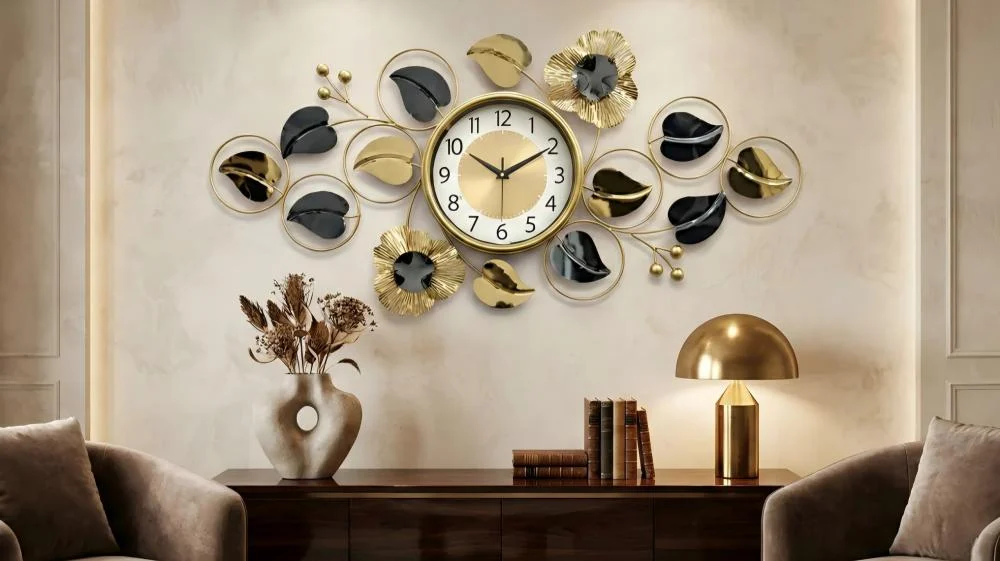
- Oversized statement clocks: Large-format pieces for living rooms and commercial spaces. High margin potential for interior design wholesalers.
- Silent mechanism clocks: Battery-operated quartz movements with noise-free sweep hands. Increasingly requested by hospitality buyers and premium retailers.
When selecting styles to source, consider pairing a minimalist wall clock option with one or two statement designs. This gives your product range broader retail appeal without overcomplicating your supplier relationships.
Understanding which styles align with your target market before you contact suppliers will save time and help you qualify manufacturers more quickly.
Who Benefits Most from Sourcing Wall Clocks from China?
Sourcing wholesale wall clocks from China makes strong commercial sense for a wide range of buyers. Home décor retailers looking to expand their product range benefit from the flexibility of China’s supply base — both in terms of style variety and order size. E-commerce sellers can access low minimum order quantities on catalog designs, allowing them to test products without overcommitting inventory.
Brand owners developing private label product lines will find China’s OEM and ODM capabilities particularly valuable. Factories across Guangdong are experienced in producing custom wall clock designs to exact specifications. Importers supplying corporate gifting programs, hospitality chains, and commercial interior designers also source heavily from Chinese manufacturers, often with requirements for branded packaging and consistent volume.
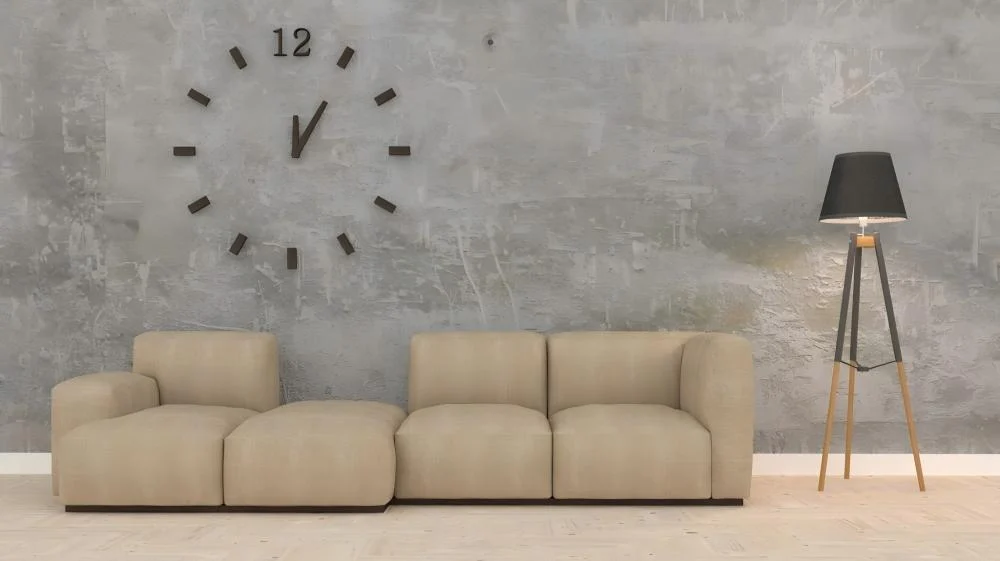
How to Find Reliable Wholesale Wall Clock Suppliers in China
Major Sourcing Channels for Wholesale Wall Clock Buyers
Knowing where to look is the first step. China offers several well-established channels for finding wholesale wall clock manufacturers, and each comes with a different risk profile and level of access:
| Platform / Channel | Best For | Key Consideration |
|---|---|---|
| 1688.com | Direct factory pricing, domestic market | Chinese language required; minimum quality screening |
| Global Sources | Verified exporters, English-language | Trade show presence; good for mid-tier buyers |
| Made-in-China.com | Broad product range, B2B focus | Supplier verification tools available |
| Canton Fair (Guangzhou) | Meeting factories in person | Biannual; best for relationship-building |
| Yiwu Market | Small MOQ, catalog designs | Better for testing styles than custom development |
For first-time importers, Global Sources and Made-in-China.com provide a more structured entry point because they include supplier verification features and export experience ratings. Experienced buyers often graduate to 1688 or direct factory relationships, where pricing is more competitive but due diligence becomes more critical.
How to Evaluate a Supplier Before Placing a Bulk Order
Not every factory listing on a B2B platform represents a reliable manufacturing partner. Before committing to a wholesale wall clock order, buyers should evaluate suppliers against a consistent set of criteria:
- Factory verification: Request the supplier’s business license, export license, and any ISO certifications. A legitimate manufacturer will provide these without hesitation.
- Sample quality: Order samples before finalizing any deal. Assess the movement accuracy, surface finish, and packaging presentation against your product brief.
- Export experience: Confirm the supplier has experience exporting to your target market. Ask for references or existing client markets.
- Production capacity: Understand the factory’s monthly output and whether they can meet your volume requirements during peak seasons.
- Communication responsiveness: Slow or evasive communication before an order is a reliable signal of how issues will be handled after payment.
Red flags include suppliers who refuse to provide factory photos, push for full payment upfront, or are unable to explain their production process in detail. Walk away from any supplier who cannot show you finished samples before production.
Why Working with a China Sourcing Agent Changes the Game
For buyers unfamiliar with China’s manufacturing landscape, working with a professional China sourcing agent significantly reduces both cost and risk. A sourcing agent handles factory identification, supplier vetting, price negotiation, quality inspection coordination, and shipping logistics — all from within China.
This matters because many of the most common sourcing problems — poor quality, missed deadlines, and miscommunication around specifications — happen in the gap between what’s agreed and what’s produced. A sourcing agent closes that gap. They are on the ground, speak the language, and carry accountability that a factory listing on a platform simply doesn’t.
At Utsourcing, we specialize in helping wholesale buyers source modern wall clocks and other home décor products from verified Chinese manufacturers. Whether you’re placing your first bulk order or scaling an existing product line, our team handles the process end to end — so you get quality-controlled product delivered to your door without the complexity of managing it yourself. Get in touch with our team to discuss your sourcing requirements.
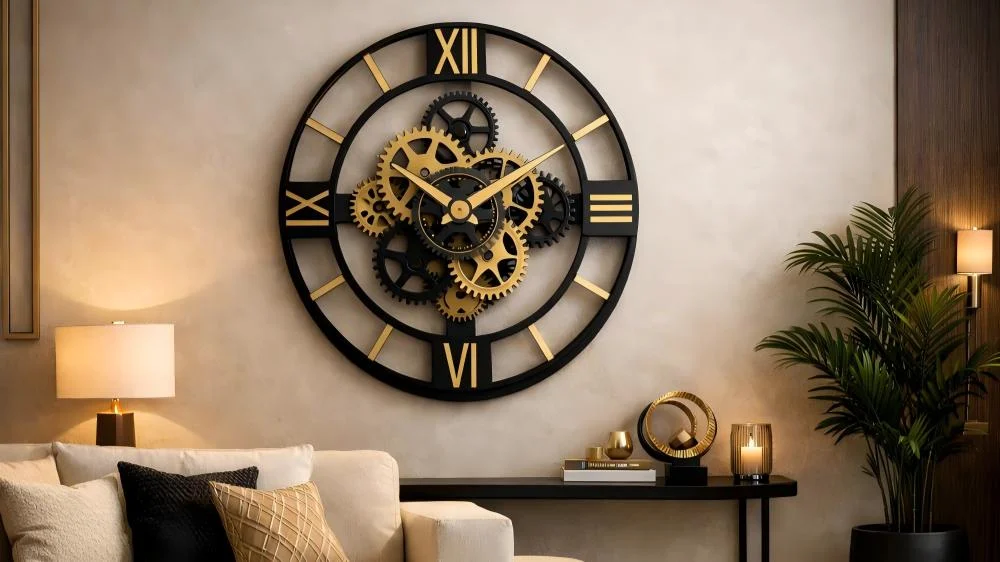
Pricing, Minimum Order Quantity, and Total Cost Planning
What Do Modern Wall Clocks Cost to Source from China?
Pricing for a modern wall clock sourced from China varies significantly based on materials, movement type, size, and finishing. Below is a general breakdown of what buyers can expect at different price tiers:
| Price Range (FOB) | Typical Specs | Market Positioning |
|---|---|---|
| $3 – $8 | Plastic case, basic quartz movement, standard dial | Mass market, promotional retail |
| $8 – $20 | Metal or wood frame, silent movement, custom dial options | Mid-tier retail, branded product lines |
| $20 – $50+ | Premium materials (solid wood, brushed brass), precision movement, custom packaging | Premium retail, hospitality, gift markets |
These are factory gate (FOB) prices and do not include freight, import duties, or inspection costs. For buyers developing a minimalist wall clock range for mid-tier retail, the $8–$20 tier typically offers the best balance of quality and margin. Premium buyers sourcing statement pieces for interior design clients should budget in the $20–$50 range.
Always request an itemized quotation from the supplier, broken down by unit cost, packaging cost, and tooling fees where applicable.
Understanding Minimum Order Quantity for Wall Clocks
Minimum order quantity is one of the first questions wholesale buyers ask — and the answer depends heavily on whether you are buying from existing inventory or placing a custom order.
For catalog designs (styles the factory already produces), minimum order quantity typically starts at 50–200 units per design. For custom wall clock orders — including custom dial artwork, branded packaging, or non-standard sizes — factories generally require a higher minimum order quantity, often between 300 and 1,000 units, to offset the setup and tooling costs involved.
Buyers can negotiate minimum order quantity, especially on a second or third order with an established supplier. Starting with a smaller trial order — even at a slightly higher unit price — is a reasonable approach for new buyer-supplier relationships. It reduces inventory risk and gives you time to validate product quality and market response before scaling up.
Hidden Costs That Impact Your Landed Price
Many first-time importers focus exclusively on the factory unit price, only to be surprised by the full cost of getting goods to their warehouse. Understanding total landed cost from the start leads to better margin planning. Key cost components beyond the unit price include:
- Sample fees: Most factories charge for samples, typically $30–$100 per piece. Some waive this cost on confirmed orders.
- Tooling and mold fees: Required for custom case shapes or unique dial designs. Costs typically range from $200 to $1,500 depending on complexity.
- Custom packaging: Branded box design and printing adds $0.50–$3.00 per unit for standard runs.
- Pre-shipment inspection: Third-party inspection services typically cost $250–$500 per inspector-day.
- Ocean freight: Variable by shipment volume, but expect $1,500–$4,000 for a standard 20-foot container from South China ports.
- Import duties and taxes: Varies by destination market (see Chapter 6).
Building these costs into your product pricing model before you finalize sourcing decisions is essential for accurate margin forecasting.
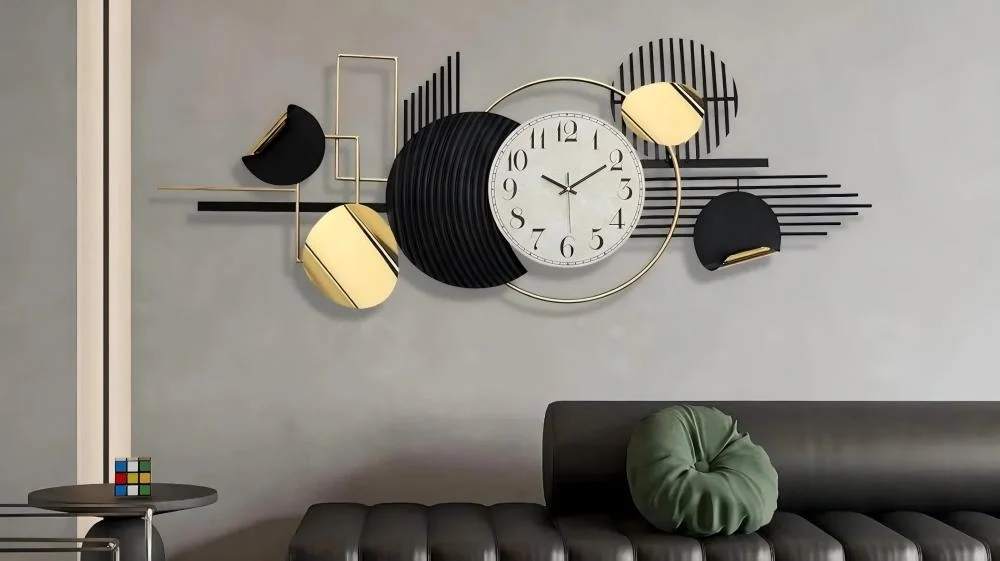
Custom Wall Clock Options for Private Label Brands
What Can Be Customized on a Modern Wall Clock?
China’s manufacturing ecosystem offers extensive customization options for brands developing a custom wall clock product line. Most experienced factories can modify the following elements:
- Dial design: Custom graphics, colors, textures, or printed patterns
- Hand style: Straight, baton, arrow, or spade hands in various finishes (gold, silver, matte black)
- Frame material: Plastic, MDF wood, solid wood, aluminum, iron, or acrylic
- Frame finish: Painted, brushed, lacquered, powder-coated, or natural wood
- Clock size: From compact 25cm desk-adjacent models to oversized 80cm statement pieces
- Movement type: Standard quartz, silent sweep, or pendulum
- Branding: Logo engraving, printed dial branding, or embossed frame details
- Packaging: Branded color box, gift box, or FSC-certified kraft packaging
The level of customization available at a given factory depends on their equipment and minimum order quantity thresholds. Factories with dedicated OEM lines typically offer the most flexibility on design and materials.
OEM vs. ODM — Choosing the Right Model for Your Brand
Understanding the difference between OEM and ODM manufacturing is important for buyers developing a custom wall clock program.
| OEM (Original Equipment Manufacturer) | ODM (Original Design Manufacturer) | |
|---|---|---|
| Design ownership | Buyer provides all design files | Factory provides base design; buyer adds branding |
| Development cost | Higher (tooling, sampling) | Lower (uses existing molds) |
| Lead time | Longer (4–12 weeks for new tooling) | Shorter (2–4 weeks) |
| Minimum order quantity | Higher (300–1,000+ units) | Lower (50–300 units) |
| Brand differentiation | High | Moderate |
OEM is the right choice for brands that want a fully differentiated product and have the budget and volume to support custom development. ODM is a faster, lower-risk path for buyers who want to apply their branding to an established design — particularly useful for new market entrants or brands testing a new category.
How to Prepare Your Design Brief for a Custom Wall Clock Order
A clear design brief is one of the most important tools a buyer can bring to a factory conversation. Ambiguous specifications are the leading cause of samples that miss the mark — and sampling delays add weeks to your timeline.
A strong design brief for a custom wall clock should include:
- Dimensions: Overall diameter, depth, and dial face measurements
- Material specifications: Frame material, finish type, and color references (Pantone or RAL codes)
- Dial artwork: Supplied as an AI or PDF file with correct color profiles
- Hand style and finish: Reference images help avoid misinterpretation
- Movement type: Specify silent sweep if required
- Packaging requirements: Box dimensions, printing specs, and any certification logos
Providing a reference sample — either an existing product you want to benchmark against, or a competitor’s product — alongside your brief significantly accelerates the sampling process.
Quality Control, Compliance, and Pre-Shipment Inspection
Common Quality Issues in Wall Clock Manufacturing
Even experienced buyers working with established suppliers encounter quality issues. Knowing the most common defects in wall clock production helps you write better inspection checklists and set clearer standards with your factory.
Frequently reported quality problems include:
- Movement inaccuracy: Quartz movements that run fast or slow beyond acceptable tolerance (typically ±15 seconds per day)
- Hand alignment: Hands that are not centered, are at incorrect angles at 12 o’clock, or drag against the dial face
- Surface defects: Scratches, paint bubbling, or uneven lacquer on the frame
- Noise from movement: Non-silent mechanisms in products specified as silent sweep
- Packaging damage: Insufficient inner padding leading to transit damage
- Logo print quality: Incorrect Pantone matching or low-resolution printing on custom dials
Providing a detailed quality checklist to both your inspection partner and the factory before production begins sets a clear standard and gives factories less room to interpret specifications loosely.
How to Set Up a Pre-Shipment Inspection
A pre-shipment inspection (PSI) is the most important quality checkpoint in the wall clock sourcing process. It should be conducted when 80–100% of goods are finished and packed, giving inspectors access to the actual shipment rather than pre-production samples.
Most professional inspection firms use the ISO 2859-1 / ANSI/ASQ Z1.4 AQL (Acceptable Quality Limit) sampling standard. For consumer goods like wall clocks, the standard industry defaults are:
- Critical defects: AQL 0 (zero tolerance — safety or compliance failures)
- Major defects: AQL 2.5 (functional or significant appearance issues)
- Minor defects: AQL 4.0 (cosmetic imperfections that don’t affect function)
The inspection covers quantity verification, visual defect assessment, functional testing (movement accuracy, hand clearance, battery compartment), packaging conformity, and labeling compliance. A full inspection report with photos is typically delivered within 24 hours of the on-site visit. Inspection services cost approximately $250–$500 per inspector-day for most consumer goods categories.
Never release final payment to a supplier before receiving a satisfactory inspection report.
Export Certifications Your Wall Clocks May Need
Depending on your target market, wall clocks may need to meet specific regulatory standards before they can be legally imported and sold.
| Market | Applicable Standard | Notes |
|---|---|---|
| European Union | CE marking | Required for clocks with electronic components (e.g., digital display, smart features) |
| European Union | RoHS compliance | Restricts hazardous substances in electrical products |
| United States | No mandatory federal certification for basic wall clocks | Section 301 tariffs apply to Chinese-origin goods |
| United States | FCC certification | Required for clocks with wireless or Bluetooth functionality |
| Australia / NZ | RCM marking | Required for products with electrical components |
For basic battery-operated analog wall clocks, CE and RoHS compliance covers most European market requirements. Confirm with your supplier which certifications they currently hold, and request documentation rather than taking verbal assurances. If your factory cannot provide valid certification documents, factor in the cost of third-party lab testing before your first shipment.
Shipping, Import Duties, and Getting Your Order Delivered
Choosing the Right Shipping Method for Bulk Wall Clock Orders
Choosing the right shipping method has a significant impact on your total landed cost and delivery timeline. Wall clocks are relatively lightweight but voluminous, so the right shipping method depends primarily on your order size and urgency.
| Shipping Method | Transit Time | Cost Level | Best For |
|---|---|---|---|
| Ocean freight (FCL) | 18–35 days | Lowest per unit | Full container loads (1,000+ units) |
| Ocean freight (LCL) | 25–40 days | Moderate | Smaller bulk orders (200–800 units) |
| Air freight | 5–10 days | High | Urgent restocks or high-value orders |
| Express courier (DHL/FedEx) | 3–7 days | Highest | Samples and small test orders only |
For most wholesale wall clock importers, ocean freight — either FCL (full container load) or LCL (less than container load) — offers the most cost-effective solution for regular bulk orders. Air freight makes sense for urgent restocks or seasonal deliveries where a delay would cost more than the freight premium.
China’s main export ports for home goods sourced from Guangdong are Yantian (Shenzhen), Nansha (Guangzhou), and Chiwan. Buyers sourcing from Zhejiang-based factories typically ship through Ningbo or Shanghai.
Import Duties and Taxes on Wall Clocks by Market
Understanding your import duty obligation before placing an order is essential for accurate cost modeling. Wall clocks in the United States are classified under HTS heading 9105, with the primary subheading for battery-operated wall clocks being 9105.21.80. According to a U.S. Customs and Border Protection ruling, the standard duty rate for electrically operated wall clocks from China is 30 cents per unit plus 6.9% on the case value plus 5.3% on the battery.
In addition to the standard HTS duty, Chinese-origin goods are subject to Section 301 tariffs. These additional tariffs — typically ranging from 7.5% to 25% — are stacked on top of the base HTS rate. Importers should verify the current Section 301 classification for their specific product before finalizing landed cost calculations, as rates are subject to periodic review by the USTR.
For European Union importers, wall clocks fall under HS Chapter 91. Basic analog clocks are generally subject to the EU’s standard import duty rate. VAT is applied at the point of import at each member state’s standard rate (typically 20–25%). UK importers face a similar structure post-Brexit, with customs duty plus 20% VAT.
Always consult a licensed customs broker in your destination market to confirm current duty rates and ensure correct HTS/HS classification before your first shipment. Classification errors can result in underpayment notices and penalties.
How a Full-Service Sourcing Agent Handles Logistics for You
Coordinating manufacturing, inspection, and freight from overseas is genuinely complex — and the cost of coordination errors (wrong cargo documentation, missed loading windows, mis-declared HTS codes) can easily exceed what a sourcing agent charges.
A full-service China sourcing agent manages the entire supply chain in one relationship: factory identification and vetting, sample management, purchase order coordination, pre-shipment inspection, export documentation, and freight forwarding coordination. For wholesale buyers who don’t have a team on the ground in China, this model delivers significant time savings and risk reduction.
At Utsourcing, our team works directly with verified wall clock manufacturers across Guangdong and Zhejiang, giving our clients access to factory pricing without the complexity of managing the relationship themselves. We handle quality control, logistics coordination, and documentation — so your product arrives on time, to specification, and cleared for sale in your market. Speak to our sourcing team today.

Conclusion
Sourcing a modern wall clock from China is one of the most accessible opportunities in the wholesale home décor market — but getting it right requires more than finding a supplier on a B2B platform. Buyers who succeed consistently are those who understand pricing structures, set clear quality standards, choose the right customization model for their brand, and build inspection and compliance into their sourcing process from the start.
Whether you’re ordering wholesale wall clocks for the first time or scaling an existing private label range, working with an experienced China sourcing agent removes the guesswork and protects your margins. The supply chain knowledge gap between a first-time importer and a seasoned sourcing professional is real — and it shows up in product quality, duty calculations, and on-time delivery rates.
Build your sourcing process on solid foundations, and the modern wall clock category can become a reliable, high-margin part of your product portfolio.