
The 2026 FIFA World Cup is already underway. It kicked off on June 11 across 16 cities in the United States, Canada, and Mexico — the largest tournament in history with 48 teams and a projected global audience of 6 billion. For retailers, importers, and brand buyers, the window is not closed. The knockout stage brings a second demand surge for world cup merchandise, and smart buyers who act now can still capture meaningful margin. This guide walks you through everything you need to source fan products from China efficiently, safely, and profitably during the live tournament.
This is not a guide for next year. It is a guide for right now. The products covered — from soccer scarves and football flags to custom sports promotional items — are available through Chinese factories and wholesale markets with lead times that can still align with the knockout rounds and, for in-stock products, the final on July 19. If you are an importer, retailer, or brand buyer who has been watching the tournament and wondering whether it is too late to act, the answer is: it depends on what you order and how fast you move. This guide will help you figure that out.
Why China Dominates World Cup Merchandise Production
When you walk into a fan store during any World Cup, there is a strong chance the products on the shelves were made in China. That is not a coincidence — it is the result of decades of manufacturing investment, industrial infrastructure, and supply chain depth that no other country has fully replicated.
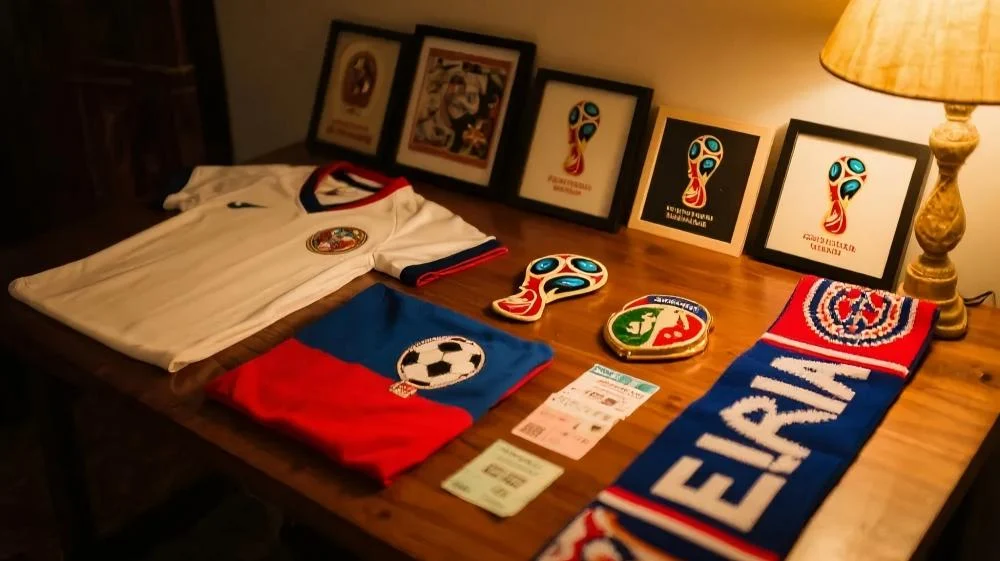
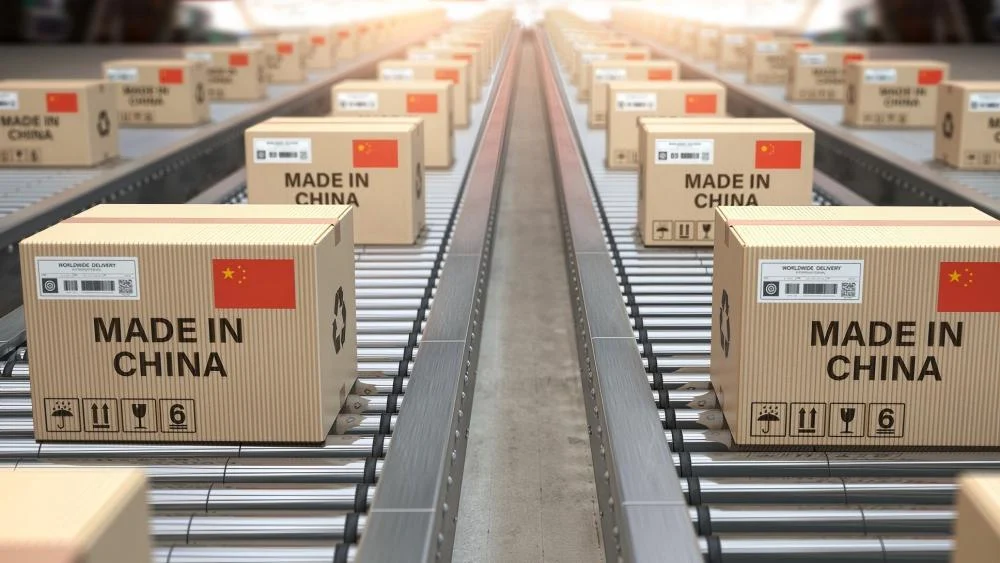
“Made in China” at the 2026 FIFA World Cup
The numbers tell a clear story. According to the Yiwu Sports Goods Association, products manufactured in Yiwu alone accounted for nearly 70% of all world cup merchandise globally during the Qatar World Cup in 2022. The trend is holding for 2026. Data from Yiwu Customs shows that exports of sporting goods and equipment from the city reached RMB 2.83 billion in Q1 2026 — up 12% year on year. From January to April 2026, total Yiwu exports of World Cup-related products reached RMB 3.77 billion (approximately $554 million USD).
China’s strength is not just low cost. As Tian Xuan, dean of Peking University’s Guanghua School of Management, noted, the real advantage lies in the ability to respond quickly to market demand while maintaining large-scale delivery capacity. That combination — speed, scale, and quality consistency — is what makes importing from China the default choice for B2B buyers worldwide.
The 2026 tournament marks an even bigger moment for Chinese manufacturing. Beyond fan goods, Chinese-made products appear throughout the event infrastructure. Yutong Bus, for example, is supplying new-energy electric buses as the main fan transportation vehicles in Mexico City. From football flags and soccer scarves to stadium logistics, “Made in China” is woven into every layer of this World Cup.
Key Manufacturing Hubs to Know
China’s world cup merchandise production is not uniform — it is concentrated in specific cities, each with its own specialty.
| City | Province | Key Products |
|---|---|---|
| Yiwu | Zhejiang | Flags, scarves, keyrings, horns, hats, mascots |
| Guangzhou | Guangdong | Jerseys, sportswear, apparel |
| Shantou | Guangdong | Toys, figurines, collectibles |
| Qingdao | Shandong | Flags, banners, textile goods |
Yiwu is the most important hub for most B2B buyers. The Yiwu International Trade Market spans over 5 million square meters with more than 75,000 suppliers covering virtually every fan merchandise category. If you are sourcing soccer scarves, football flags, cheering horns, or promotional accessories, Yiwu should be your first stop.
What World Cup Merchandise to Source Right Now
The group stage is over. The knockout rounds have started, and that changes the product mix. Demand is shifting from general fan gear toward team-specific items tied to advancing nations — and eventually toward final commemorative products.
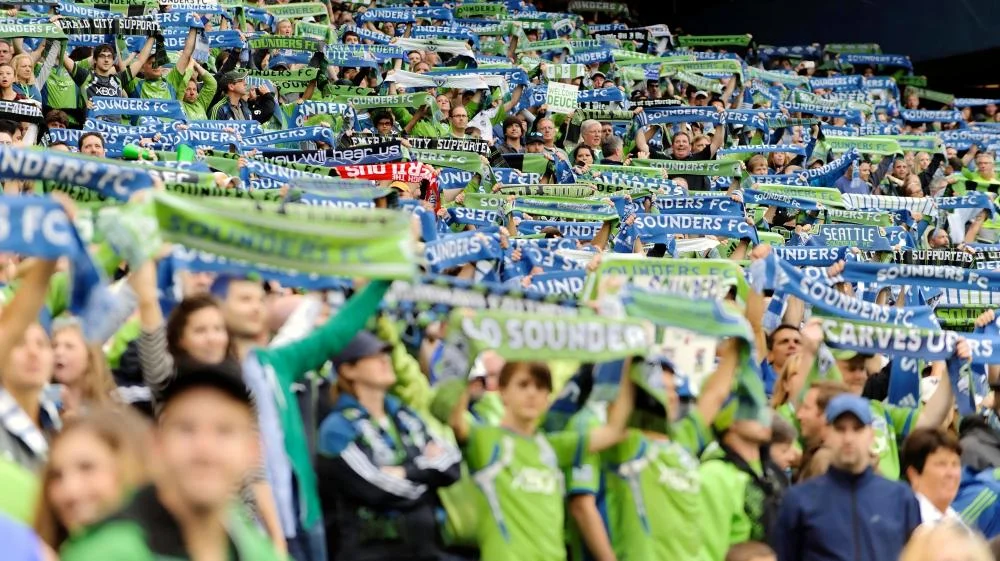
Soccer Scarves and Football Flags: Still the Core
Soccer scarves and football flags are the most universally sourced products during any World Cup. They work across every market, every team, and every price point. They are lightweight, easy to ship, and quick to produce.
For soccer scarves, the two most common B2B formats are:
- Knitted scarves: Traditional woven style, heavier feel, ideal for colder markets. MOQ typically starts at 100–300 pieces per design.
- Printed scarves: Full-color sublimation, faster turnaround, better for bulk orders and promotional use. MOQ can start as low as 50 pieces.
Football flags follow a similar pattern. The standard product is a 90 x 150 cm polyester flag with grommets. In-stock national team flags can ship within 3–7 business days from Yiwu warehouses. Custom printed football flags with specific branding or messaging carry a lead time of 10–15 days for production, depending on order size.
For buyers still sourcing during the knockout stage, focus on teams most likely to advance. Argentina, Brazil, France, Germany, England, and the host nations — the USA, Mexico, and Canada — consistently drive the highest volume for both soccer scarves and football flags regardless of round.
Sports Promotional Items: The B2B Opportunity Most Buyers Miss
Beyond individual fan gear, world cup merchandise offers a significant opportunity in the sports promotional items category. This is where brand owners and corporate buyers can add real margin.
Sports promotional items tied to the World Cup include branded water bottles, tote bags, lanyards, caps, wristbands, and co-branded apparel. These products are used by companies running World Cup watch parties, sponsorship activations, employee gifting programs, and retail promotions.
The B2B logic is simple: a company ordering 2,000 branded soccer scarves with their logo for a customer event is not buying fan gear — they are buying marketing assets. That shifts the value conversation entirely. Lead times for custom-branded sports promotional items from China typically run 15–25 days for production, making air freight the practical shipping option for orders needed before the July 19 final.
What Is Still Realistic Before the Final
The FIFA World Cup 2026 final is scheduled for July 19. As of mid-June, that leaves roughly 30 days. Here is a realistic breakdown of what is still achievable:
| Product Type | Production Lead Time | Recommended Shipping | Feasibility |
|---|---|---|---|
| In-stock football flags | 0 days | Air express (3–5 days) | ✓ High |
| In-stock soccer scarves | 0 days | Air express (3–5 days) | ✓ High |
| Custom printed scarves/flags | 10–15 days | Air freight (5–7 days) | ✓ Possible |
| Custom branded apparel | 15–20 days | Air freight (5–7 days) | △ Tight |
| Custom sports promotional items | 15–25 days | Air express | △ Marginal |
| Embroidered/knit custom goods | 20–30 days | Air freight | ✗ Unlikely |
If you have not placed your order yet, move fast and focus on in-stock or simple custom products. A China sourcing agent can help you identify which Yiwu suppliers have ready inventory and can prioritize your order.
How to Start Importing from China: A Practical Guide
Importing from China for the first time — or doing it under tight tournament deadlines — requires more than just finding a supplier. It requires a reliable process.
Finding Verified Suppliers
There are several channels B2B buyers use to source world cup merchandise from China.
1688.com is China’s domestic wholesale platform operated by Alibaba. Prices are lower than Alibaba international, and the platform supports multiple languages, such as English and Japanese. It is most useful for buyers working with a local sourcing agent.
Yiwu International Trade Market is the world’s largest small commodity market. Walking the market in person remains the most effective way to evaluate suppliers, compare products, and negotiate prices. For buyers who cannot travel, sourcing agents based in Yiwu can visit on your behalf.
Canton Fair (China Import and Export Fair) takes place twice a year in Guangzhou. It is one of the most established sourcing platforms for B2B buyers globally. The autumn session runs October–November, which is too late for the 2026 World Cup — but valuable for planning the next tournament cycle.
When evaluating any supplier for importing from China, verify these documents before placing a bulk order:
- Business license
- Export license or customs registration
- Product samples with final spec confirmation
- Bank account details matching the registered company name
Beyond documents, pay attention to how a supplier communicates. Response time, willingness to provide samples, and clarity on production timelines are all signals of reliability. A supplier who is vague about lead times during peak season is a risk. A supplier who gives you a written production schedule is a partner.
It is also worth asking about existing stock versus custom production. Many Yiwu factories that produce world cup merchandise maintain ready inventory of the most popular products — national flags, soccer scarves in standard team colors, and basic fan accessories. Ordering from existing stock eliminates production lead time entirely and gets products into your hands within days rather than weeks. For buyers working against the July 19 final deadline, this distinction is critical.
Working with a China Sourcing Agent
For buyers who do not have an existing China supply chain, a China sourcing agent is often the most efficient path. A good sourcing agent does more than translate. They identify qualified suppliers, negotiate pricing, manage quality inspection before shipment, and coordinate logistics — all from within China.
This matters especially during the World Cup season, when factories are running at high capacity and communication delays can cost you days. An experienced China sourcing agent knows which Yiwu suppliers carry ready stock, which factories can fast-track production, and how to structure orders to avoid common customs issues.
At Utsourcing, we specialize in exactly this kind of B2B sourcing support — from supplier identification and sampling to quality control and final delivery. If you are looking to source world cup merchandise from China without the complexity of managing it alone, our team is ready to help. Contact us to discuss your requirements.
Understanding Minimum Order Quantity
Minimum order quantity (MOQ) is one of the most common questions from first-time importers. The short answer: it varies significantly depending on whether you are buying standard stock items or placing a custom order.
Here is a general reference for world cup merchandise MOQs from China:
| Product | Stock Item MOQ | Custom Order MOQ |
|---|---|---|
| Football flags (standard sizes) | 50–100 pcs | 300–500 pcs |
| Soccer scarves (printed) | 50–100 pcs | 200–300 pcs |
| Soccer scarves (knitted) | 100–200 pcs | 500–1,000 pcs |
| Sports promotional items | 100–500 pcs | 500–2,000 pcs |
| Branded apparel | 100–200 pcs per style | 300–500 pcs per style |
These are indicative figures. Actual minimum order quantity thresholds depend on the factory, the product complexity, and your total order value. Working with a China sourcing agent gives you negotiating leverage, especially for mixed orders where you are buying multiple product types from the same supplier.
Customization Options for World Cup Merchandise
One of the biggest advantages of sourcing from China is the depth of customization available. Whether you want soccer scarves with a corporate logo or football flags in a custom color scheme, Chinese factories can accommodate it — at a fraction of what local production would cost.
Print, Embroidery, and Sublimation
The three most common decoration methods used on world cup merchandise are:
Sublimation printing is the standard for polyester flags and printed scarves. It produces full-color, edge-to-edge designs with no fading risk. It is the fastest option for high-volume orders and works well for football flags in particular. Most Yiwu suppliers can produce sublimated flags within 7–10 days for standard sizes.
Screen printing is used for simpler, multi-unit designs on flat surfaces — caps, bags, tote products. It is cost-effective for larger runs and delivers clean, bold color results. MOQ is typically 300–500 pieces per design.
Embroidery produces premium results on caps, polo shirts, and heavyweight scarves. It is slower than print methods and carries a higher minimum order quantity — usually 500 pieces minimum for custom embroidery programs. Lead times run 20–30 days. For timeline-sensitive orders during the World Cup, embroidery is only viable for buyers who placed orders in advance.
Custom Sports Promotional Items for Brand Buyers
For brand owners and corporate buyers, the World Cup creates a specific opportunity in custom sports promotional items. Companies running game-day activations, hospitality events, or retail promotions are ordering branded merchandise tied to the tournament window.
Common product categories in this segment include:
- Branded soccer scarves with woven or printed logo
- Custom-printed football flags with company branding
- Logo water bottles, travel mugs, or thermos flasks in team colors
- Co-branded drawstring bags or tote bags with World Cup-adjacent messaging
- Printed wristbands and lanyards for event staff or VIP guests
The key to getting this right is separating your brand identity from FIFA’s protected intellectual property — more on that in the next section. When done correctly, custom sports promotional items sourced from China offer strong margin and immediate brand relevance during the tournament cycle.
Shipping, Lead Times, and IP Risks When Importing from China
Getting your order right is only half the job. Getting it delivered on time — and in compliance — is the other half.
Current Lead Times and Shipping Options
China’s peak-season logistics during the World Cup means two things: factory capacity is constrained, and freight costs are elevated. Plan for both.
For orders placed now (mid-June 2026), here are realistic shipping options:
Air express (DHL / FedEx / UPS): 3–5 business days door-to-door. Best for small to medium volume orders where speed matters more than cost. Typical cost is $6–10 USD per kg.
Air freight (consolidated or charter): 5–8 business days airport to airport, plus customs clearance. More cost-effective than express for larger volumes (200 kg+). Typical cost is $3–5 USD per kg.
Sea freight (LCL — less than container load): 20–35 days depending on the destination port. This option is no longer viable for anything needed before the July 19 final. It remains valuable for post-tournament restocking or planning your next seasonal cycle.
A China sourcing agent can help consolidate orders from multiple Yiwu suppliers into a single air freight shipment — reducing per-unit shipping costs significantly compared to booking separately.
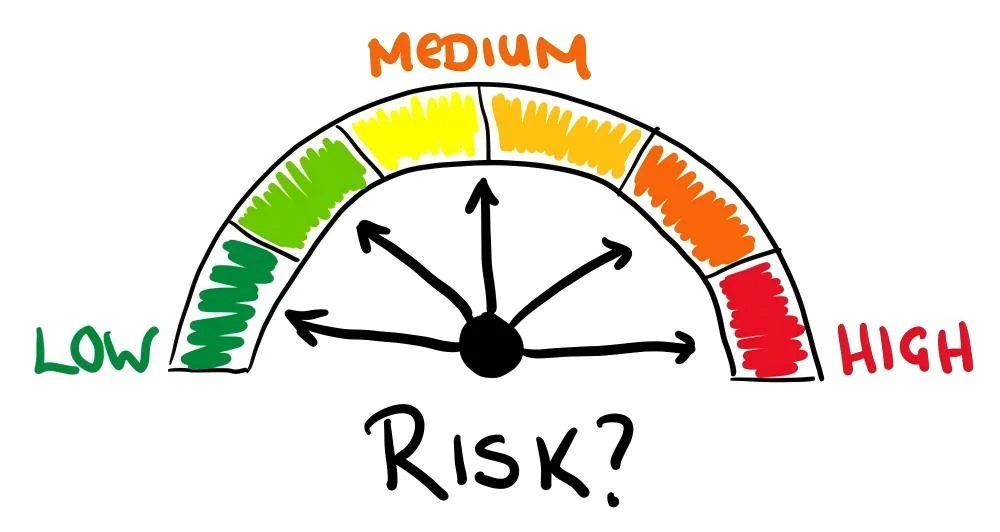
One more consideration when importing from China during a peak event window: quality control. Factories running at high capacity to meet World Cup demand are more prone to cutting corners on finishing details, packaging quality, and color consistency. If you are placing a large order of soccer scarves or football flags without an on-the-ground inspection step, you are taking a risk. A pre-shipment inspection — conducted by your China sourcing agent or a third-party QC firm — catches problems before goods leave the factory. It costs a fraction of what a full order return or replacement would cost, and it gives you documentation in case of disputes.
FIFA Licensing and IP Compliance
This is a critical area that importers must understand before placing any order. FIFA is one of the most aggressive intellectual property enforcers in global sports. Its IP portfolio covers the event name, official logos, trophy designs, mascot images, official fonts, and more.
According to FIFA’s official brand protection guidelines, any product bearing FIFA trademarks without a proper license is treated as counterfeit — regardless of whether it was produced intentionally or in ignorance. FIFA works directly with customs authorities in the US, Canada, and Mexico to intercept infringing goods at the border.
The practical consequences for importers are serious: goods can be seized at customs, payment processors can freeze accounts, and civil lawsuits can follow. As legal firm Gowling WLG noted in its 2026 World Cup IP enforcement briefing, cross-border coordination between the three host countries means enforcement coverage is wider than at any previous tournament.
What you can source legally without a FIFA license:
- Country flags and national team colors (generic, non-logo)
- Soccer scarves with generic football-themed messaging
- Football flags with country imagery not using official FIFA tournament branding
- Sports promotional items using generic tournament-adjacent phrases like “Vamos Mexico” or “Football 2026”
What requires an official FIFA license:
- Products using the FIFA World Cup 2026™ name or official logo
- Items featuring the official match ball name, mascot, or trophy replica in exact likeness
- Any product marketed as “official” World Cup merchandise
If you are considering importing products that fall into the licensed category, work with a supplier who can provide documented licensing agreements before you place an order. A reputable China sourcing agent will flag these risks early in the process and help you stay on the right side of the line.
Conclusion
The 2026 FIFA World Cup is live, and the commercial opportunity for B2B buyers is still very much open. The knockout stage drives a second wave of demand for world cup merchandise — particularly for soccer scarves, football flags, and custom sports promotional items tied to advancing teams and the final. China, led by manufacturing hubs like Yiwu, remains the world’s dominant supplier of fan goods, and importing from China is the most efficient and cost-effective path for most B2B buyers globally.
The key variables now are speed and compliance. Move quickly on in-stock products if you need delivery before July 19. Prioritize air freight. And before you place any bulk order, make sure your products are structured to stay clear of FIFA’s IP restrictions.
Looking beyond the final whistle is also worth doing now. Post-tournament, demand for commemorative world cup merchandise around the winning team typically spikes for several weeks. Buyers who have already established supplier relationships in China can turn those orders around faster than competitors starting from scratch. The infrastructure you build for 2026 becomes the foundation for future sourcing cycles — whether that is the 2027 Club World Cup, regional sporting events, or your next seasonal campaign.
Working with an experienced China sourcing agent is the single most reliable way to compress timelines, reduce risk, and navigate the complexity of international procurement during a live event window. It removes the language barrier, provides on-the-ground quality oversight, and gives you access to supplier networks that are not visible on public platforms.
If you need support sourcing world cup merchandise from China — from supplier identification and quality control to logistics coordination — Utsourcing is here to help. Visit utsourcing.com to connect with our team and get started.