
Have you ever wondered where the small, everyday items in your local store come from? Chances are, many of them trace back to Zhejiang, a coastal province in eastern China that powers a huge part of China’s Foreign Trade Industry Chain.
This province is not just a manufacturing hub. It is a collection of specialized industrial clusters, each focused on one type of product. This “one town, one industry” model has made Zhejiang a go-to spot for global buyers looking for reliable, cost-effective sourcing.
In this guide, we will break down Zhejiang’s key Foreign Trade Industry Belts. We will look at what makes each region unique, what products they specialize in, and why they are so important for global supply chains. Whether you are a small business owner sourcing goods or a supply chain manager, this guide will help you understand how Zhejiang works.
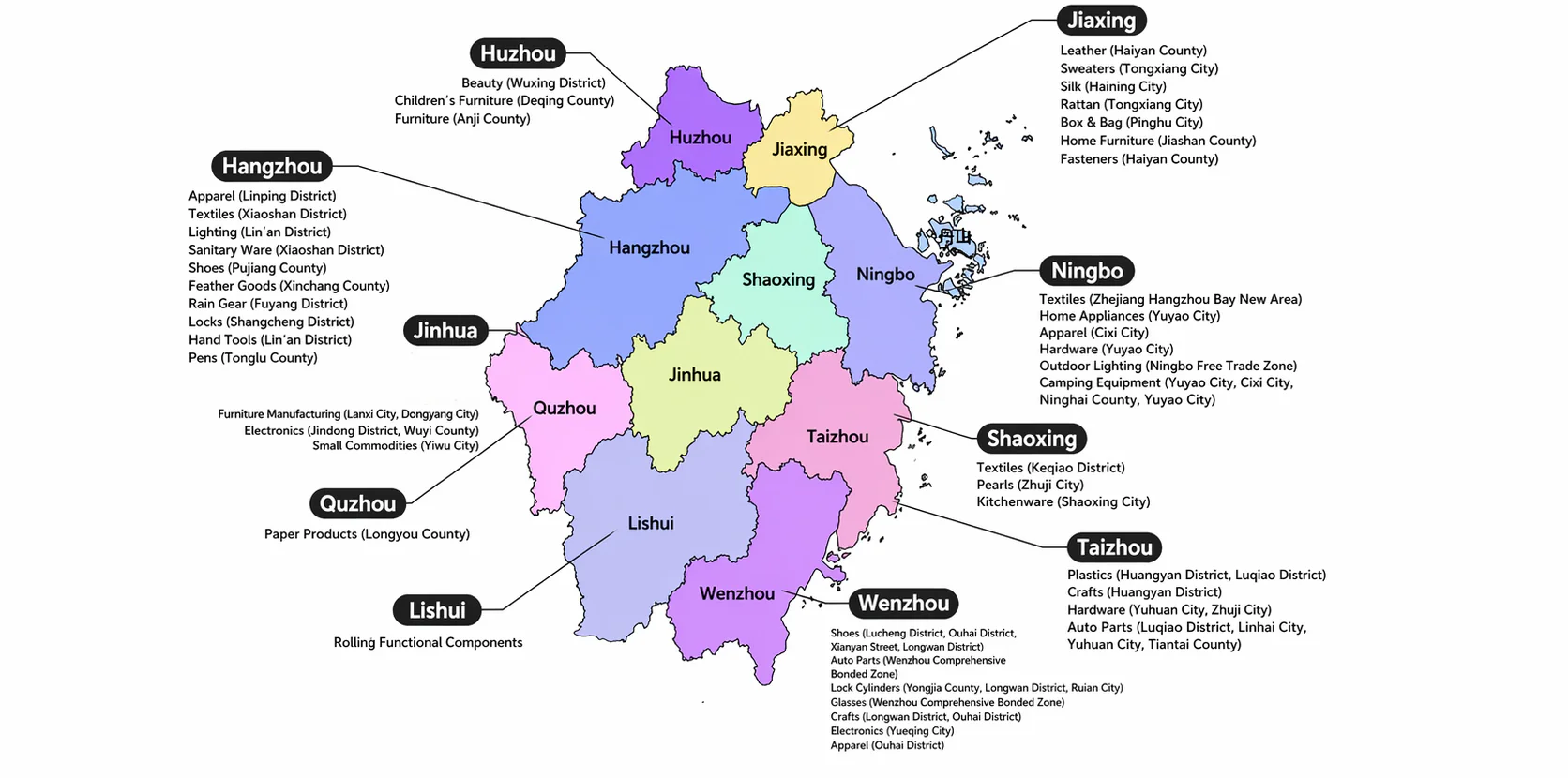
Chapter 1: Overview of Zhejiang’s Foreign Trade & Industrial Cluster Advantages
Zhejiang has long been a leader in China’s export economy. What makes it stand out is not just its size, but how it organizes its production.
Unlike other regions that spread manufacturing across many sectors, Zhejiang has built tight-knit industrial clusters. Each city, and even each town, focuses on perfecting one specific industry. This creates a complete, efficient supply chain right in one area.
For example, if you want to source umbrellas, you can find every single part you need within a 10-kilometer radius. The fabric factory, the frame maker, the handle supplier, and the assembly plant are all right there. This cuts down on costs and delivery times dramatically.
Private businesses are the main driving force here. Unlike many other parts of China where state-owned companies dominate, Zhejiang’s economy is run by small and medium private enterprises. These businesses are flexible, fast to adapt to market changes, and always looking for ways to improve.
This model has also made Zhejiang a leader in digital trade. It is home to Alibaba, the world’s largest B2B e-commerce platform. Many of its cities, including Hangzhou, Ningbo, and Yiwu, are national pilot cities for cross-border e-commerce. This means they have special policies to make international online trade easier.
To give you a quick overview, here are the core industrial belts we will cover in this guide:
| Industrial Belt | Core Products | Key Global/National Market Share |
| Hangzhou | Fashion, textiles, lighting, pens, down and feather filled products | 1/3 of China’s down feather export raw materials |
| Jinhua (Yiwu/Yongkang) | Small commodities, hardware, tools | 80% of China’s thermos cup output; 1/3 of national power tool exports |
| Wenzhou | Footwear, auto parts, pumps & valves | 38% of China’s pump & valve industry output |
| Shaoxing | Textiles, pearls, kitchenware | 70% of global freshwater pearl production; 1/4 of global textile fabric trade |
| Jiaxing | Leather, bags, wool sweaters | 70% of China’s wool sweater sales; 90% of domestic brand silk quilts |
| Huzhou | Children’s clothing, cosmetics, chairs | 50% of China’s children’s clothing; 50% of national chair exports |
This table shows just how much power these small regions hold. Together, they cover almost every type of consumer and industrial product you can think of.
Chapter 2: Hangzhou–Jinhua Core Belt: Light Industry, E-commerce & General Merchandise
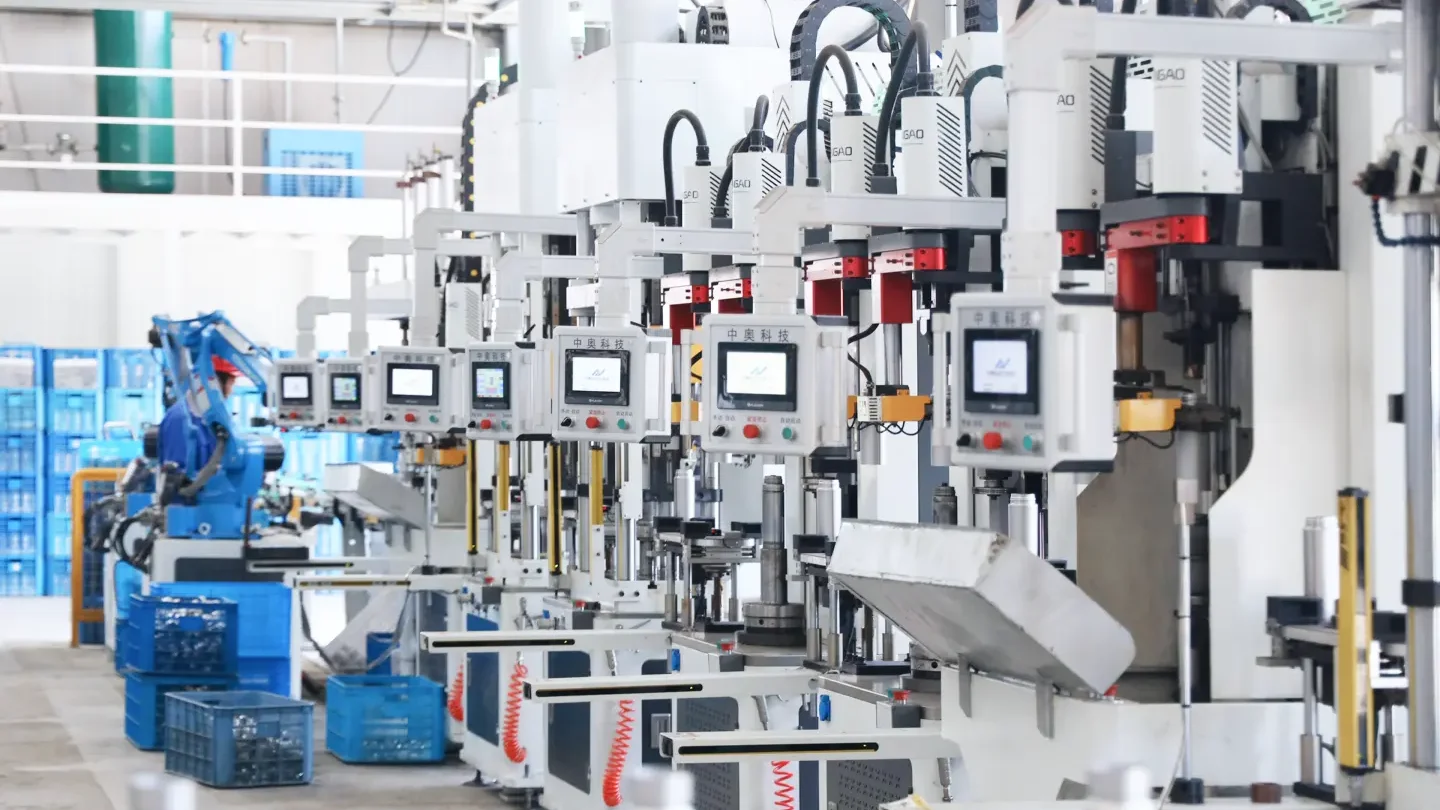
The northern-central part of Zhejiang is home to the most well-known industrial belt in the province. This area combines Hangzhou’s high-end manufacturing and digital strength with Jinhua’s massive small commodity exports.
If you are sourcing light industry products or general merchandise, this is the first place you should look.
Hangzhou: Specialized Towns for Every Product
Hangzhou, the capital of Zhejiang, is famous for its tech scene. But it also has a network of specialized towns that make some of the world’s most popular consumer goods.
Let’s break down the key areas:
- Linping District (Fashion & Apparel): Linping is building a world-class fashion industry hub. It aims to hit a 100 billion yuan industry scale by 2028. This area focuses on high-quality, trendy clothing for global brands.
- Xiaoshan District (Textiles): Xiaoshan is home to some of China’s largest cotton textile mills. The entire textile industry here has an annual output of over 100 billion yuan. It supplies fabrics to clothing brands all over the world.
- Lin’an District (Lighting & Hardware): The lighting industry here is massive. The entire region’s lighting sales top 110 billion yuan, with exports exceeding 11 billion US dollars. It also has a strong hardware tool sector, with 65 local enterprises generating 2.76 billion yuan in sales.
- Xintang Town (Down & Feather Products): Xintang is one of China’s three “Down Feather Hometowns”. Its raw down feather materials account for one-third of China’s total export market. Down products make up a quarter of the national market. With 57 local enterprises, the industry hits 10 billion yuan in annual output.
- Nanyang Street (Umbrellas): Nanyang is known as “China’s Umbrella Town”. It has over 100 umbrella factories. These factories can produce nearly 1 million umbrellas a day, or 300 million a year. The entire industry is worth over 6 billion yuan annually.
- Fenshui Town (Tonglu, Pen Making): Fenshui is “China’s Pen Making Hometown”. With a local population of 53,400, over 13,000 people work directly in pen making. The industry drives over 40,000 jobs in the surrounding area. It has a complete supply chain for every part of a pen, from nibs to ink.
Each of these small towns has perfected their craft over decades. They can handle small custom orders as well as massive bulk shipments. This makes them incredibly flexible for global buyers.
Jinhua: The World’s Small Commodity and Hardware Hub
Just south of Hangzhou, Jinhua takes this cluster model to an even larger scale. It is home to two of the most famous export hubs in the world: Yiwu and Yongkang.
First, there is Yiwu, the “World Capital of Small Commodities”. If you have ever ordered small items from China, you have probably bought something from Yiwu.
Yiwu’s products cover everything from daily necessities, jewelry, toys, to knitwear. These products are exported to over 200 countries and regions. The Yiwu International Trade Mart is the largest small commodity wholesale market in the world. You can find almost any small item you can think of under one roof.
This market is so efficient that even small buyers can source products here. You do not need to order a full container to get a good price. Many suppliers will handle mixed containers, making it perfect for small and medium businesses.
Then there is Yongkang, the “Hardware Capital of China”. This is where you go if you need hardware products, tools, or household hardware.
Yongkang has over 140,000 manufacturing market players, employing over 500,000 people. The scale here is hard to believe:
- It produces over 1.2 billion thermos cups every year. That accounts for 80% of China’s total output.
- It makes 37 million security doors annually, taking up 70% of the national market.
- Its power tool industry hits 16.7 billion yuan in output. It accounts for a quarter of China’s total production and one-third of the country’s power tool exports.
This means that no matter what hardware product you need, Yongkang can supply it at a scale and price that is hard to match anywhere else.
Together, Hangzhou and Jinhua form the core of Zhejiang’s light industry exports. They offer everything from high-end fashion to cheap, reliable small goods. This is why they are such a big part of Global Sourcing from Zhejiang.
Chapter 3: Wenzhou Belt: Footwear, Auto Parts & Pumps & Valves
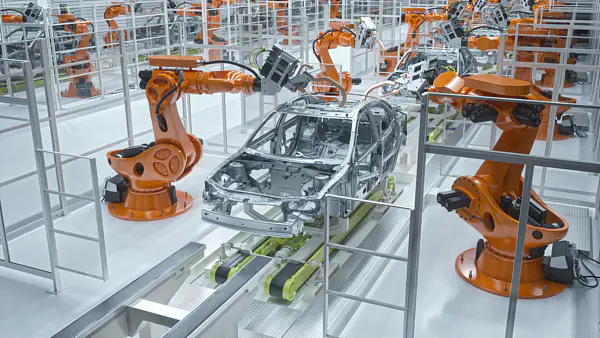
Moving south, we come to Wenzhou, a city known for its entrepreneurial spirit. Wenzhou was one of the first cities in China to embrace private business, and it shows in its industrial clusters.
Wenzhou’s industries focus on more heavy-duty, industrial products, along with classic consumer goods like shoes. It is a top spot for buyers looking for auto parts, industrial machinery, and footwear.
Footwear: Wenzhou’s Signature Industry
When people talk about Wenzhou, the first thing that comes to mind is shoes. Wenzhou’s footwear industry is massive. In 2024, the total output value of the industry hit 87 billion yuan, growing by 4.8% year over year.
The scale of the industry here is incredible. There are thousands of shoe factories in the area, covering every type of footwear. From casual men’s shoes to work boots, athletic shoes, and fashion footwear, Wenzhou can make it all.
Many of these factories are OEM and ODM specialists. They can work with your brand to create custom designs, or they can produce your existing designs at a very low cost. This has made Wenzhou a key supplier for major footwear brands around the world.
The industry also has a complete supply chain. You can find leather suppliers, sole makers, lace factories, and packaging companies all within the same area. This means faster production times and lower costs for buyers.
Auto Parts: A Complete Supply Chain for Car Manufacturers
Wenzhou is also known as “China’s Auto Parts Capital”. It has the most complete range of auto parts categories of any region in China.
Ruian, a county-level city under Wenzhou, is the core of this industry. Ruian’s auto parts industry has an output value of nearly 70 billion yuan. It covers 12 major categories of auto parts, covering almost every part of a car.
Whether you need engine parts, brake systems, electrical components, or body parts, you can find it here. Many of these suppliers work with major global car manufacturers. They have the quality certifications and production capacity to meet strict international standards.
This makes Wenzhou a key part of the global auto supply chain. Many auto parts buyers source from Wenzhou because of the wide range of products and the competitive prices.
Pumps & Valves: The Industrial Heart of Wenzhou
Another major industry in Wenzhou is pumps and valves. This is an industrial product that many people do not think about, but it is critical for many industries like oil and gas, water treatment, and manufacturing.
Wenzhou has over 3,700 pump and valve related enterprises. The total industrial output value of this industry is about 67.5 billion yuan. That accounts for about 38% of the entire national industry in China.
It is the largest and most complete valve manufacturing center in the country. The suppliers here can produce everything from small valves for home use to large, high-pressure industrial valves for power plants.
Many of these companies export their products to Europe, the United States, and Southeast Asia. They have the technical ability to meet international standards, making them a reliable source for industrial buyers.
Beyond these, Wenzhou also has a strong arts and crafts industry. Local products like wood carving, stone carving, and Ou embroidery are popular export products. They combine traditional Chinese craftsmanship with modern design, making them popular in global gift and home decor markets.
Wenzhou’s industries show how Zhejiang’s cluster model works for industrial products too. Just like with consumer goods, the tight supply chain and specialized expertise make these industries incredibly competitive.
Chapter 4: Shaoxing–Jiaxing–Huzhou Belt: Textiles, Pearl, Leather & Home Goods
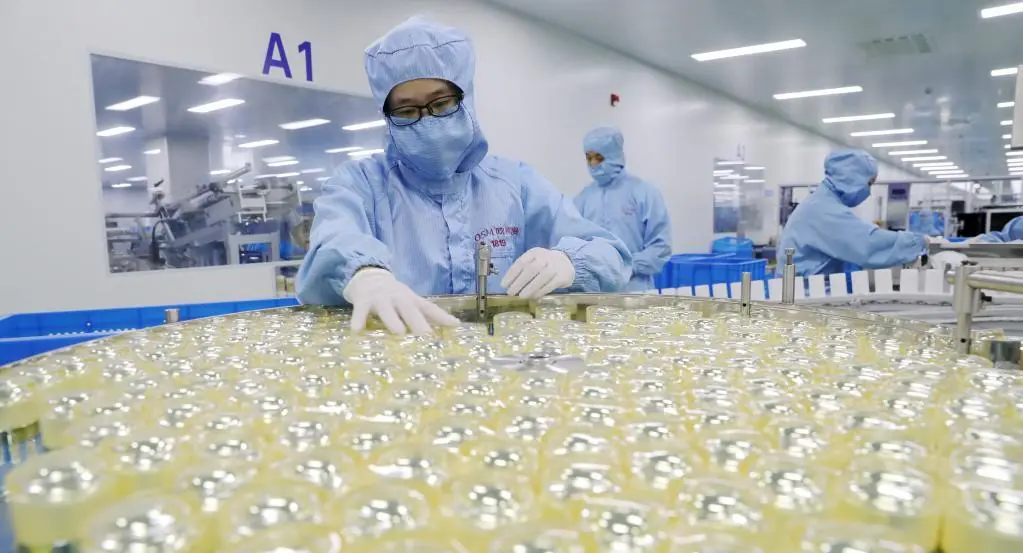
The northern part of Zhejiang, around Taihu Lake, is home to another group of powerful industrial clusters. This area focuses on textiles, home goods, and luxury accessories.
If you are sourcing fabrics, home textiles, leather goods, or furniture, this is the region you need to know.
Shaoxing: Textiles, Pearls and Kitchenware
Shaoxing is an ancient city, but it is also a modern manufacturing powerhouse. It has three major specialized industries that dominate global markets.
First, there is Keqiao District, the textile hub. Keqiao’s textile industry accounts for 28% of Shaoxing’s total industrial economy, and one-third of Zhejiang’s entire textile industry scale.
It is home to the China Textile City, the largest textile trading market in Asia. This market sells fabrics to over 190 countries and regions. Every year, one-quarter of the world’s textile fabrics are traded here. The online and offline transaction volume of the market exceeds 360 billion yuan.
This means that no matter what type of fabric you need—cotton, polyester, linen, or specialty fabrics—you can find it in Keqiao. It is the largest fabric sourcing spot in the world. Many clothing brands and home textile companies source all their fabrics here.
Second, there is Zhuji, the Pearl Capital. Zhuji is known as “China’s Pearl Hometown”. It is the most important freshwater pearl production and trading center in the world.
Zhuji accounts for 70% of the global freshwater pearl production volume, and 80% of the national market. There are over 9,000 pearl related businesses in the area. They produce everything from raw pearls to finished pearl jewelry.
This means that if you are in the jewelry business, Zhuji is the best place to source pearls. You can get high-quality pearls at a fraction of the price you would pay in Western markets.
Third, there is Shengzhou, the Kitchenware Capital. Shengzhou specializes in high-quality kitchen appliances and cookware. The industry is known for its innovative designs and complete supply chain. Many global kitchen brands source their products from Shengzhou.
Jiaxing: Leather, Bags and Home Textiles
Just north of Shaoxing, Jiaxing has its own set of specialized industries. It is a major hub for leather goods, bags, and home textiles.
First, Haining, the Leather Capital. Haining is one of China’s most important leather production bases. It has over 10,000 leather related enterprises. The annual transaction volume of the industry exceeds 200 billion yuan.
The Haining Leather City is the largest leather professional market in the world. It supplies leather jackets, bags, shoes, and other leather goods to buyers all over the world. The quality of the leather here is very high, and the prices are very competitive.
Second, Pinghu, the Bag Capital. Jiaxing is one of the three largest bag production bases in China. Pinghu is the core of this industry. There are over 500 bag and accessory enterprises in the area. They produce 490 million bags every year.
Whether you need backpacks, handbags, luggage, or travel bags, you can find it here. Many of these factories work with major global bag brands, so they have experience meeting high quality standards.
Third, Tongxiang’s home textile clusters. Tongxiang has two famous specialized towns:
- Zhouquan Town, Silk Quilts: Zhouquan has over 200 silk quilt enterprises. Nearly 90% of the silk quilts for famous domestic home textile brands are produced here.
- Puyuan Town, Wool Sweaters: Puyuan is the largest wool sweater distribution center in the world. Every year, 700 million wool sweaters flow out of this town. That accounts for over 70% of China’s total wool sweater sales.
This means that if you are sourcing sweaters or home textiles, Tongxiang is the place to go. The scale here means you can get huge volumes at very low prices.
Huzhou: Children’s Clothing, Cosmetics and Furniture
The last city in this belt is Huzhou. It has three unique industries that are very popular with global buyers.
First, Zhili Town, Children’s Clothing Capital. Zhili is famous across China for its children’s clothing. On average, one out of every two children’s clothing items sold in China comes from Zhili.
There are over 21,000 clothing enterprises here, and over 200 children’s clothing brands. The industry covers everything from baby clothes to kids’ wear, school uniforms, and children’s accessories.
This is a huge opportunity for global buyers. The factories here specialize in small sizes and safe, non-toxic materials for kids. They can produce large volumes of children’s clothing at very competitive prices.
Second, Wuxing District, Cosmetics. Huzhou’s cosmetics industry, driven by the Cosmetics Town, has grown rapidly in recent years. It is becoming a major production base for affordable, high-quality cosmetics for global brands.
Third, Anji, Chair Capital. Anji is known as “China’s Chair Hometown”. Its chair and furniture exports account for half of China’s total chair exports.
Anji specializes in office chairs, leisure chairs, outdoor furniture, and bamboo furniture. The industry has built several 10-billion-yuan industrial clusters. Many global office furniture brands source their chairs from Anji.
This entire northern belt of Zhejiang is focused on home goods and textiles. It is the reason why Zhejiang is such a big part of China Textile & Apparel Export Supply Chain.
Chapter 5: Digital Trade & Upgrading: Zhejiang’s New Competitive Edge in Global Supply Chains
All these industrial clusters are impressive, but what really makes Zhejiang stand out today is its digital transformation. Zhejiang is not just a manufacturing hub—it is a digital trade hub.
This is what gives it a new competitive edge in the global supply chain.
First, Zhejiang is the birthplace of cross-border e-commerce in China. Hangzhou, the capital, was the first cross-border e-commerce pilot zone in China, back in 2015. Since then, the number of cross-border e-commerce sellers in Hangzhou has grown from just over 200 to 65,000.
This means that small buyers can now source directly from Zhejiang factories online, without having to travel to China. Platforms like Alibaba make it easy to connect with suppliers, place orders, and arrange shipping right from your computer.
This has opened up Zhejiang’s industrial clusters to small and medium businesses around the world. Before, only large companies could afford to source directly from China. Now, even a small store owner can order a small batch of goods from Yiwu or Shaoxing through cross-border e-commerce.
Zhejiang’s industrial clusters are also digitizing their own supply chains. For example, the China Textile City in Keqiao has an online trading platform that matches buyers and sellers in real time. This makes it faster and easier to source fabrics.
Yiwu’s market has also gone digital. Many of the small shop owners in the Yiwu International Trade Mart now live stream their products to global buyers. You can take a virtual tour of their shop, ask questions, and place orders right there.
This digital transformation is also helping Zhejiang’s factories upgrade. Many factories are now using smart manufacturing technology to improve quality and efficiency. They are also moving from just OEM manufacturing to building their own brands.
This means that Zhejiang is no longer just a place to make cheap goods. It is a place to find high-quality, innovative products that can compete with brands from around the world.
For global buyers, this means sourcing from Zhejiang is easier than ever. You do not need to have a lot of experience or a huge budget. You can start small, test the market, and grow your business. This is why Cross-border E-commerce in Zhejiang is growing so fast.
Conclusion
Zhejiang’s foreign trade industry chain is a perfect example of how specialization can create global competitiveness. Its “one town, one industry” model has created a network of industrial clusters that cover almost every product you can think of.
From Yiwu’s small commodities to Shaoxing’s textiles, from Wenzhou’s pumps to Anji’s chairs, each region has perfected its craft. They have built complete supply chains that are fast, efficient, and cost-effective.
For global buyers, this makes Zhejiang the best place in the world to source almost any product. Whether you are a small business owner looking for small batches or a large company looking for massive bulk orders, you can find what you need here.
As Zhejiang continues to upgrade its industries and embrace digital trade, it will only become more important in the global supply chain. It is the core engine of China’s Foreign Trade Industry Chain, and it will keep powering global trade for years to come.
If you are looking to source products from China, start with Zhejiang. You will be amazed at what you can find.