

If you’ve ever tried to negotiate a factory quote through a translation app, you already know where the problems start. A mistranslated tolerance spec, a missed nuance in a payment term, a supplier who switches to broken English the moment the conversation gets technical: these are not rare glitches. For buyers in Latin America and Eastern Europe, they’re the default experience with most China sourcing agents, because most agents are built around English and, at best, one second language.
Union Trust’s sourcing team is fluent in Spanish, Russian, English, Polish, and German. A few other agents in this space also advertise Russian-language support, so language coverage alone isn’t a rare claim anymore. What’s harder to find is an agent willing to put a name, a title, and a real work history behind that claim instead of a generic “our team speaks your language” line. That’s the part worth checking before you commit to an agent, and it’s the part this article focuses on.
Key Takeaways
- Union Trust’s sourcing team covers Spanish, Russian, English, Polish, and German. Several competitors also claim Russian support, so the real differentiator is naming a specific person, title, and work history behind the claim.
- Marina Ma (Sales Director, with Union Trust since 2015) and Rachel Zhu (Senior Sales Manager, 7+ years) both work in Russian and English with Eastern European and Latin American clients daily.
- Language match matters most at the two riskiest points in a first order: writing the initial spec and reviewing the contract before you sign it.
- A shared language doesn’t replace sourcing fundamentals like quality inspection and clear payment terms. It removes one specific point of failure: the misunderstanding nobody catches until the goods arrive.
What Does a “Multilingual Sourcing Team” Actually Mean?
Any agency can claim language coverage. What matters is whether the person handling your account actually speaks your language day to day, not whether the company keeps one bilingual staffer around for emergencies. At Union Trust, Spanish, Russian, English, Polish, and German are working languages across the sales team. Not a backup option routed through a single translator.
That distinction shows up in three concrete ways during a real order: how your product specification gets written up for the factory, how contract terms get explained back to you before you sign, and how a quality dispute gets resolved if one comes up. Each of those moments is where a language gap turns into a costly mistake, and each is where a native or fluent speaker on your side of the table changes the outcome.
Meet the Team Behind the Language Coverage
Two people who work with Eastern European and Latin American buyers directly are Marina Ma, Union Trust’s Sales Director, and Rachel Zhu, Senior Sales Manager. Marina has been with the company since 2015 and works daily in Russian and English. Rachel has more than seven years of experience and also works in Russian and English with clients across the same regions. You can find both of them on LinkedIn: Marina Ma and Rachel Zhu.
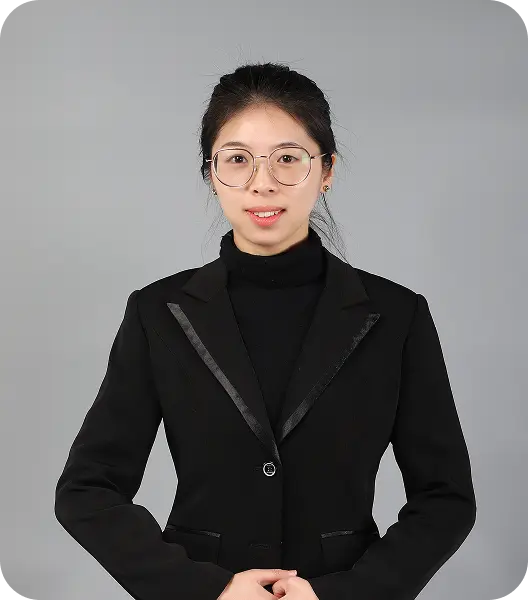

Naming the actual people behind a language claim matters, because “our team speaks five languages” is easy to write and impossible to check from the outside. Most sourcing agents that advertise Russian or Spanish support describe it the same generic way, without a name attached. Putting a name, a title, and a public profile behind it at least gives you someone specific to ask.
| What’s advertised | Typical sourcing agent | Union Trust |
|---|---|---|
| Language coverage | “Our team speaks Russian/Spanish” | Same, plus Polish and German |
| Who, specifically | Not named | Marina Ma and Rachel Zhu, named with titles |
| Verifiable work history | Not provided | Public LinkedIn profiles |
Spanish, Polish, and German capability sits with other members of the wider Union Trust team under Sellers Union Group, which has operated in China’s supply chain for close to 30 years. The point isn’t that any single person speaks all five languages. It’s that a buyer writing in from Warsaw, Berlin, Mexico City, or Moscow gets matched with someone who actually works in that language, rather than being routed through English by default.
Why This Matters More for Eastern Europe and Latin America Than Elsewhere
Buyers sourcing from established English-speaking markets rarely think about this, because most sourcing agents are already built around English. The gap shows up specifically for Eastern European and Latin American buyers, where English fluency among factory-side staff is less consistent, and where the buyer’s own team may prefer to negotiate and review contracts in their first language rather than a second one.
This is also where the naming question matters most. Several sourcing agents now advertise Russian or Spanish-speaking support, from Latin America-focused agencies like chilat.com to Yiwu-based competitors. Almost none of them attach a name and a checkable work history to that claim. If a buyer can’t tell whether “our team speaks Russian” means one part-time translator or an experienced account manager, the claim isn’t doing much work for them.
How a Language-Matched Agent Changes Your First Order
The clearest place this shows up is the product specification. When you can describe tolerances, materials, and packaging requirements in your own language to someone who then translates that precisely into Chinese for the factory, you remove one entire layer of “lost in translation” risk before production even starts. Compare that to writing a spec in your second language, having it translated again into Chinese, and hoping nothing shifted meaning twice.
The second place it matters is contract review. Payment terms, quality clauses, delivery penalties: this is exactly the kind of detail that gets skimmed when you’re reading it in a language you’re not fully comfortable in. A team member who can walk through the contract with you in Russian, Spanish, Polish, or German, then confirm the same terms with the factory in Chinese, covers both sides of that conversation.
If a dispute comes up later, over a missed spec or a quality issue, the same logic applies. You want to be able to explain exactly what went wrong, in detail, without losing precision to translation, while your agent argues your case with the factory in Chinese.
What About the Rest of the Sourcing Process?
Language match solves one specific problem. It doesn’t replace the fundamentals: verifying a supplier’s business license, ordering samples before a full production run, and booking a pre-shipment inspection. If you’re new to the process end to end, our guide on sourcing from China in 2026 walks through the full 8-step process, including realistic fee ranges and shipping-cost expectations.
For buyers specifically working with Union Trust’s Yiwu-based team, the Yiwu sourcing agent service page covers what a language-matched agent handles day to day, from supplier shortlisting to quality inspection coordination.
Conclusion
A shared language won’t fix a bad factory or a skipped inspection. What it does is remove the specific, avoidable risk of a spec or contract term getting lost between two languages neither side fully controls. Plenty of agents will tell you they cover your language. Fewer will tell you who, specifically, will be handling your account. Before your next order, ask for that name, their title, and a way to verify it, whether that’s Union Trust’s team or anyone else’s.