
If you are a retailer, brand owner, or eCommerce seller looking to expand your pet product range, sourcing wholesale dog toys from China is one of the most cost-effective strategies available. China dominates global pet toy production, offering unmatched variety, competitive factory pricing, and strong OEM and ODM capabilities. This guide walks you through everything you need to know — from understanding the market and product types to finding a reliable dog toy supplier, managing quality compliance, and shipping your first bulk order.
Whether you run an independent pet store, manage a private label brand on Amazon, or operate a multi-category wholesale business, the fundamentals of wholesale dog toys sourcing from China remain the same. You need to know what to buy, where it is made, how to ensure it is safe and compliant, and how to get it shipped efficiently. Getting all four right is what separates profitable buyers from those who struggle with returns, customs delays, and margin erosion. This guide will help you build that foundation.
Why the Wholesale Dog Toy Market Keeps Growing
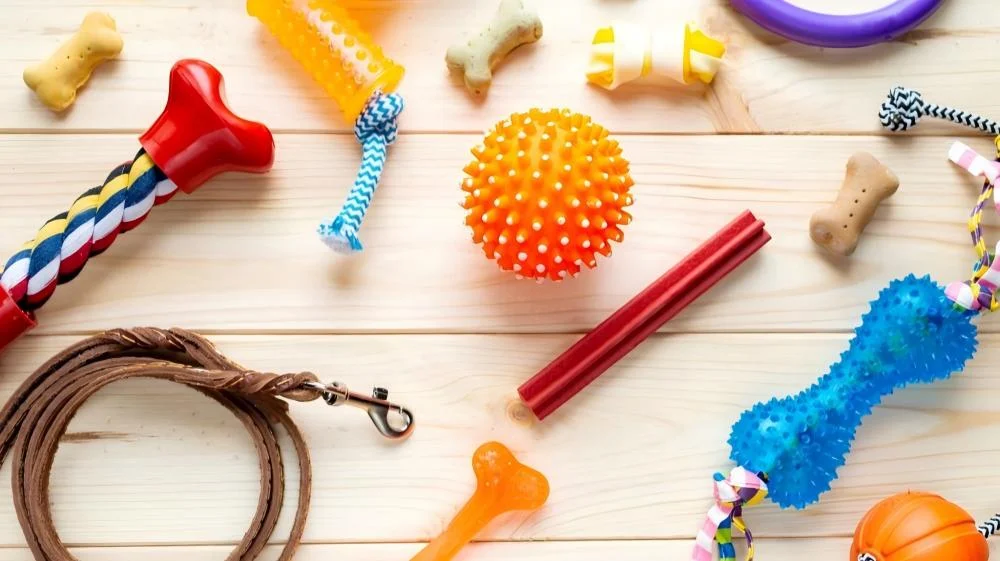
The global pet industry is not slowing down. Pets are increasingly treated as family members, and pet owners are spending more than ever on enrichment, play, and well-being. That trend directly fuels demand for wholesale dog toys across every retail channel.
According to Future Market Insights, the global pet toys market was valued at approximately USD 4.7 billion in 2026 and is projected to reach USD 9.3 billion by 2036, growing at a compound annual growth rate (CAGR) of around 6.9%. The United States and Europe remain the two largest import markets, with China serving as the primary production hub for both.
For B2B buyers, this growth creates a real commercial opportunity. Retailers that stock a well-curated range of dog toys — from basic plush dog toys to premium interactive dog toys — are well positioned to capture repeat purchases and build customer loyalty. Sourcing those products at wholesale prices from China is often the most practical way to protect your margins while staying competitive on price.
China alone accounts for the vast majority of global dog toy exports. According to IndexBox market data, China exported approximately 1.2–1.5 billion plush toys of all types in 2025, with dog toys estimated at 20–25% of that total. The United States absorbs around 30–35% of Chinese pet toy export value, followed by the European Union at 25–30%. These numbers tell a clear story: the wholesale dog toys supply chain is already well established, and global buyers are already using it.
The timing is right to build a reliable supply chain. And understanding how to do it correctly matters more than ever.
What Types of Dog Toys Can You Source from China?
China produces virtually every category of dog toy sold in the global market. Before approaching a dog toy supplier, it helps to know what product types are available and which ones match your business model.
Plush Dog Toys
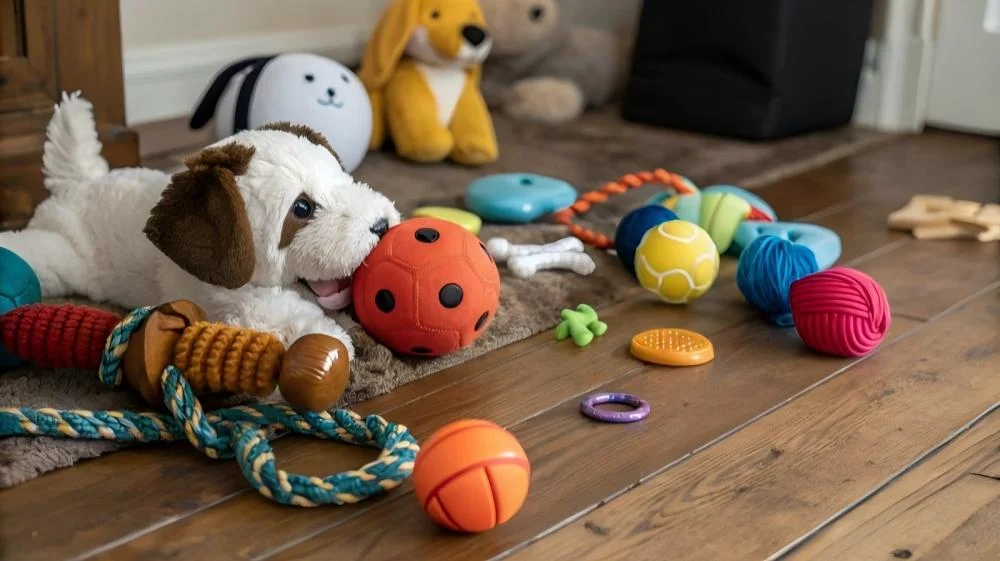
Plush dog toys are among the most consistently high-demand products in the wholesale pet supplies market. They appeal to a wide range of dog owners and generate strong impulse purchases at retail. Chinese manufacturers — especially in Zhejiang province — have deep expertise in plush production, with vertically integrated supply chains covering fabric sourcing, cutting, stuffing, and finishing.
Most plush dog toys can be produced with full custom branding. You can work with a dog toy supplier to develop your own shapes, colors, materials, and packaging, making private label plush an excellent entry point for brand owners. Minimum order quantities for custom plush typically start between 500 and 1,000 units per design, depending on complexity.
Common product variants include squeaky plush, crinkle plush, rope-reinforced plush, and catnip-infused plush for mixed pet retailers. Plush dog toys also tend to have strong visual appeal on retail shelves and in product photography, which matters for eCommerce conversion. For brand owners building a private label line, plush is often the first category to develop — the design flexibility is wide, production timelines are predictable, and the margin structure is favorable at wholesale volumes.
Interactive Dog Toys
Interactive dog toys are the fastest-growing category in the premium pet market. This segment includes puzzle feeders, treat-dispensing balls, electronic motion toys, and snuffle mats. They appeal to consumers who prioritize mental stimulation and enrichment for their dogs.
China’s manufacturing ecosystem in Guangdong and Jiangsu provinces is particularly strong for this category. Factories in Shenzhen and Suzhou have electronics integration capability, enabling the production of battery-operated and sensor-triggered interactive dog toys at scale. For brand owners targeting the US or European market, sourcing interactive dog toys from China offers a 30–60% cost advantage compared to domestic alternatives.
This category also benefits from strong differentiation potential. A unique interactive format — a new puzzle mechanism or a novel material combination — can significantly reduce direct price competition. Buyers looking to avoid commoditized markets should give serious consideration to building a custom dog toys line in the interactive segment. The development investment is higher, but the barriers to competitor replication are also higher, which supports better long-term pricing power.
It is also worth noting that interactive dog toys consistently attract higher average selling prices. A well-designed puzzle feeder or motion-activated toy can retail at 3–5 times the price of a basic chew toy while still carrying a healthy margin when sourced at wholesale pricing from China.
Rubber and Chew Toys
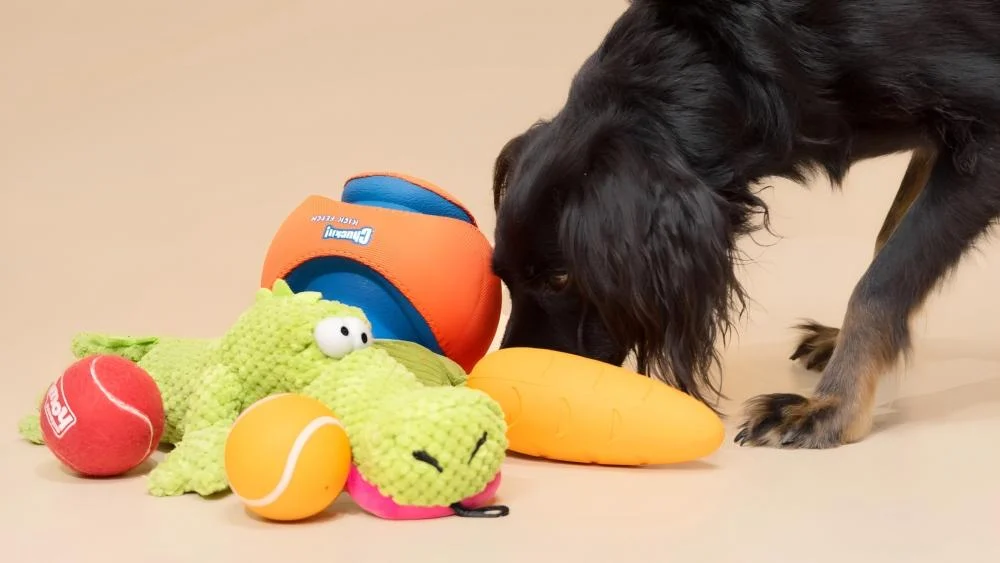
Rubber and TPR (thermoplastic rubber) chew toys are another staple of the wholesale dog toy business. Guangdong province leads production in this category, with factories experienced in producing durable, non-toxic rubber toys that meet international safety standards.
These products are well suited to high-volume bulk dog toys orders. They are relatively simple to manufacture, have longer shelf lives, and are less susceptible to seasonal demand shifts. Popular formats include Kong-style treat dispensers, tug toys, teething rings, and dental chew toys.
When sourcing rubber dog toys, always confirm that materials are BPA-free and comply with relevant safety certifications for your target market. It is also worth discussing durability testing directly with your dog toy supplier. Chew toys are subject to significant mechanical stress during use, and poorly constructed products generate high return rates and negative reviews — both of which are costly for online sellers.
Rope and Fabric Toys
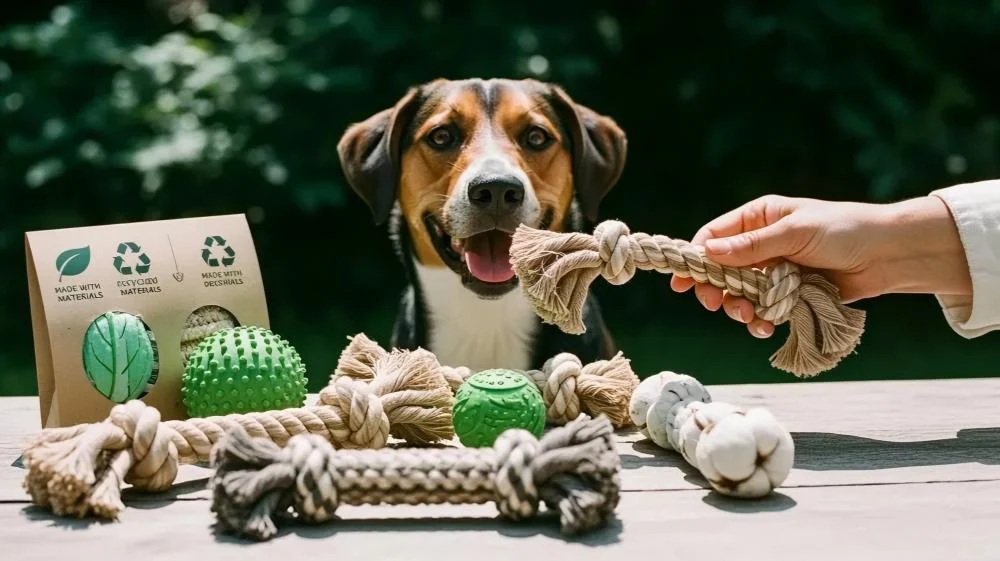
Rope toys, canvas tug toys, and knotted fabric chews are the most entry-level segment for wholesale dog toys sourcing. These products are widely available at Yiwu International Trade City — one of the world’s largest wholesale markets — and can be sourced with low minimum order quantities, making them ideal for smaller buyers or those testing new product lines.
Yiwu-based suppliers typically offer fast sampling turnaround and flexible MOQ terms. For buyers sourcing a mixed container of bulk dog toys, rope and fabric products are often used to fill remaining volume and improve the overall cost efficiency of a shipment. They also make effective bundle components — pairing a rope toy with a plush or rubber item is a common retail packaging strategy that increases average transaction value without requiring complex product development.
Key Manufacturing Regions for Dog Toys in China
Understanding where products are made helps you source smarter. Different regions in China specialize in different toy categories, and choosing the right production hub for your product type can affect both quality and cost.
| Region | Product Specialty | Best Suited For |
|---|---|---|
| Guangdong (Guangzhou, Dongguan, Shenzhen) | Rubber/TPR chew toys, electronic interactive dog toys | Durable goods, tech-integrated products |
| Zhejiang (Yiwu, Ningbo, Wenzhou) | Plush dog toys, rope toys, fabric accessories | Bulk wholesale, OEM plush, mixed orders |
| Jiangsu (Yangzhou, Suzhou) | Diverse materials, strong OEM/ODM capability | Custom dog toys, mixed-material designs |
| Fujian (Fuzhou, Quanzhou) | Leashes, collars, soft accessories | Multi-category pet suppliers |
Zhejiang is widely regarded as the most important province for sourcing plush dog toys and general wholesale pet supplies. Yiwu International Trade City, located in Zhejiang, is the world’s largest small commodity wholesale market and houses hundreds of pet product booths. According to JingSourcing, most pet product wholesalers in Yiwu are concentrated in District 2 and District 5.
Guangdong is the go-to region for rubber dog toys and interactive dog toys with electronics components. Factories here tend to operate at larger scale and often hold certifications required by major US and European retailers.
Jiangsu is emerging as a strong hub for custom dog toys orders, particularly where buyers need specific material combinations or complex OEM product development.
One practical point for importers: regional specialization means that sourcing all your product categories from a single factory is rarely optimal. A Guangdong factory producing excellent rubber chew toys may not be the best partner for your plush dog toys range. Working with a sourcing agent who has established relationships across multiple regions gives you access to best-in-class production for each product type without requiring you to manage multiple supplier relationships independently.
Safety Certifications and Compliance: What Every Importer Must Know
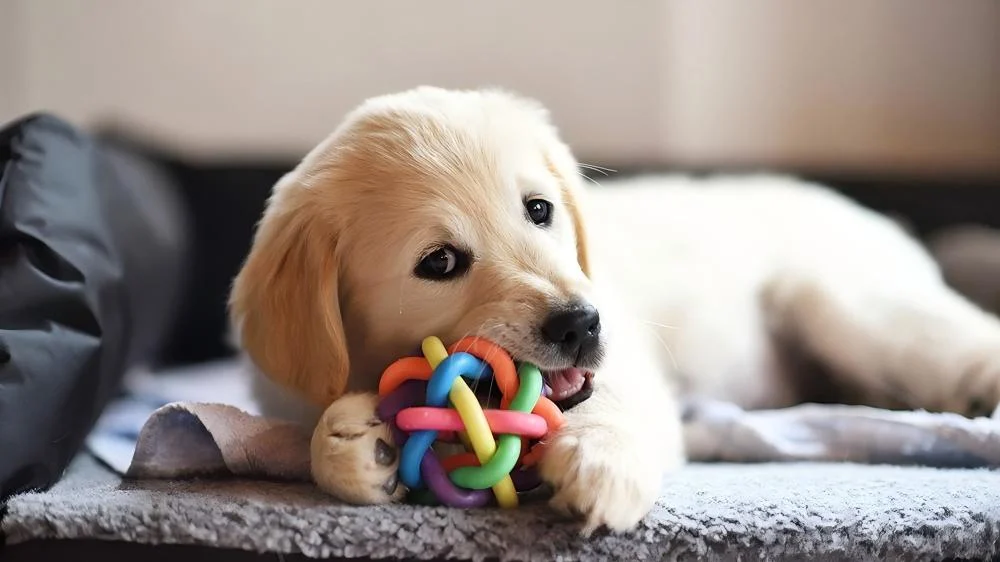
This is one of the most important sections of any sourcing guide — and one of the most overlooked by first-time buyers. Importing wholesale dog toys into the US, EU, or UK without proper safety documentation can result in customs holds, platform delistings, or costly product recalls.
The good news: leading Chinese factories in Guangdong and Zhejiang already hold the key certifications you need. The challenge is knowing which ones to ask for — and how to verify that the documents are genuine.
Key Certifications by Market
United States
For selling through US retailers or platforms like Amazon, the most critical standard is ASTM F963 — the Consumer Safety Specification for Toy Safety, enforced by the Consumer Product Safety Commission (CPSC). While dog toys are technically pet products and not always legally required to meet children’s toy standards, major US retailers including Petco, PetSmart, and Chewy routinely require ASTM F963 compliance as a condition of doing business.
The CPSIA (Consumer Product Safety Improvement Act) supplements ASTM F963 with additional restrictions on lead content and phthalates. For any dog toy that could be handled by children — or that contains electronic components — CPSIA compliance should be treated as non-negotiable.
European Union
For EU market entry, the EN71 standard series governs toy safety. The three most important parts for dog toy importers are:
- EN71-1: Mechanical and physical properties (choking hazards, sharp edges, structural strength)
- EN71-2: Flammability
- EN71-3: Migration of chemical elements (heavy metals, toxic substances)
Products entering the EU also require CE marking, which confirms the product complies with relevant EU directives. Note that EN71-1:2026 and EN71-8:2026 were published in January 2026, with a compliance deadline of July 2027. Buyers sourcing for the EU market should confirm that their dog toy supplier is already adapting to these updated requirements.
United Kingdom
Post-Brexit, the UK uses UKCA (UK Conformity Assessed) marking in place of CE. Requirements are broadly aligned with EN71 but require separate documentation.
Additional Certifications Worth Requesting
| Certification | What It Covers | Why It Matters |
|---|---|---|
| ISO 9001 | Quality management systems | Confirms consistent factory processes |
| REACH | Chemical safety (EU) | Restricts hazardous substances in materials |
| BSCI | Social compliance audit | Required by some European retailers |
| SGS / Intertek test reports | Third-party lab verification | Provides independent proof of compliance |
A note on REACH compliance specifically: this EU regulation restricts the use of hazardous chemical substances in products sold in Europe. For dog toys, REACH applies to materials including dyes, plasticizers, and surface coatings. If you are sourcing plush dog toys or rubber products for the EU market, ask your dog toy supplier to provide REACH test reports that confirm compliance with the current Substances of Very High Concern (SVHC) candidate list. The list is updated twice annually, so recent testing matters.
How to Verify Certification Authenticity
Do not accept photocopied certificates at face value. Ask your dog toy supplier to provide original third-party laboratory test reports — not just summary pages. Confirm that the product described in the test report matches the exact item you are ordering: same material composition, same color, same construction. Any substitution after testing creates a compliance gap.
If you are placing a large order, consider engaging a third-party inspection company such as SGS or Bureau Veritas to conduct a pre-shipment inspection and verify that production units match the tested sample.
How to Find and Evaluate the Right Dog Toy Supplier
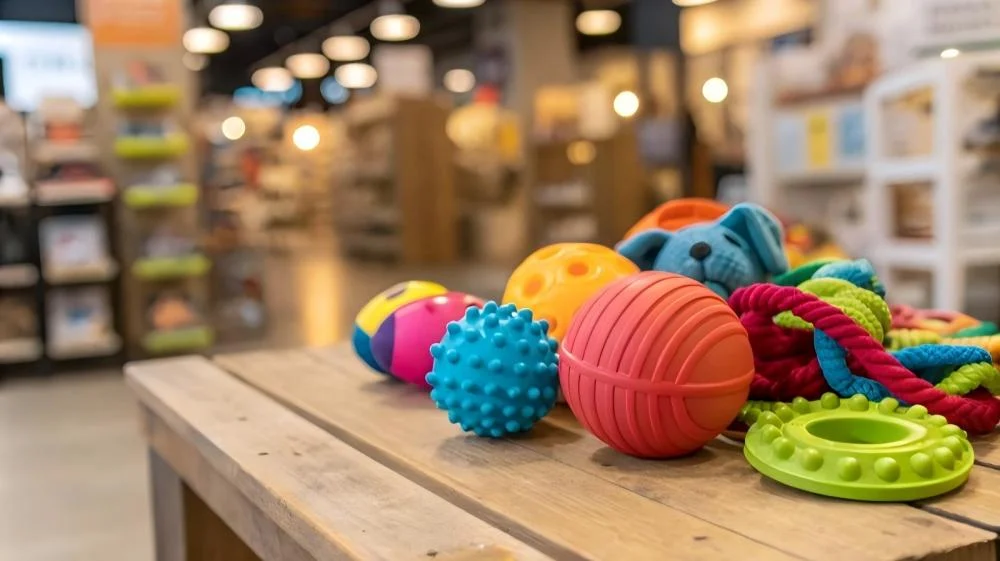
Finding a factory is easy. Finding a reliable one takes more effort. Here is a practical framework for evaluating potential suppliers before you commit to an order.
Where to Start Your Supplier Search
1. Alibaba and Made-in-China
These platforms are the most accessible starting point for overseas buyers. Both list thousands of Chinese dog toy suppliers with product photos, factory certifications, minimum order quantities, and response metrics. Alibaba’s Trade Assurance program provides some financial protection on qualifying orders.
The limitation is that supplier quality varies significantly. A polished listing does not guarantee production capability or compliance. Always request samples before placing any bulk dog toys order.
2. Canton Fair and Pet Fair Asia
Trade fairs remain one of the best ways to assess a dog toy supplier in person. The Canton Fair (held twice yearly in Guangzhou) and Pet Fair Asia (held annually in Shanghai) both attract hundreds of pet product manufacturers. You can inspect product quality firsthand, negotiate directly, and build relationships that lead to better pricing and service over time.
3. China Sourcing Agent
For buyers who lack the time, language skills, or on-the-ground knowledge to source independently, working with a China-based sourcing agent is often the most efficient approach. A good sourcing agent can identify compliant factories, negotiate pricing, arrange quality inspections, and manage shipping logistics — all from a single point of contact.
At UTSourcing, we specialize in B2B procurement for international buyers, including pet product sourcing from China’s major manufacturing hubs. Our team has hands-on experience managing wholesale dog toys orders across all the major product categories covered in this guide. If you are looking to source wholesale dog toys or custom dog toys at scale, we can help you find vetted suppliers, manage the sampling process, and ensure your order meets compliance requirements before it ships. Contact us to discuss your sourcing needs.
Supplier Evaluation Checklist
When assessing any dog toy supplier, work through the following criteria:
- Certifications: Does the factory hold ASTM, EN71, or CE documentation relevant to your market?
- MOQ flexibility: What is the minimum order quantity per design? Can they accommodate mixed SKU orders?
- OEM/ODM capability: Can they produce custom dog toys with your branding, packaging, and design specifications?
- Sample lead time: How quickly can they provide production-quality samples?
- Production capacity: Can they fulfil your projected volume within your required lead time?
- On-time delivery rate: Ask for references or check platform metrics where available.
- Communication: Are they responsive, clear, and proactive in flagging issues?
- Inspection policy: Do they allow third-party pre-shipment inspection?
No supplier will be perfect on every dimension. The goal is to identify where the trade-offs are acceptable for your specific business needs.
One thing experienced importers always recommend: never skip the sample stage, even when time is tight. A pre-production sample is the single best tool you have for catching quality issues before they become shipment problems. Request samples that reflect actual production materials and construction — not specially produced showcase items. Ask the supplier to use the same factory line that will fulfill your bulk dog toys order, and inspect samples against your product specification document before approving production.
If you plan to develop custom dog toys with your own branding, build extra time into the sampling process. Custom products typically require 2–4 rounds of sample revision before both parties are satisfied with the result. Factor this into your launch timeline to avoid pressure-driven compromises on quality.
MOQ, Pricing, and Shipping: Practical Numbers for B2B Buyers
Understanding the commercial parameters of wholesale dog toys sourcing helps you plan your inventory investment and set realistic expectations with your team.
Minimum Order Quantities
MOQ varies considerably depending on product type and whether you are working with a factory directly or through a trading company:
| Product Type | Typical Factory MOQ | Trading Company MOQ |
|---|---|---|
| Plush dog toys (stock designs) | 500–1,000 pcs per design | 50–200 pcs per design |
| Custom dog toys (OEM/ODM) | 1,000–3,000 pcs per design | 300–500 pcs per design |
| Rubber/TPR chew toys | 500–2,000 pcs | 100–500 pcs |
| Interactive dog toys | 300–1,000 units | 100–300 units |
| Rope and fabric toys | 200–500 pcs | 50–200 pcs |
For buyers who want to place a mixed-category order, a China sourcing agent can often consolidate multiple product lines into a single shipment, allowing you to meet each supplier’s MOQ while keeping total spend at a manageable level.
Estimated Wholesale Price Ranges
Prices depend on material, complexity, customization level, and order volume. As a rough reference for budgeting purposes:
- Basic rope/fabric toys: USD 0.80 – 2.50 per unit
- Standard plush dog toys: USD 1.50 – 5.00 per unit
- Rubber/TPR chew toys: USD 1.20 – 4.00 per unit
- Interactive dog toys: USD 3.00 – 15.00 per unit (depending on electronics complexity)
- Custom dog toys with full private label packaging: add USD 0.30 – 1.50 per unit depending on packaging type
These are factory or trading company prices, not landed costs. Always calculate total cost including freight, import duty, and any applicable inspection fees before comparing against domestic sourcing alternatives.
Shipping and Import Duties
Most wholesale dog toys are shipped under HS code 9503 (toys and related products). Import duty rates vary by destination:
- United States: Currently subject to Section 301 tariffs on Chinese goods, typically in the 7.5%–25% range for pet products. Confirm the exact rate for your specific product code before pricing your order.
- European Union: Standard import duty for toys from China is generally 4.7%, with VAT applied on import.
- United Kingdom: Post-Brexit UK applies its own tariff schedule; toy categories typically attract a 0%–4.7% rate.
Work with a licensed customs broker in your destination country to confirm the correct classification and applicable duty rate before you finalize pricing with your supplier. Getting this wrong at the sourcing stage — by building a landed cost model on an incorrect duty rate — can wipe out the margin advantage you gained by sourcing from China in the first place.
For shipment mode, most bulk dog toys orders from China move by sea freight (FCL or LCL depending on volume). Air freight is rarely cost-effective for wholesale quantities but may be worth considering for urgent smaller orders or new product samples. As a rough benchmark, a 20-foot FCL from a major Chinese port (Ningbo, Guangzhou, Shanghai) to the US West Coast or a Northern European port typically takes 18–30 days in transit, depending on the routing and the current carrier schedule. LCL (less than container load) shipments take slightly longer due to consolidation and deconsolidation handling.
Incoterms matter when negotiating with your dog toy supplier. FOB (Free On Board) is the most common arrangement for experienced importers — you take responsibility for the shipment once it is loaded onto the vessel, and you arrange your own freight forwarder. CIF (Cost, Insurance, and Freight) includes freight and insurance in the supplier’s quote but gives you less control over shipping costs and carrier selection. For buyers new to direct importing, working with a sourcing agent who can coordinate both supplier and logistics provides the simplest overall experience.
Summary
China offers international buyers a compelling combination of production scale, product variety, OEM capability, and price competitiveness for wholesale dog toys. Whether you are looking to source bulk dog toys for a retail chain, develop custom dog toys under your own brand, or build a full pet supplies catalogue that includes plush dog toys and interactive dog toys, Chinese manufacturers have the infrastructure to deliver. The supply chain is mature, the certifications are achievable, and the cost advantages are real.
The key to success lies in supplier selection, compliance diligence, and logistics planning. Buyers who invest time in vetting their dog toy supplier, verifying certifications, and understanding the true landed cost of their orders consistently outperform those who focus on unit price alone. Cutting corners at the sourcing stage almost always costs more in the long run — through returns, compliance failures, or missed delivery windows.
China’s pet product manufacturing ecosystem continues to evolve. Quality standards are rising, factory certifications are becoming more common, and the range of custom dog toys available for private label development is wider than ever. For international buyers willing to invest in the sourcing process, the opportunity is significant.
If you are ready to start sourcing or want to explore what a curated supplier shortlist looks like for your product category, the UTSourcing team is here to help. We work with retailers, brand owners, and importers across the globe to simplify procurement from China’s major manufacturing hubs. Reach out through our website at utsourcing.com to tell us what you need — and we will take it from there.