
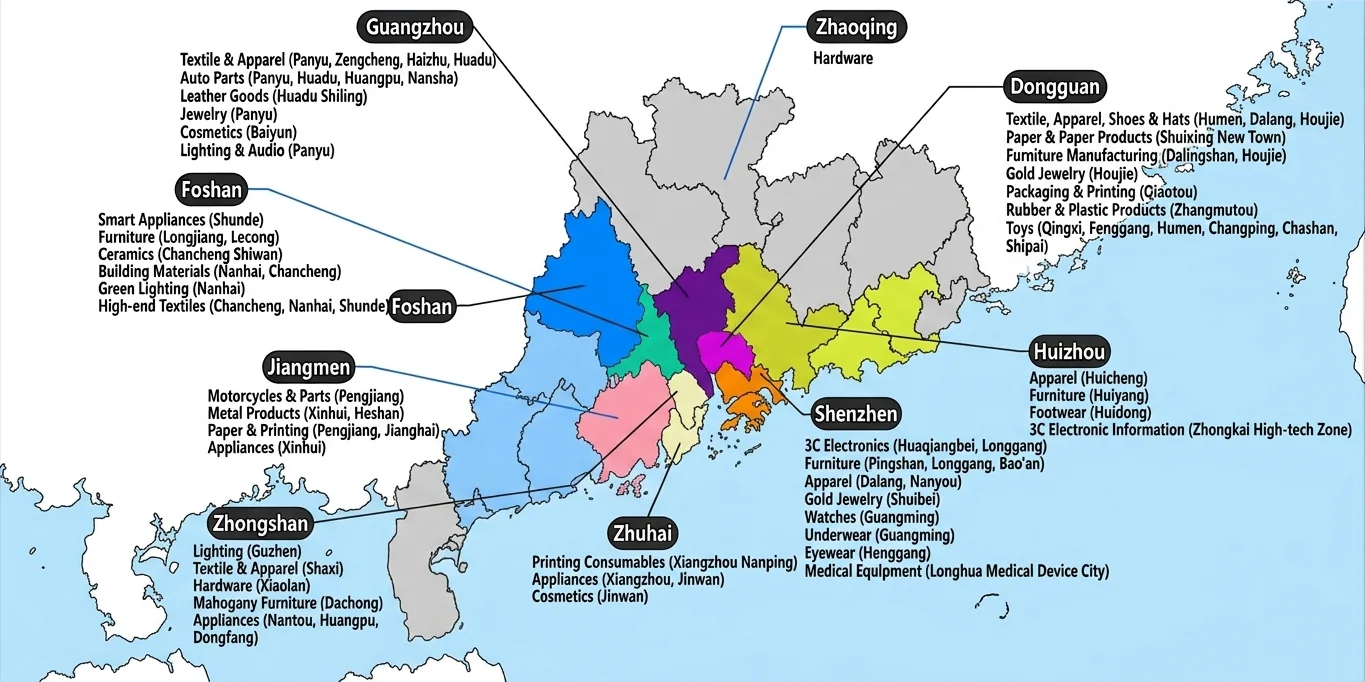
Use Guangdong’s manufacturing networks to find suppliers for the processes your product requires. A region can offer useful component, assembly and logistics connections, but the commercial decision still depends on the actual factory, specification and contract. Avoid treating regional export statistics as proof of supplier reliability.
Define the manufacturing problem before the route
List the important materials, processes, components and test needs. Identify which decisions require engineering dialogue and which relate mainly to assortment or packaging. This helps narrow the search before organizing visits.
Ask for the production address and the seller’s relationship to the site. A sales office or showroom can be far from the factory and may represent several businesses. Use the supplier verification checklist consistently.
Regional proximity can make coordination convenient, but should not replace a capability review. Important subcontractors and component sources may still be outside the area.
Investigate electronics and supporting processes
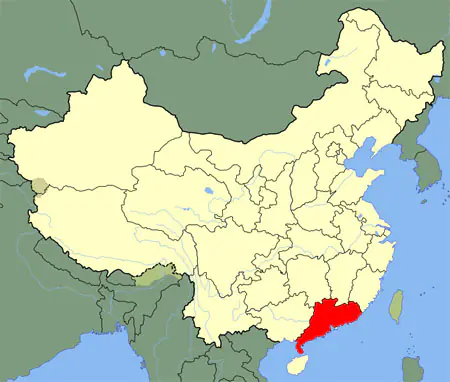
Shenzhen’s official industry overview describes electronic and related manufacturing capabilities. It is useful context for a search, not evidence that every local supplier can meet a particular design or quality standard.
For an electronic product, define the exact configuration, power source, components, software where relevant and destination. Ask which design, assembly and testing tasks the candidate performs. Purchased modules do not remove the need to assess the finished product.
Keep model identifiers and approved critical components connected to reports and production records. A substitution may require review even if the exterior stays the same.
Examine assembly, tooling and finishing networks
For products involving molds, machining, coating or assembly, identify the operations that determine performance. Ask which happen in-house and which are outsourced. Qualification should address the actual production chain.
Approve tooling ownership, revision control and access arrangements. Record how a design or process change will be reviewed before production. A supplier’s willingness to make a custom item does not establish that your company owns its design rights.
Check capacity against the required product and date. A general output figure or impressive facility photograph does not reserve resources for your order.

Adapt checks for household and decorative products
Define materials, construction, finish, dimensions and intended use. Packaging and mounting may matter as much as appearance for a fragile or projecting item. The metal wall-art guide illustrates product-specific questions.
Determine destination requirements before accepting a generic certificate package. Decorative, electrical, food-contact and children’s products should not be combined under one unsupported compliance statement.
Use the quality-control guide to define inspection, specialist testing and release authority. Each report should have a clear scope.

Plan logistics from the actual production sites
Collect packed dimensions, weights, ready dates and supplier addresses. Compare suitable collection points and departure services using written offers. Do not assume the closest major port or airport is always the lowest delivered-cost option.
When several suppliers share a shipment, define warehouse receipt checks and lot identification. The consolidation guide separates this work from the transport booking itself.
Review deadlines using the air-versus-sea comparison. Include origin work, clearance and receiving rather than comparing only the main carriage leg.
Compare Guangdong with other feasible sourcing routes
Evaluate the complete offer: capability, sample result, evidence gaps, price, service scope and schedule. A regional reputation can help generate candidates while the final decision remains supplier-specific.
The Zhejiang guide and Fujian guide provide alternative search routes for relevant categories. Compare actual product offers rather than a blanket provincial cost ranking.
Send the specification, quantities and destination through the enquiry form to request a shortlist. Ask the provider to explain which manufacturing requirements each candidate can support and what remains to be verified.