
If you’re a retailer, brand owner, or interior design buyer looking to scale your product line, sourcing metal wall art from China is one of the most cost-effective decisions you can make. China is the world’s largest manufacturer of metal wall art, with mature supply chains, advanced production capabilities, and highly competitive pricing. This guide walks you through every step of the import process — from finding the right supplier to clearing customs — so you can source with confidence.
Why China Is the Top Source for Metal Wall Art
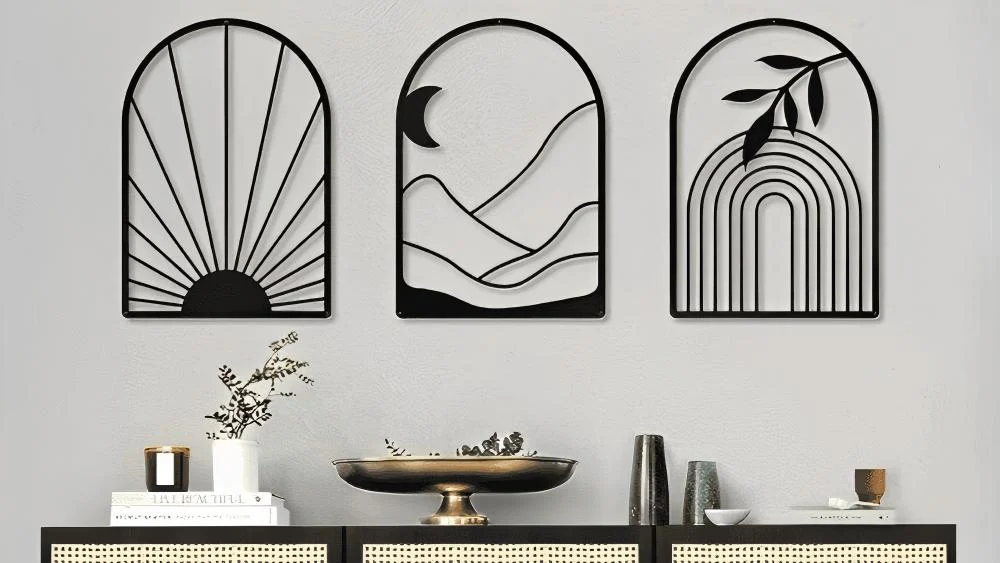
The Scale of China’s Metal Decor Manufacturing Industry
The global wall decor market was valued at over USD 64.7 billion in 2024 and is expected to reach USD 103.4 billion by 2034, growing at a CAGR of 4.8%. Metal home decor is one of the fastest-growing segments in this space, driven by demand for modern, industrial, and nature-inspired aesthetics in both residential and commercial settings.
China sits at the center of this growth. The country dominates global wall art manufacturing through concentrated industrial clusters that combine skilled labor, raw material access, and export-ready infrastructure. Key production hubs include:
- Guangdong (Foshan, Dongguan, Shenzhen): A leader in large-scale sheet metal fabrication, modern designs, and rapid prototyping with strong export logistics
- Zhejiang (Yiwu, Ningbo): Specializes in intricate handicrafts and handcrafted metal wall decor with decades of artisan tradition
- Fujian (Xiamen, Quanzhou): Known for artisanal metalwork and export-oriented light industries
- Shandong: A growing hub for cost-efficient mass production of metal home decor
These regions offer proximity to major ports — Shenzhen, Ningbo, Xiamen — which significantly streamlines global shipping logistics.
Cost Advantages for B2B Buyers
The price gap between Chinese-manufactured metal wall art and equivalent products from other sourcing regions remains substantial. Factors that drive China’s cost advantage include:
- Integrated supply chains where steel, aluminum, and iron suppliers, fabricators, and finishing facilities all operate within the same industrial clusters
- Economies of scale from years of high-volume export production
- Competitive labor costs, especially in Zhejiang and Shandong provinces
- Advanced machinery — including CNC laser cutting and automated powder coating lines — that reduces production time and waste
For B2B buyers, these advantages translate directly into higher margins. Whether you’re sourcing wholesale metal wall decor for a retail chain or building a private-label brand, the unit economics from Chinese manufacturers are difficult to match elsewhere.
Customization Capabilities: OEM & ODM
One major reason global buyers continue to source metal wall art from China is the depth of customization available. Most established factories offer both OEM (Original Equipment Manufacturing) and ODM (Original Design Manufacturing) services, which means you can either bring your own designs or choose from existing templates and adapt them.
Common customization options include:
- Custom dimensions and shapes (laser-cut to spec)
- Surface finish choices: matte black, brushed gold, antique copper, powder-coated colors
- Custom packaging with branded boxes or inserts
- Private labeling and logo engraving
- Mixed SKU orders to meet your catalog needs
Custom metal wall art orders typically require a higher minimum order quantity than standard catalog items, but many factories are willing to negotiate, especially for long-term partnerships.
How to Find Reliable Metal Wall Art Suppliers in China
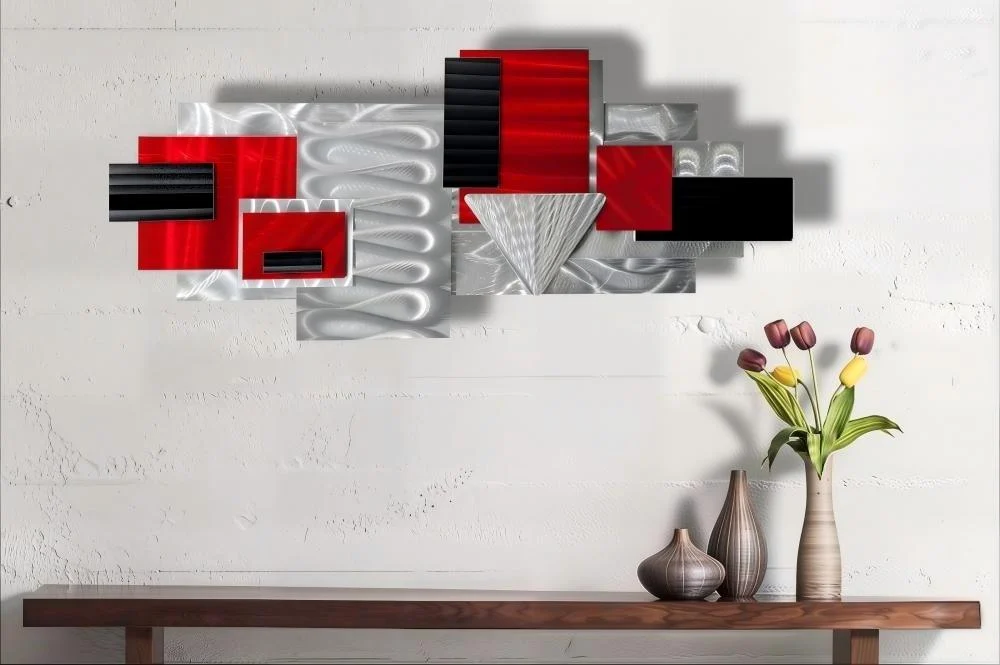
Major B2B Sourcing Platforms
For most buyers, the search for a metal wall art supplier starts online. Three platforms dominate B2B sourcing from China:
Alibaba is the largest global B2B marketplace and offers the widest selection of metal wall art manufacturers. When vetting suppliers, look for the “Verified Supplier” badge, Trade Assurance coverage, and on-time delivery rates above 90%. Filter by transaction history and reorder rates — a high reorder rate indicates buyers are returning, which is a strong signal of consistent quality.
Made-in-China.com focuses specifically on Chinese manufacturers and is well-suited for industrial and decorative goods. It lists factory profiles with certifications, inspection reports, and product catalogs that make comparison easier.
Global Sources is another reliable platform, particularly for buyers in Europe and North America. It tends to feature mid-to-large factories with strong export track records and is a good option if you’re sourcing wholesale metal wall decor at higher volumes.
Tips for filtering suppliers on any platform:
| Indicator | What to Look For |
|---|---|
| Supplier type | “Manufacturer” rather than “Trading Company” for better pricing |
| Response time | Under 24 hours shows reliability |
| On-time delivery rate | 90%+ preferred |
| Reorder rate | Higher rates indicate buyer satisfaction |
| Certifications | ISO 9001, SGS audit reports |
| Sample availability | Willingness to send samples before bulk order |
Always contact at least five to eight suppliers before shortlisting. Compare quotes carefully — the lowest price is not always the best value.
Trade Shows Worth Attending
Online platforms are efficient, but nothing replaces meeting suppliers face to face. China hosts several major trade shows where metal home decor manufacturers exhibit:
Canton Fair (China Import and Export Fair), held twice yearly in Guangzhou, is the world’s largest trade fair and features thousands of metal wall art and home decor manufacturers. It’s the most comprehensive option for sourcing a wide range of products in one trip.
Yiwu International Commodities Fair (Yiwu Fair), held annually in Zhejiang, is particularly strong for small-to-medium wholesale metal wall decor buyers. Yiwu’s commodity market is one of the largest in the world for decorative goods, and attending gives you access to factory representatives, live samples, and real-time negotiation.
Attending trade shows lets you assess product quality in person, compare multiple suppliers side by side, and build the kind of direct relationships that often lead to better pricing and priority service.
Working with a China Sourcing Agent
For buyers who don’t have the time or resources to manage sourcing independently, a China sourcing agent can be a high-value investment. A professional sourcing agent handles the entire process on your behalf — from identifying qualified metal wall art suppliers to factory audits, sample coordination, price negotiation, quality inspection, and export documentation.
The right sourcing partner dramatically reduces risk. They understand local business culture, speak the language, and have existing relationships with vetted manufacturers. This is especially important when placing your first order or when sourcing custom metal wall art that requires back-and-forth on specifications.
At UTsourcing, we specialize in end-to-end product sourcing from China for B2B buyers across retail, e-commerce, and interior design. If you’re looking to streamline your metal wall art sourcing process, our team is ready to help. Get in touch with us to start a conversation about your sourcing needs.
Evaluating Metal Wall Art Quality Before You Order
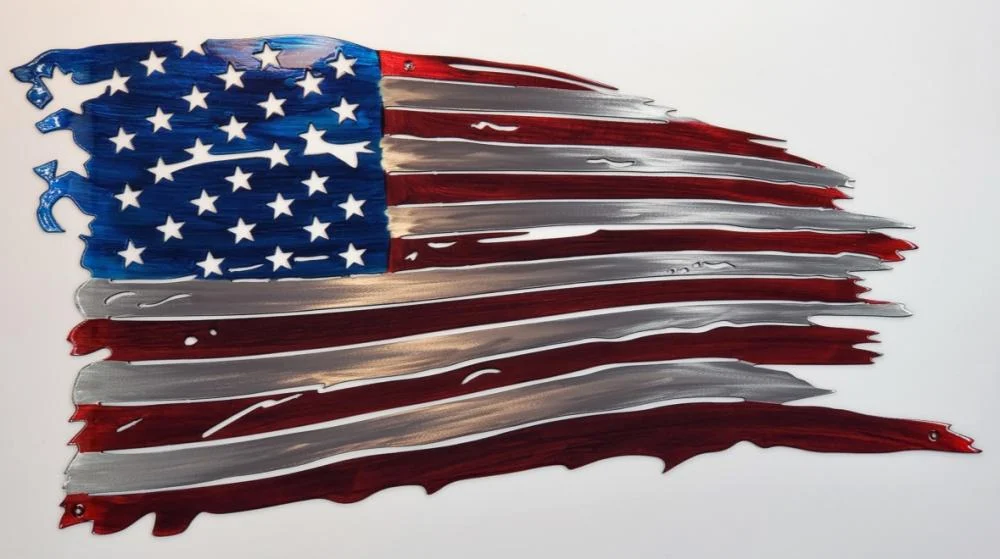
Key Materials and Their Pros & Cons
The material used in metal wall art directly affects durability, appearance, weight, and price. Understanding your options helps you match the right product to your target market.
| Material | Durability | Best For | Relative Cost | Notes |
|---|---|---|---|---|
| Mild Steel | High | Indoor wall art, large formats | Low–Medium | Heavy; prone to rust without proper coating |
| Wrought Iron | Very High | Traditional/rustic styles | Medium | Dense and durable; common in handcrafted designs |
| Aluminum | Medium–High | Lightweight pieces, outdoor use | Medium | Naturally corrosion-resistant; easier to ship |
| Stainless Steel | Very High | Modern/commercial applications | High | Excellent finish; ideal for high-end metal home decor |
| Corten Steel | Very High | Outdoor/architectural art | Medium–High | Weathers to a rust-like patina; intentionally aged look |
For most retail buyers sourcing wholesale metal wall decor, mild steel with a powder-coated finish offers the best balance of quality, cost, and visual appeal. For outdoor or hospitality applications, aluminum or corten steel are worth the premium.
Surface Finishing & Coating Standards
The surface finish on metal wall art serves two purposes: aesthetics and protection. The most common finishing methods used by Chinese factories include:
Powder Coating is the industry standard for metal wall art. It involves applying a dry powder electrostatically to the metal surface, then curing it at high heat (around 180°C). The result is a smooth, durable finish that resists chipping, fading, and corrosion. Quality powder coating uses reputable brands such as Akzo Nobel, PPG, or Axalta, and should pass an adhesion test (ISO 2409 cross-hatch method) before shipping.
Electrostatic painting is a similar technique using liquid paint. It offers a wider color range but generally lower durability than powder coating.
Galvanizing involves coating the metal in a layer of zinc, providing strong rust resistance. It’s commonly used as an undercoat before further finishing on outdoor metal home decor.
Patina and antiquing treatments are used for decorative effect — popular for rustic and vintage-style metal wall art.
When discussing finishes with your supplier, always ask for test reports on coating thickness (measured in microns) and adhesion standards. A reputable factory should be able to provide this documentation.
Quality Inspection Checklist
Before your order ships, a systematic quality inspection is essential. Whether you use a third-party inspection service or coordinate with your China sourcing agent, the following checklist covers the critical points for metal wall art:
- Weld quality: Smooth, consistent welds with no visible gaps, spatter, or cracks
- Coating adhesion: Pass the cross-hatch adhesion test (ISO 2409); no flaking or peeling
- Coating appearance: No pin holes, discoloration, craters, fish eye, or sags
- Dimensional accuracy: Verify dimensions match the approved sample within agreed tolerances
- Weight consistency: Spot-check weights across the batch to detect material substitutions
- Packaging integrity: Inner foam or carton inserts are secure; pieces should not shift during transit
- Rust and oxidation: Check cut edges and welded areas for any rust spots before coating
- Hanging hardware: Test mounting brackets or D-rings for load-bearing capacity
For new suppliers, always commission a pre-shipment inspection through a third-party service such as SGS, Bureau Veritas, or QIMA. The cost is typically USD 200–300 per inspection day and is money well spent on your first few orders.
Understanding MOQ, Pricing, and Payment Terms
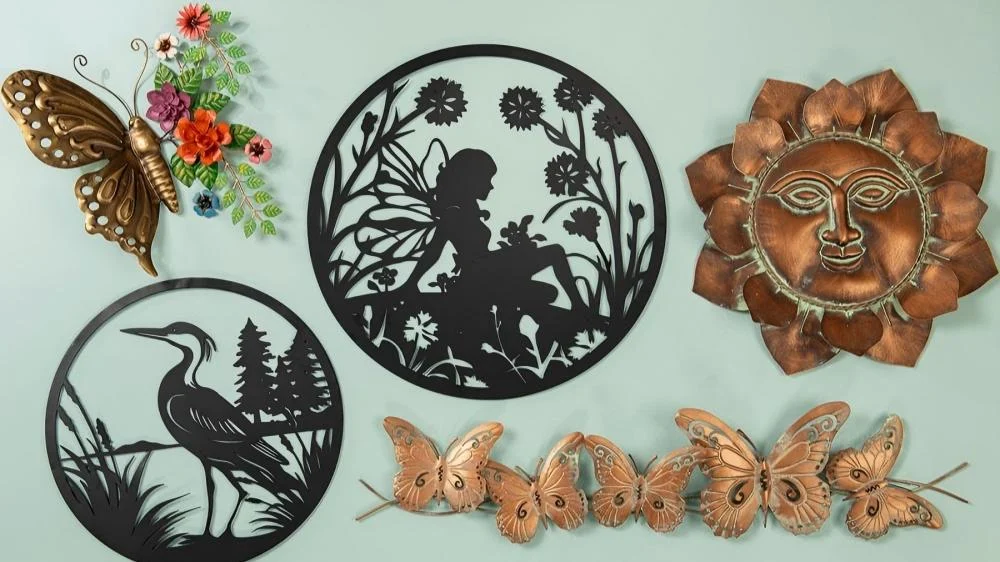
Minimum Order Quantity (MOQ) Explained
Minimum order quantity is one of the first things B2B buyers encounter when sourcing metal wall art from China. MOQ varies significantly based on factory size, product complexity, and whether the order is for standard or custom metal wall art.
Typical MOQ ranges for metal wall art:
- Large factories (high-volume exporters): 500–1,000 pieces per design
- Mid-size factories: 100–500 pieces per design
- Small/artisan factories: 50–100 pieces; sometimes lower for standard catalog items
If you’re a first-time importer, a high MOQ can feel like a barrier. There are a few ways to work around it:
- Mixed-SKU orders: Many factories allow you to combine multiple designs to hit the MOQ threshold, rather than ordering all one design
- Negotiate directly: For buyers willing to commit to repeat orders, suppliers often lower the initial MOQ to establish the relationship
- Use a sourcing agent: A sourcing agent with existing supplier relationships can often negotiate better MOQ terms than a new buyer approaching cold
It’s worth noting that minimum order quantity is almost always negotiable, especially if you’re clear about your long-term purchasing intention.
Price Breakdown: What Affects the Cost of Wholesale Metal Wall Decor
Understanding what drives the price of wholesale metal wall decor helps you evaluate quotes more accurately and negotiate with confidence.
Key pricing factors include:
- Material: Stainless steel and corten steel cost more than mild steel or iron
- Size and weight: Larger pieces require more raw material and are more expensive to package and ship
- Design complexity: Intricate laser-cut patterns, 3D layering, and handcrafted details add production time and cost
- Surface finish: Multi-step finishing processes (e.g., base coat + powder coat + antiquing) increase cost vs. single-step powder coating
- Packaging: Custom-branded packaging, foam inserts, and individual polybags all add to unit cost
- MOQ: Lower-MOQ orders typically carry higher per-unit pricing
A basic mild steel metal wall art piece in a standard size (e.g., 60 x 60 cm) from a mid-size Chinese factory might run USD 8–18 per unit at MOQs of 200–500 pieces. Larger, more complex pieces or those made from premium materials can reach USD 30–60+ per unit. Always request an itemized quotation so you can see where the cost is coming from.
Common Payment Methods and Risk Management
Payment terms are a critical part of managing risk when importing metal wall art from China. The most common payment methods are:
T/T (Telegraphic Transfer / Bank Wire): The most widely used method in China trade. The standard structure is 30% deposit before production, 70% balance before shipment. For new suppliers, consider paying the balance after receiving a pre-shipment inspection report.
Letter of Credit (L/C): Offers stronger protection for both parties by using a bank as intermediary. Best suited for large orders (typically USD 20,000+) where the added bank fees are justified by the risk reduction.
Alibaba Trade Assurance: A platform-based protection tool that holds your payment in escrow until you confirm receipt of goods. Highly recommended for first orders placed through Alibaba.
PayPal: Occasionally used for small sample orders. Not recommended for bulk orders due to high fees and limited protection above a certain transaction value.
Never pay 100% upfront to a new supplier. Using Trade Assurance or a partial deposit structure protects you if the supplier fails to deliver or delivers substandard goods.
Shipping Metal Wall Art from China: Logistics & Import Tips
Choosing Between Sea Freight and Air Freight
Metal wall art is relatively heavy and bulky, which makes shipping method selection an important cost decision.
Sea freight (FCL or LCL) is the standard choice for bulk orders. It offers the lowest cost per unit but takes longer — typically 20–40 days from Chinese ports to the US or Europe, depending on origin and destination.
- FCL (Full Container Load): Cost-effective for large orders. A 20-foot container holds approximately 25–28 CBM of cargo, suitable for larger wholesale shipments
- LCL (Less than Container Load): Your cargo is consolidated with other shipments. Good for mid-size orders where you don’t fill a full container
Air freight is viable for urgent, high-value, or small-quantity orders. Transit time is typically 5–10 days, but cost per kg is 5–8x higher than sea freight. For most wholesale metal wall decor orders, air freight only makes sense for samples or rush replenishments.
A rough cost comparison for a 500-piece order of mid-size metal wall art (approx. 2 CBM total):
| Method | Estimated Cost | Transit Time |
|---|---|---|
| LCL Sea Freight (China → USA) | USD 300–500 | 25–35 days |
| Air Freight (China → USA) | USD 1,200–2,000 | 5–8 days |
Always get freight quotes from at least two or three forwarders and factor insurance costs into your landed cost calculation.
Packaging Requirements for Metal Wall Art
Metal wall art is susceptible to surface scratches, coating damage, and structural bending during transit. Good packaging is not optional — it directly affects your return and damage rate.
Best practices for metal wall art shipping packaging:
- Individual poly bag or foam sleeve: Protects the coating surface from scratches
- Cardboard corner protectors: Prevent edge damage during handling
- EPE or pearl cotton inner lining: Cushions the piece inside the carton
- Double-wall export cartons: Standard for pieces over 2 kg
- Clear product labeling: Carton labels should include SKU, dimensions, weight, and destination address
For large or irregularly shaped pieces, some factories use wooden crates or custom-formed foam inserts. This adds cost but significantly reduces damage rates for high-value orders.
Before placing a bulk order, ask your supplier to photograph the packaging method and, if possible, request a destructive pack test on a sample carton.
Import Duties, HS Codes, and Compliance
Getting the HS code right is essential for smooth customs clearance and accurate duty calculation. Metal wall art manufactured goods (mass-produced, non-original artworks) are typically classified under HS Code 7326.90 (other articles of iron or steel) or HS Code 8306.29 (statuettes and other ornaments of base metal). The correct code depends on the specific product type and country of import.
It’s important to note: mass-produced decorative metal wall art is classified differently from original, handmade works of art. Original artworks may qualify for duty-free treatment under Chapter 97 of the Harmonized Tariff Schedule, but most wholesale metal wall decor does not meet this threshold.
Key compliance considerations for US importers:
- Section 301 Tariffs: As of 2025, many metal goods imported from China are subject to additional tariffs under Section 301. Steel and aluminum derivative products may be subject to a 25% duty under HTSUS 9903.81.87. Always verify current rates with your customs broker before placing large orders, as tariff policy changes frequently.
- CPSC compliance: For metal wall art sold in the US retail market, ensure products meet CPSC safety standards, particularly if marketed for use near children
- California Prop 65: If selling in California, coatings and materials must comply with Proposition 65 limits on certain chemicals
Working with a licensed customs broker is strongly recommended for first-time importers. They can verify HS codes, calculate landed costs accurately, and ensure your documentation package — commercial invoice, packing list, bill of lading, and certificate of origin — is complete before the shipment arrives.
Final Thoughts
Importing metal wall art from China is a proven sourcing strategy for B2B buyers across retail, e-commerce, and commercial interiors. The combination of large-scale manufacturing capacity, deep customization options, and competitive pricing makes China the dominant global supplier of metal wall decor. But like any international trade process, success depends on doing the groundwork: finding qualified suppliers, verifying quality before shipment, understanding your cost structure, and getting your logistics and compliance right from the start.
The buyers who get the most out of China sourcing are those who treat it as a system — not a one-time transaction. Building long-term relationships with reliable metal home decor manufacturers, investing in quality inspection, and working with experienced partners makes every subsequent order smoother, faster, and more profitable.
Looking for a smarter way to source metal wall art from China? UTsourcing provides end-to-end B2B sourcing services — from supplier verification and factory audits to quality control and shipment coordination. Contact our team to learn how we can help streamline your supply chain.