
China remains the world’s top sourcing destination for retailers, brand owners, and eCommerce sellers. But if this is your first attempt to find suppliers in China, the process can feel overwhelming. Thousands of factories and trading companies compete for your attention, and it is not always easy to tell a reliable partner from a risky one. This guide breaks the process into clear, practical steps so you can move from “where do I even start” to placing your first confident order.
We will cover who you’re actually dealing with when you contact a supplier, where to look, how to screen candidates quickly, and what due diligence looks like before you commit real money. Along the way, we will point out the mistakes that trip up most first-time buyers, so you can skip them entirely and find suppliers in China with far less guesswork than most new importers experience. This guide focuses specifically on finding and vetting suppliers; for the full sourcing process end to end, including fees, MOQs, and shipping, see our complete guide to sourcing from China in 2026.
Most first-time buyers approach this task the same way: they open a search engine, type in a product name, and start messaging every result. This scattershot method wastes time and often surfaces the loudest sellers rather than the most capable ones. A more structured approach, built around clear filters and a repeatable checklist, helps you find suppliers in China faster and with far fewer wasted conversations.
Key Takeaways
- Know whether you’re talking to a manufacturer or a trading company before you negotiate price. Trading companies typically add a 10-30% markup but offer more flexibility on small orders.
- Five channels cover most sourcing needs: B2B platforms, offline wholesale markets like Yiwu, trade shows, sourcing agents, or a mix of these.
- An Alibaba “Verified Supplier” badge means a third-party on-site audit happened. “Gold Supplier” only confirms basic registration and a paid membership. Don’t treat them as equivalent.
- Budget $300-$1,500+ for a third-party factory audit depending on the firm, and plan for at least one quality inspection before goods leave the factory.
Know Who You’re Actually Talking To Before You Start
Before you try to find suppliers in China, it helps to understand who you are actually talking to. Not every seller on a B2B platform runs a factory. Many are trading companies, agents, or resellers working on commission. Knowing the difference changes how you negotiate price, communicate specifications, and plan your quality control from day one.
This distinction matters more than most beginners realize. A buyer who assumes every contact is a factory owner often ends up paying trading-company margins without getting trading-company convenience, like combined shipments or multi-category sourcing. Understanding your counterpart early saves both time and money, and it also shapes how quickly you can find suppliers in China who genuinely match your product and volume needs.
Manufacturer vs Trading Company: What’s the Real Difference
The manufacturer vs trading company question is one of the first things every new buyer should sort out. A manufacturer owns or operates the production line that makes your product. A trading company, by contrast, buys from one or more factories and resells to you, often adding a markup of 10 to 30 percent. Working directly with a manufacturer usually means lower unit prices, but it also means you handle more of the coordination yourself, including quality checks and sometimes higher minimum order quantities.
Trading companies offer a different value: they can bundle products from multiple factories into a single shipment, speak fluent English more often, and tend to be more flexible on small orders. For a first-time buyer testing a new category, that flexibility can outweigh the price gap. The manufacturer vs trading company decision ultimately depends on your order volume, product complexity, and how much hands-on management you are ready to take on.
There is also a middle option many buyers overlook: some trading companies specialize deeply in one category and maintain long-term exclusive arrangements with a handful of factories. In practice, these specialists can offer pricing close to a factory-direct deal while still providing the communication support and order flexibility of a trading company. Asking a potential supplier how long they have worked with their production partners is a simple way to spot this middle ground.
| Factor | Manufacturer | Trading Company |
|---|---|---|
| Unit price | Lower, factory-direct | Higher, includes margin |
| MOQ | Often higher | More flexible, lower MOQ |
| Communication | Can be limited | Usually strong English support |
| Multi-category orders | Difficult, single product line | Easy, one point of contact |
| Quality control | Buyer must manage directly | Trading company often assists |
Why Understanding Supplier Type Is the First Real Step
Many new buyers waste weeks negotiating with a contact who cannot actually confirm production specs, because that contact is a salesperson at a trading firm rather than the factory itself. Before you invest time in a relationship, ask directly whether they are a manufacturer or a trading company, and request to see the factory’s business license and production address.
Reputable wholesale suppliers in China answer this question without hesitation. Vague or evasive answers are an early warning sign worth taking seriously, and they usually signal that deeper checks are needed before you move forward.
Getting this classification right also affects your budget planning. If you are comparing quotes from several wholesale suppliers in China and the prices vary widely for what looks like the same product, the gap is often explained by one contact being a factory and another being a middleman two or three layers removed from production.
Five Channels to Find Suppliers in China
There is no single best way to find suppliers in China. Each channel below fits different budgets, timelines, and product types. Most experienced buyers end up using two or three of these together rather than relying on just one, and combining channels is often the fastest route to reliable wholesale suppliers in China.
B2B Platforms: Alibaba, Global Sources, and Made-in-China
Alibaba.com is the largest starting point for most international buyers, and it now labels higher-quality sellers with a “Verified Supplier” badge. This form of Alibaba supplier verification requires an independent on-site audit by firms like SGS, TÜV, or Intertek, covering business registration, production capacity, equipment, staffing, and quality management systems. Global Sources and Made-in-China work in a similar way, though Global Sources leans toward electronics and hardware, while Made-in-China has strong coverage of industrial and mechanical products.
Trade Assurance, Alibaba’s free buyer protection program, is worth using whenever a supplier accepts it. It holds your payment until the order matches the agreed quantity, quality, and delivery date, which is far safer than wiring funds directly to a private bank account.
That said, Alibaba supplier verification badges are a starting filter, not a guarantee. An older tier called Gold Supplier mainly confirms basic business registration and a paid membership, with no on-site audit involved, so treat platform status as one input among several rather than the final word on reliability.
Search filters on these platforms also matter more than most buyers realize. Narrowing results by “Verified Supplier,” minimum years in business, and response rate cuts a list of hundreds down to a manageable shortlist within minutes. It is still worth messaging five or six candidates rather than one, since response quality, not just price, tells you a great deal about how a supplier will handle problems later in the relationship.
Offline Wholesale Markets: The Yiwu Market Advantage
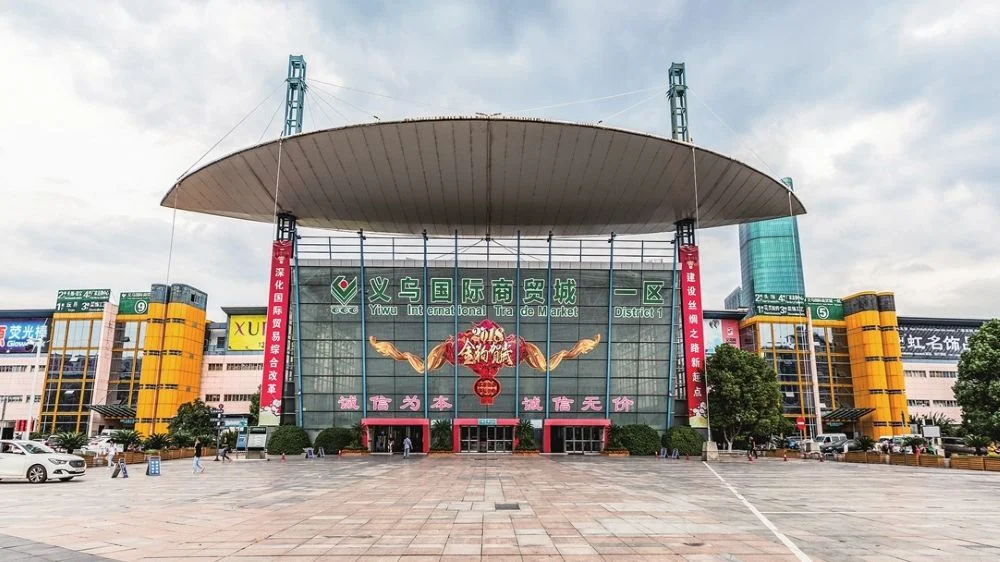
For small commodities, gifts, and seasonal goods, physically walking a wholesale market remains one of the fastest ways to compare products and prices side by side. The Yiwu market, officially called Yiwu International Trade City, is the best-known example. It is widely recognized as the world’s largest wholesale market for small commodities, spanning 6.4 million square meters across five districts with more than 2.1 million products across 26 categories (Daxue Consulting).
The Yiwu market draws hundreds of thousands of international buyers each year and covers dozens of product categories, from toys and jewelry to hardware and holiday decorations. Because so many vendors sit within walking distance of each other, first-time buyers can compare pricing, minimum order quantities, and sample quality in a single afternoon.
Many buyers now use a local sourcing agent to guide them through the Yiwu market, since navigating tens of thousands of booths without direction can burn several days with little to show for it.
If your product fits the small commodity category, the Yiwu market is often faster than online searching alone. You can hold a sample, negotiate a price on the spot, and confirm minimum order quantities before you ever place a formal order, which shortens the entire process to find suppliers in China for fast-moving consumer goods.
Trade Shows: Canton Fair and Industry-Specific Events
The China Import and Export Fair, commonly known as the Canton Fair, is held twice a year in Guangzhou and is one of the largest trade fairs in the world, covering nearly every product category. Attending in person lets you meet factory representatives face to face, inspect physical samples, and start building the kind of relationship that is harder to establish through chat messages alone.
Smaller, industry-specific fairs, such as those for furniture, toys, or electronics, can be even more efficient if your product category is narrow.
Trade shows also give you a chance to compare several wholesale suppliers in China within a single hall, which is difficult to replicate online. Bring a clear product brief, target price, and expected order volume so conversations move quickly instead of starting from scratch with every booth you visit.
Working With a China Sourcing Agent
A China sourcing agent acts as your local representative, handling supplier searches, factory visits, price negotiation, and sometimes quality inspection on your behalf. This option is especially useful if you do not speak Mandarin, cannot travel to China, or simply want to reduce the time spent screening unreliable contacts. Good agents also understand regional manufacturing clusters, so they can point you toward the right city or district for your specific product instead of a generic supplier list.
Choosing a China sourcing agent is not just about outsourcing effort. It is about tapping into local relationships and market knowledge that would otherwise take years to build on your own. A capable China sourcing agent can also help you verify Chinese supplier credentials in person, something that is nearly impossible to do reliably from overseas. For a full breakdown of what agents charge and where hidden fees hide, see our guide on China sourcing agent fees and hidden traps.
Fees vary widely, from a flat service charge per shipment to a small percentage of order value, so it is worth clarifying pricing structure before committing to a long-term arrangement.
If you would rather skip weeks of trial and error, UTSourcing’s team works daily with verified factories across Yiwu, Guangzhou, and other manufacturing hubs, and can manage the entire process from supplier shortlist to final shipment. This kind of hands-on support is often the difference between a first order that goes smoothly and one that turns into a costly lesson.
How to Screen Suppliers Quickly and Filter Out Risk
Once you have a list of candidates, the next step is narrowing it down fast. You do not need to deeply vet every contact, but you do need a consistent filter to eliminate obvious risks before investing more time. This is also the stage where most buyers start to seriously verify Chinese supplier claims instead of taking them at face value.
Checking Business Licenses and Company Records
Every legitimate Chinese company must register with the State Administration for Market Regulation, and that record is publicly searchable through platforms like Qichacha (企查查) or Tianyancha (天眼查). These tools show registered capital, business scope, years in operation, and any legal disputes. This step is one of the fastest ways to verify Chinese supplier legitimacy before a single message is exchanged. A mismatch between what a supplier claims to sell and what their registered business scope allows is a red flag worth asking about directly.
Reading Alibaba Verification Badges Correctly
Understanding Alibaba supplier verification labels helps you avoid over-trusting a badge that does not mean what it sounds like. “Verified Supplier” involves an on-site third-party audit, typically by firms like SGS or TÜV, and covers company profile, production capability, and process controls. “Gold Supplier,” an older and less rigorous tier, mainly confirms basic business registration and a paid membership fee.
Trade Assurance is a payment protection tool, not a quality certification. Knowing these distinctions during Alibaba supplier verification prevents buyers from assuming too much protection from a single icon, and it is a core part of learning to verify Chinese supplier credentials correctly before you commit to an order.
Spotting Common Scam Signals Early
A small number of warning signs cover most supplier scams. Watch for these patterns:
- Insistence on full payment upfront, with no willingness to discuss partial deposits
- Refusal to do a live video call showing the actual factory floor
- Prices dramatically below every competitor for the same specifications
- Pressure to move communication off the platform immediately
- No verifiable business license, or a registered address that does not match the company name
None of these signs alone proves fraud, but two or more together should slow you down and prompt extra verification before sending money. Taking the time to verify Chinese supplier details early is far cheaper than recovering funds after a bad payment.
Due Diligence: From First Contact to Confirmed Order
Screening filters out the worst candidates. Supplier due diligence China buyers rely on goes deeper, confirming your finalist can actually deliver what you need, at the quality and price you agreed on, before you place a full production order.
Writing an RFQ That Gets Useful Replies
A vague inquiry gets a vague, copy-paste reply. A strong Request for Quotation should include exact product specifications, target unit price, intended market or country, expected order quantity, and any required certifications such as CE, REACH, or ASTM F963 for children’s products.
Suppliers who respond with specific, tailored answers to a detailed RFQ are usually more serious and more experienced with export orders than those who send a generic price list. This is often the first real test of supplier due diligence China buyers should not skip.
Remote Factory Verification and Third-Party Audits
You do not need to fly to China to complete meaningful supplier due diligence China requires. A live video call, where the supplier walks you through the actual production floor, warehouse, and quality control station, reveals a lot in twenty minutes. For larger orders, hiring an independent inspection firm such as SGS or Bureau Veritas to conduct a factory audit adds a professional layer of verification, covering equipment, staffing, and certifications without requiring your own travel.
MOQ Negotiation and Payment Terms for First Orders
MOQ negotiation is often more flexible than the number on a product listing suggests, especially for a first order where the supplier is trying to win a long-term customer. It helps to be upfront that you are testing the product and market, and to ask directly whether a smaller trial order is possible even at a slightly higher unit price. Successful MOQ negotiation usually depends on framing the smaller order as the start of a longer relationship rather than a one-time favor.
On payment, a common and safer structure for new relationships is a 30 percent deposit before production and the remaining 70 percent after inspection, just before shipment. This keeps your exposure limited if something goes wrong midway, and it is a standard part of MOQ negotiation conversations once both sides agree on quantity and price.
| Due Diligence Step | Why It Matters | Typical Cost |
|---|---|---|
| Business license check | Confirms legal registration and scope | Free to low-cost |
| Video factory call | Visual confirmation of real operations | Free |
| Third-party factory audit | Independent, detailed capability report | $300–$1,500+ per audit, depending on the firm and factory location |
| Sample order | Tests actual product quality | Varies by product |
| Trade Assurance / escrow | Protects payment until delivery | Free on eligible platforms |
After You Place the Order: Inspection and Shipping Basics
Finding a supplier is only half the job. What happens after the order is confirmed determines whether your first shipment actually meets expectations, and it also determines how smoothly you will import from China the next time around.
Why Product Quality Inspection Matters for First Orders
Product quality inspection should happen at least once before goods leave the factory, and ideally twice for larger orders: once during mid-production and again just before the shipment is loaded. Most inspectors use the AQL, or Acceptable Quality Limit, sampling standard, which sets a statistically sound number of units to check based on your total order size.
Skipping product quality inspection on a first order is one of the most common and costly mistakes new importers make, since defects caught after arrival are far more expensive to fix.
Booking product quality inspection through a third-party firm rather than relying on the supplier’s own report is worth the modest added cost. An independent inspector has no incentive to overlook problems, which gives you an honest picture before the goods leave China.
Avoiding Common Shipping and Incoterm Mistakes
First-time buyers often misunderstand shipping terms, which can quietly add cost or delay when you import from China for the first time. Under FOB, or Free On Board, the supplier handles delivery to the origin port, and you take over shipping and import costs from there. Under CIF, or Cost, Insurance, and Freight, the supplier arranges and pays for shipping to your destination port, though you still cover import duties and clearance.
Neither term is universally better; the right choice depends on whether you already have a trusted freight forwarder and how much control you want over the shipping leg.
If you plan to import from China regularly, building a relationship with one reliable forwarder pays off quickly, since consistent Incoterm choices simplify your accounting and reduce miscommunication over who owes what at each stage. Buyers who import from China as a recurring part of their business also benefit from keeping HS codes and duty rates on file for each product, so landed cost estimates stay accurate order after order.
It is also worth checking whether your product category is subject to Section 301 tariffs or any additional compliance requirements, such as CE marking, UKCA marking, or BSCI social compliance audits, before your first shipment leaves the factory. Confirming these details early prevents costly surprises at customs and keeps your total landed cost close to your original budget.
Conclusion
Learning how to find suppliers in China comes down to four connected steps: choosing the right sourcing channel, screening candidates quickly, running proper due diligence, and managing quality and shipping carefully after the order is placed. Each step reduces risk and builds the foundation for a supplier relationship that can grow over time. If you would rather skip the learning curve, UTSourcing can manage sourcing, verification, and quality inspection on your behalf, so your first order becomes a confident one rather than a gamble.