
EU compliance for goods sourced from China covers three separate layers: product safety marks, chemical regulations, and customs paperwork. Missing any one of them can hold a shipment at port or get a listing removed after launch. This checklist breaks down exactly what applies, in what order, and what each step actually requires.
If you read our case study on a European buyer’s CE marking journey, this article is the reference checklist behind it — the full picture of what EU compliance actually demands, organized so you can work through it step by step rather than discovering gaps one shipment at a time.
Getting import compliance right the first time matters more than it used to. EU market surveillance has tightened considerably, customs enforcement now cross-references declarations against product registries in real time, and the cost of catching a gap after a shipment has already left China is almost always higher than catching it before production finishes.
Who This Checklist Is For
This guide is written for buyers new to shipping from China into the EU or UK — small business owners, independent sellers, and growing brands who haven’t yet built out a dedicated compliance team. If you already have an in-house regulatory affairs function, most of this will be familiar. If you don’t, treat this as the sequence to follow before your next order ships.
What EU Compliance Actually Covers
Three Separate Systems, Not One Checkbox
Buyers new to European import compliance often assume there’s a single approval process to complete. In reality, EU compliance splits into three distinct systems, each governed by different rules and different authorities.
Product safety falls under CE marking, covering directives specific to your product category — electronics, toys, machinery, and more. Chemical safety falls under REACH compliance, covering any substance in the product regardless of category. Customs and market entry falls under a separate set of documentation requirements, including EORI registration and import declarations.
A product can pass CE marking and still fail a customs check over missing paperwork. Treating these as one combined process is the single most common reason shipments get delayed at EU ports.
Why the Order Matters
Working through these systems in the wrong order wastes time and money. CE marking and REACH testing should happen before production finishes, since failed tests may require design or material changes. Customs documentation, by contrast, gets prepared once the product itself is finalized and ready to ship.
Buyers who leave compliance until the shipment is already at the dock typically face one of two outcomes: a costly hold while documentation is rushed, or a rejected entry that sends the shipment back to origin. Neither is cheap, and both are avoidable with the right sequencing.
A Realistic Compliance Timeline
Mapping each step against your production schedule makes the sequencing concrete rather than abstract:
| Timeframe | What Should Be Happening |
|---|---|
| 8-10 weeks before shipping | Confirm which directives apply to your product; request CE and REACH test quotes |
| 6-8 weeks before shipping | Submit samples for CE and REACH testing (run in parallel where possible) |
| 4-6 weeks before shipping | Review test results; address any failures before bulk production locks in |
| 2-3 weeks before shipping | Register for EORI if not already done; confirm Importer of Record arrangement |
| 1-2 weeks before shipping | Finalize commercial invoice, packing list, and certificate of origin |
| At shipping | Confirm HS code classification matches the actual product description |
This timeline assumes no failed tests requiring redesign. Buyers working with unfamiliar suppliers or newly developed products should budget extra buffer time, since a failed CE or REACH test can add another testing cycle before production can proceed.
Step 1: CE Marking Requirements
What CE Marking Confirms
CE marking is a self-declaration, not a purchased certificate. It confirms that a manufacturer or importer has tested the product against relevant EU safety directives and can produce documentation proving it. Products commonly requiring CE marking include electronics, toys, machinery, personal protective equipment, and medical devices.
The Core CE Documentation Set
Before any product ships, buyers should confirm their supplier can provide:
- Declaration of Conformity (DoC), naming the specific directives and standards tested against
- Test reports from an accredited laboratory, matched to the exact product model
- Technical file, documenting the risk assessment and design specifications
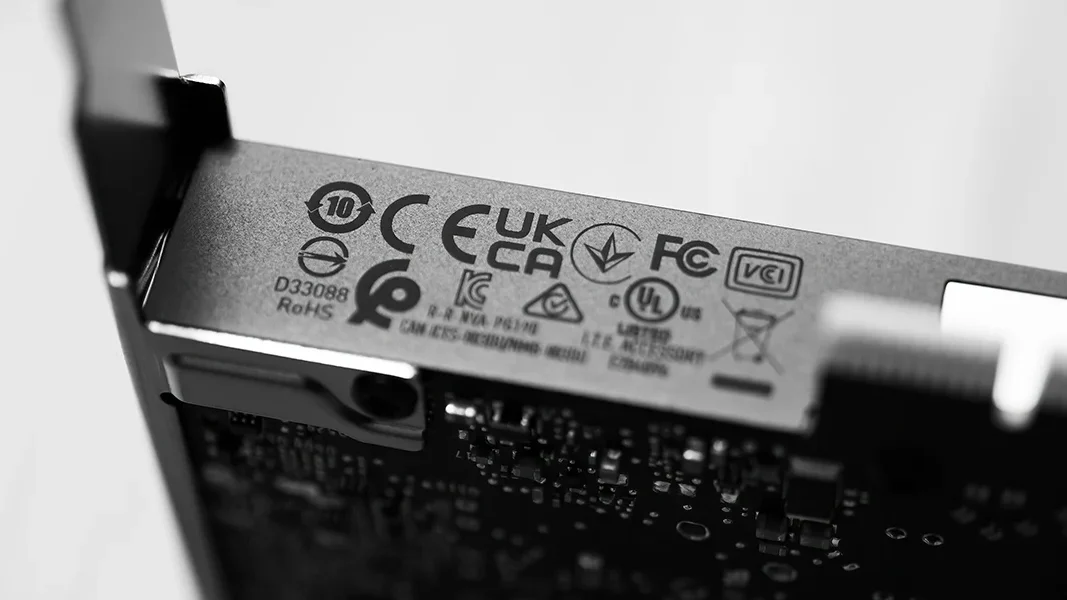
- Correct CE logo placement, distinct from the unofficial “China Export” symbol that looks nearly identical
CE Testing Cost by Product Category
| Product Type | Typical Cost | Directives |
|---|---|---|
| Battery-powered electronics | $500–$850 | EMC |
| AC-powered electronics | $700–$1,200 | EMC + LVD |
| Wireless devices | $800–$1,400 | EMC + Radio Equipment |
| Toys | Varies with EN71 scope | Toy Safety + EN71 |
| Machinery | $1,200+ | Machinery Directive |
Testing typically takes four to six weeks from sample submission to final report. Building this timeline into your production schedule avoids the common mistake of treating CE marking as a last-minute step before shipping.
Step 2: REACH Compliance for Chemical Substances
What REACH Covers That CE Doesn’t
REACH compliance addresses chemical substances in a product — dyes, coatings, plastics, metal finishes — independent of product safety directives. Nearly every product category faces some REACH exposure, including textiles, furniture, and cosmetics that may not require CE marking at all.
The core threshold to know: any Substance of Very High Concern (SVHC) on the current candidate list must stay below 0.1% by weight in the finished product. That candidate list updates twice yearly, so a compliant product can require retesting if a new substance is added later.
REACH Testing Cost and Scope
Standard material testing for a single component or color typically runs $220 to $450, with broader SVHC screening across multiple materials reaching $450 to $900. Products with several distinct components — a mixed-material toy, for instance, or a coated metal item — often need multiple separate tests rather than one blanket screening.
Non-compliance carries real financial risk beyond a failed shipment: REACH violations can draw fines in the range of €10,000 to €50,000 or more per violation, depending on the member state and severity of the breach.
Step 3: UKCA Marking for the UK Market
Why UKCA Is a Separate System
UKCA marking applies specifically to Great Britain — England, Scotland, and Wales — following the UK’s departure from the EU regulatory framework. It is not interchangeable with CE marking, even though the underlying safety standards frequently overlap. Northern Ireland currently follows a different, EU-aligned arrangement, adding a third layer of complexity for buyers selling across the full UK and Ireland market.
When UKCA Actually Applies
Buyers selling only within the EU don’t need UKCA marking at all. It becomes relevant specifically when a business plans to sell into Great Britain, whether through a UK-based storefront, marketplace listing, or direct-to-consumer shipping. Testing costs and documentation requirements for UKCA closely mirror CE marking in scope, but the certificates themselves are not transferable between the two systems.
CE, REACH, and UKCA Side by Side
| System | Governs | Applies To | Required Documentation |
|---|---|---|---|
| CE Marking | Product safety directives | EU + EEA | DoC, test reports, technical file |
| REACH Compliance | Chemical substances | EU + EEA | SVHC screening, material test reports |
| UKCA Marking | Product safety directives | Great Britain only | Separate DoC, UK-specific test reports |
Step 4: Customs and Import Documentation
Registering as an Importer
Before any goods can clear EU customs, the importing business needs an EORI number (Economic Operators Registration and Identification), obtained through the customs authority of the first EU member state where goods will enter. Without it, customs clearance simply cannot proceed, regardless of how complete the product compliance documentation is.
Non-EU businesses selling into the EU also need to establish who serves as Importer of Record (IOR) — the entity legally responsible for the shipment’s compliance and duties. This can be the buyer’s own EU-registered entity or a third-party customs broker acting on their behalf.
The Core Document Set for Customs Clearance
Every shipment entering the EU needs a baseline set of documents, regardless of product category:
- Commercial invoice, matching the declared value and product description
- Packing list, itemizing contents by quantity and weight
- Transport documents, such as a bill of lading or airway bill
- Certificate of origin, particularly relevant if claiming preferential duty rates under a trade agreement
- Single Administrative Document (SAD) or electronic customs declaration equivalent
HS Codes and Duty Rates
Correct classification under the Harmonized System (HS) determines the duty rate applied to a shipment, which typically ranges from 0% to 20% ad valorem depending on the product category. Misclassifying a product — intentionally or by mistake — is one of the fastest ways to trigger a customs audit, since declared HS codes are cross-referenced against the actual product description on arrival.
VAT is charged separately from duties, calculated on the CIF value plus duty, and varies by member state within a roughly 17% to 27% range. As of mid-2026, the EU has also removed the previous duty-free threshold for low-value shipments, meaning even small commercial parcels now require full customs entry.
VAT Recovery and the EU Responsible Person Requirement
Non-EU businesses generally cannot recover import VAT without appointing a fiscal representative in the destination country — a requirement that varies by member state but is worth confirming before your first shipment, since unrecovered VAT directly affects margin.
Separately, many product categories now require naming an EU Responsible Person on the product or its packaging whenever the manufacturer is based outside the EU. This applies broadly across electronics, packaging, batteries, and textiles, and is increasingly cross-checked against customs data during clearance rather than treated as a formality.

Common Compliance Mistakes That Delay Shipments
A recurring set of mistakes accounts for most avoidable customs holds and market surveillance flags in import compliance work:
- Treating CE marking as sufficient on its own. Passing CE testing says nothing about REACH compliance, and vice versa — both are typically required together.
- Assuming UKCA and CE certificates are interchangeable. They cover similar ground but require separate testing and separate documentation.
- Missing EORI registration before the shipment ships. Without it, customs clearance cannot begin, regardless of product compliance status.
- Misclassifying HS codes to reduce duty exposure. This is one of the most common triggers for a full customs audit, not a minor paperwork issue.
- Accepting a generic “CE certificate” from a supplier with no product-specific test data. This is not valid documentation and won’t satisfy a compliance check.
- Skipping the EU Responsible Person declaration. This detail is easy to overlook but is increasingly checked against customs data on arrival.
- Assuming a fiscal representative isn’t necessary. Without one, businesses in several member states cannot recover import VAT, quietly eating into margin on every shipment.
How a Sourcing Agent Coordinates the Full Checklist
Why This Rarely Works as a Solo DIY Process
Each layer of EU compliance — product testing, chemical screening, UK-specific marking, and customs documentation — involves different labs, different authorities, and different timelines. Coordinating all four as a first-time importer, alongside supplier negotiations and quality inspection, is a significant operational load.
This is where a china sourcing agent typically adds the most practical value: not by replacing any single step, but by sequencing them correctly and catching gaps before a shipment is already committed. A sourcing agent who regularly manages import compliance for EU-bound orders knows which labs handle combined CE and REACH testing, which documentation customs brokers actually require, and where first-time importers most often get tripped up.
A good china sourcing agent also keeps a running record across orders — which suppliers have reliable documentation, which product categories need extra lead time for testing, and which member states require additional steps like fiscal representation. That institutional memory is difficult to build from scratch on a single order, but it compounds in value with every shipment that follows.
At UTSourcing, we coordinate this full compliance sequence for buyers shipping into the EU and UK from our Yiwu-based sourcing network — verifying supplier documentation, scheduling accredited testing, and confirming customs paperwork is complete before a shipment leaves China, not after it’s already delayed at the border.

Product Compliance Burden by Category
Not Every Product Needs the Same Checklist
The full EU compliance sequence above doesn’t apply equally to every product category. Understanding where your product falls helps set realistic expectations for both cost and timeline before you request testing quotes.
Electronics, lighting, and anything with a battery or power cord almost always need CE marking under EMC and LVD directives, plus REACH testing for any coatings or components. Toys carry an even heavier product compliance burden, requiring CE marking, EN71 safety standards, and REACH testing together, since toys sit at the intersection of physical safety and chemical exposure risk for children.
Textiles and apparel typically skip CE marking entirely but carry meaningful REACH exposure through dyes, prints, and metal trim. Furniture and general home goods fall into a lighter compliance category unless they include electrical components, in which case the same electronics-level requirements apply. Cosmetics face their own separate EU regulatory framework beyond CE marking and REACH, with additional registration requirements this checklist doesn’t cover.
Matching Compliance Scope to Your Product
Before finalizing a product with a supplier, it’s worth requesting a compliance scope assessment specific to that item, not a generic answer about “China products” in general. A single product with unusual materials or components can trigger REACH testing requirements that a near-identical product in a different material wouldn’t need at all. Getting this scope confirmed early keeps your EU compliance timeline realistic instead of guesswork.
Quick-Reference EU Compliance Checklist
For buyers who want the full sequence in one place, here’s the condensed version of everything covered above:
- [ ] Confirm which CE directives apply to your specific product category
- [ ] Request CE testing quotes from at least two accredited labs
- [ ] Confirm REACH testing scope for all materials and components used
- [ ] Submit samples for CE and REACH testing in parallel where possible
- [ ] Decide whether UKCA marking is needed based on UK sales plans
- [ ] Register for an EORI number before your first shipment
- [ ] Confirm your Importer of Record arrangement
- [ ] Appoint a fiscal representative if required in your target member state
- [ ] Name an EU Responsible Person on product packaging where required
- [ ] Verify HS code classification matches the actual product description
- [ ] Prepare commercial invoice, packing list, and certificate of origin
Treating this as a working checklist — reviewed before every new product, not just your first order — is what keeps EU compliance manageable as your product range grows.
Frequently Asked Questions
Do I need both CE marking and REACH compliance for every product? In most cases, yes. CE marking covers safety directives specific to your product category, while REACH compliance covers chemical substances across nearly all products, regardless of category.
Is UKCA marking required if I only sell in the EU? No. UKCA marking is only required for sales into Great Britain. EU-only sellers need CE marking and REACH compliance, not UKCA.
What happens if my EORI number isn’t ready when the shipment arrives? Customs clearance cannot proceed without a valid EORI number, which typically causes the shipment to be held at port until registration is complete.
How long does full EU compliance typically take for a new product? Budget four to six weeks for CE and REACH testing combined, plus time to prepare customs documentation, which can generally run in parallel once the product itself is finalized.
Can a china sourcing agent manage the entire compliance checklist for me? Yes — a sourcing agent experienced with EU-bound shipments can coordinate testing, documentation, and customs preparation as one sequenced process rather than separate, disconnected steps.
What is an EU Responsible Person, and do I need one? An EU Responsible Person is a locally based contact named on the product or packaging when the manufacturer is outside the EU. It’s required across most product categories now checked at customs, including electronics, batteries, and textiles.
Do I need a fiscal representative to recover import VAT? In many EU member states, yes. Non-EU businesses generally cannot recover import VAT without one, and the requirement varies by country, so it’s worth confirming before your first shipment rather than after.
Conclusion
EU compliance isn’t one requirement — it’s three separate systems working together: product safety, chemical regulation, and customs documentation. Missing any one of them, even after getting the other two right, is enough to hold a shipment or trigger a market surveillance flag.
Working through this EU compliance checklist in order, with testing scheduled before production finishes and customs paperwork prepared well ahead of shipping, is what separates a smooth EU launch from a costly one.