
China remains the world’s largest denim production hub, and that scale makes it the natural starting point for any business that wants to wholesale jeans from China. Retailers, brand owners, and eCommerce sellers all face the same early questions. Which region should you source from? How do MOQs and pricing actually work? This guide breaks the process into clear, practical steps so you can start a wholesale jeans program with confidence.
Why Wholesale Jeans from China
China’s Major Denim Production Regions
China’s denim industry is not a single factory category. It is a network of specialized clusters, each built around decades of fabric weaving, cutting, sewing, and washing expertise. Buyers who wholesale jeans from China benefit from this concentration because it shortens supply chains and keeps costs predictable, even on mid-sized orders.
Guangdong province, and the Xintang district in particular, is often called the denim capital of the world. Reports from China Daily and industry trackers note that Xintang alone produces well over 200 million pairs of jeans every year, supported by hundreds of fabric mills and laundry workshops operating in the same area. This density means a buyer can source fabric, trims, and finishing services without shipping components between regions, which keeps lead times short and pricing competitive.
Shanghai and Jiangsu province add further depth to the supply chain, particularly for buyers who want access to higher-end finishing or more advanced fabric blends. Foshan focuses heavily on garment dyeing and finishing, while Changzhou is known for denim yarn and twill weaving. For a business that wants to wholesale jeans from China at scale, understanding these regional strengths helps narrow the search before contacting suppliers.
The table below summarizes the main production regions and what each one typically offers.
| Region | Core Strength | Best For |
|---|---|---|
| Xintang, Guangdong | High-volume cut and sew, integrated mills | Bulk wholesale jeans orders, fast turnaround |
| Foshan, Guangdong | Garment dyeing and washing finishes | Distressed, acid-wash, or special finishes |
| Changzhou, Jiangsu | Denim yarn and twill weaving | Custom fabric development |
| Shanghai | Mid-to-high end manufacturing | Premium private label jeans |
Cost and Supply Chain Advantages
Cost is the other major reason buyers choose to wholesale jeans from China. Public supplier listings on B2B marketplaces show finished jeans priced anywhere from roughly five to seventeen US dollars per piece, depending on fabric weight, wash treatment, and order volume. Compared with manufacturing hubs in Bangladesh or Vietnam, China generally offers faster sampling and broader fabric options, even if base labor costs run slightly higher in some categories.
Supply chain maturity matters just as much as price. A region that has produced denim for decades carries deep institutional knowledge about wash recipes, stitching durability, and fit consistency across sizes. Newer manufacturing hubs are still building this expertise, which often shows up as longer learning curves and more sample revisions before a style gets approved. Buyers who plan to wholesale jeans from China on a recurring basis benefit from this maturity through fewer production surprises and more predictable reorders season after season.
Order volume should also shape your regional choice. Buyers placing very large, standardized orders usually get the strongest pricing from high-capacity Xintang factories built for volume efficiency. Buyers who need smaller, more specialized runs, such as premium selvedge denim or unusual wash treatments, often find better support from boutique workshops in Shanghai or smaller Guangdong clusters that focus on detail work instead of raw output.
Finding a Reliable Denim Jeans Manufacturer
Evaluating Capacity and MOQ
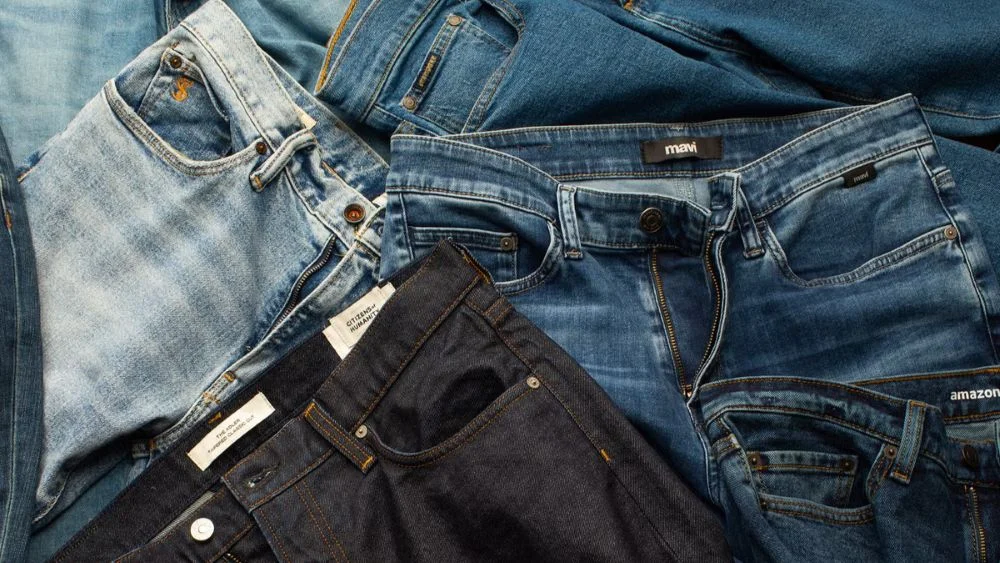
Choosing the right denim jeans manufacturer is the single most important decision in this process. A strong manufacturer protects your margins, your timeline, and your brand reputation, while a poor match creates delays and quality disputes that are expensive to fix later.
Start by evaluating production capacity against your order size. Established factories that produce hundreds of thousands of units annually tend to set minimum order quantities between 500 and 1,000 pieces per style. Smaller workshops and trading companies, by contrast, often accept MOQs as low as 50 to 300 pieces, which makes them a better fit for new brands testing a style before committing to volume. Always confirm MOQ in writing before you negotiate pricing, since factories frequently quote a “flexible” MOQ that still has a firm floor.
Lead time is the second factor to confirm early. Industry data from established denim factories points to an average production cycle of six to eight weeks after sample approval, covering fabric sourcing, cutting, sewing, washing, and final quality checks. Some manufacturers can turn around approved samples in just a few days using rapid prototyping, which speeds up the entire timeline if you are working toward a seasonal launch.
When you compare a denim jeans manufacturer against another, look at these criteria side by side:
- Verified audit reports and years of operating history
- Stated MOQ per style, not per order
- Sample lead time and bulk production lead time
- In-house fabric mill or laundry, versus outsourced finishing
- English-speaking sales or merchandising staff
- Client portfolio and reference orders in your product category
Asking for a recent third-party audit report is one of the fastest ways to confirm legitimacy before you commit to a sample order. Buyers who skip this step often discover capacity or compliance gaps only after placing a large wholesale jeans order, which is a costly mistake to make.
Payment Terms and Communication Standards
Payment structure is another detail worth locking in early, since it affects both your cash flow and your leverage if a dispute arises. Most denim jeans manufacturer partners in China expect a deposit, typically thirty percent, before production starts, with the balance due before or upon shipment. Buyers ordering from a new factory for the first time should consider tying the final payment to passed inspection results rather than to the shipment date alone, since this gives you a built-in checkpoint before the bulk of your funds leave your account.
Communication style also deserves attention during the vetting stage. Factories that respond quickly, provide detailed answers to technical questions, and proactively flag potential issues with your tech pack tend to be easier long-term partners than those that simply agree to every request without pushback. A denim jeans manufacturer that pushes back on an unrealistic fabric request, for example, is often signaling real production experience rather than a lack of flexibility.
Understanding Jeans Fabric Types and Unstitched Jeans Fabric
Fabric Weight and Construction
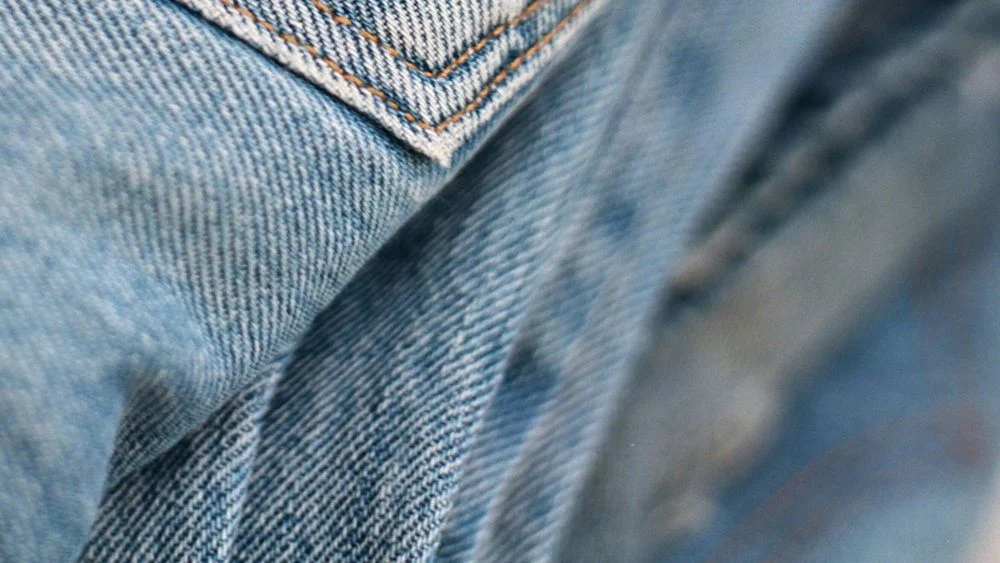
Fabric selection drives both the cost and the positioning of any jeans product, so it deserves its own evaluation before you commit to a manufacturer. Denim is woven from cotton, or cotton blended with stretch fibers like spandex, using a twill weave that creates the fabric’s signature diagonal texture. Understanding the main jeans fabric types helps you brief your supplier accurately and avoid mismatched expectations on the final product.
Fabric weight, measured in ounces per square yard, is the first variable to specify. Light denim, typically four to seven ounces, suits warm-weather styles and feels closer to a casual trouser. Mid-weight denim in the seven to twelve ounce range is the most common choice for everyday wholesale jeans, balancing durability with comfort. Heavyweight denim above twelve ounces is favored for workwear and raw denim styles, where structure and longevity matter more than stretch.
Beyond weight, buyers should understand the construction differences across common jeans fabric types:
- Rigid or raw denim: undyed or minimally washed, no stretch, prized for aging and fading naturally over time
- Stretch denim: cotton blended with two to three percent spandex for comfort and fit retention
- Selvedge denim: woven on traditional shuttle looms with a clean, self-finished edge, often used in premium lines
- Ring-spun denim: yarn spun in a way that creates a softer, more textured surface
- Open-end denim: a more cost-efficient spinning method, common in mass-market wholesale jeans
Sourcing Unstitched Jeans Fabric
Some B2B buyers prefer to source unstitched jeans fabric rather than finished garments, particularly importers who run their own cut-and-sew operations or who want to control the final assembly locally. Buying unstitched jeans fabric in roll form allows more flexibility on pattern development and can reduce certain import classifications compared with finished apparel, though buyers should always confirm current customs treatment for fabric versus finished goods. Chinese denim mills in Changzhou and parts of Guangdong supply unstitched jeans fabric by the meter or yard, often with minimum order quantities measured in fabric rolls rather than finished units.
Whether you choose finished garments or unstitched jeans fabric, request a physical swatch card before placing a bulk order. A swatch lets you verify weight, stretch recovery, and wash compatibility in person, which prevents costly surprises once a full production run is already underway.
Private Label Jeans and OEM Customization
The Private Label Production Process
Most B2B buyers who wholesale jeans from China are not simply reselling generic stock. They want private label jeans that carry their own branding, fit specifications, and design details. Chinese manufacturers are well equipped for this, since OEM and ODM services are standard across most mid-size and large denim factories.
The private label jeans process generally follows a consistent sequence. You start by sharing a tech pack that defines measurements, fabric specification, wash treatment, and trim details. The factory then sources matching fabric and produces a first sample, which you review and request revisions on if needed. Once the sample is approved, the factory moves into bulk cutting, sewing, washing, and final finishing before quality inspection and shipment.
Customization options on private label jeans typically include the following:
| Customization Element | Example Options |
|---|---|
| Branding | Custom metal buttons, embossed rivets, woven labels |
| Trims | Leather or faux-leather back patches |
| Wash treatment | Stone wash, acid wash, distressed, raw |
| Detailing | Whisker effects, hand-sanding, selective fading |
| Fit | Skinny, straight, bootcut, wide leg, mom jeans |
Working with a denim jeans manufacturer that offers full-package OEM service saves significant coordination time, since the factory manages fabric sourcing, trim procurement, and finishing under one roof. Buyers who instead try to coordinate fabric mills, washing facilities, and sewing factories separately often face longer lead times and more quality variance between batches.
MOQ Strategy for New Private Label Lines
It is worth noting that private label jeans programs usually carry slightly higher MOQs than basic wholesale jeans orders, since custom trims and dedicated wash recipes require minimum production runs to be cost effective for the factory. Negotiating a phased order, starting smaller and scaling once the style proves itself in market, is a common strategy among first-time private label buyers.
A phased approach typically looks like this in practice. The first order might cover one or two core styles at the lowest MOQ the factory will accept, giving you real sell-through data before committing to a larger run. Once a style proves popular, the second order can scale volume and lock in better per-unit pricing, since most denim jeans manufacturer partners offer tiered discounts once order quantity passes certain thresholds. This staged model reduces upfront risk while still building toward the volume pricing that makes private label jeans profitable long term.
Quality Control for Wholesale Jeans Orders
Fabric and Pre-Production Checks
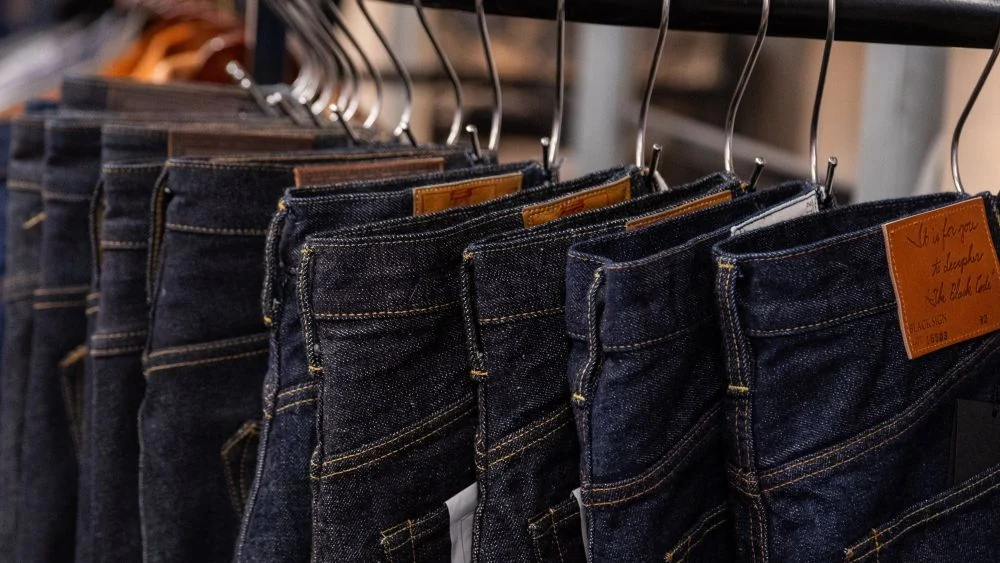
Quality control is where many wholesale jeans deals succeed or fail, particularly for buyers managing production remotely. A clear inspection plan protects your investment and gives you documented leverage if a batch falls short of agreed standards.
Start with fabric-level checks before production scales up. Confirm cotton content, fabric weight, and shrinkage rate against your original specification, since variance here affects fit and durability across the entire order. Many buyers request a pre-production sample specifically to lock in these fabric details before bulk cutting begins.
AQL Inspection and Defect Tracking
During and after production, AQL sampling is the standard method used across the apparel industry to inspect finished wholesale jeans. AQL, or Acceptable Quality Limit, defines how many units from a batch get inspected and how many defects are allowed before the batch fails. A typical AQL 2.5 standard for general merchandise is common in denim orders, though buyers selling into stricter retail channels sometimes request AQL 1.5 for tighter tolerance.
Key inspection points for any jeans fabric types and finished product include:
- Seam strength and stitching consistency at stress points
- Color matching and wash uniformity across the batch
- Metal hardware safety, including button and rivet attachment strength
- Measurement accuracy against the approved size chart
- Packaging condition and accurate labeling
Many buyers hire an independent third-party inspection company to conduct this check before shipment, rather than relying solely on the factory’s internal QC team. This adds a layer of objectivity and is particularly valuable for first-time orders with a new denim jeans manufacturer, where trust has not yet been established through repeat business.
It also helps to track defect patterns across multiple orders rather than reviewing each shipment in isolation. If the same issue, such as inconsistent wash shade or loose stitching on back pockets, appears in two or three consecutive wholesale jeans orders, that pattern points to a process problem at the factory rather than a one-off error. Sharing this data with the manufacturer directly, supported by inspection photos, usually leads to a faster correction than a single complaint after one shipment.
HS Code, Tariffs, and Customs Clearance
Classifying Denim Jeans Under the Harmonized System
Correct customs classification is essential whenever you wholesale jeans from China, since it directly determines the duty rate applied at import. Misclassification can trigger retroactive duty assessments, compliance audits, and shipment delays, so this step deserves the same attention as supplier selection.
Under the international Harmonized System, men’s or boys’ cotton denim trousers generally fall under HS heading 6203.42, while women’s or girls’ cotton denim trousers fall under HS heading 6204.62. These are the global six-digit codes; the United States and other destination countries extend them further into a longer national tariff code that determines the exact duty rate. Buyers should confirm whether the product is woven or knitted denim first, since that distinction separates Chapter 61 from Chapter 62 in the classification system.
Because trade policy between the United States and China has shifted multiple times in recent years, buyers should always verify current rates directly through the USITC Harmonized Tariff Schedule search tool or the destination country’s official customs portal before finalizing pricing. Additional Section 301 duties may apply to apparel originating in China, and these rates are updated periodically by the Office of the US Trade Representative, so relying on outdated figures can distort your landed cost calculations significantly.
Calculating Landed Cost
To estimate true landed cost for a wholesale jeans shipment, buyers typically need to account for:
- Product cost (FOB or EX-Works price from the factory)
- International freight and insurance (FOB versus CIF terms)
- Import duty based on the confirmed HS code
- Any applicable Section 301 or trade-remedy duties
- Customs broker fees and destination port charges
Working with a licensed customs broker, or a sourcing partner experienced in apparel imports, significantly reduces the risk of misclassification. This is especially important for buyers placing their first wholesale jeans order, since one incorrect HS code on the entry documents can affect every future shipment using the same product description.
A simplified example helps illustrate why these calculations matter. Suppose a buyer orders 1,000 pairs of jeans at an FOB price of eight dollars per pair, totaling eight thousand dollars. After adding ocean freight, applicable import duty under the confirmed HS code, any Section 301 surcharge, and broker fees, the landed cost per pair can climb noticeably above the factory quote. Skipping this calculation and pricing retail based on FOB cost alone is one of the most common mistakes new importers make when they first wholesale jeans from China.
Working with a China Sourcing Agent
What a Sourcing Agent Handles for You
Many B2B buyers reach a point where managing factory communication, quality inspection, and logistics alone becomes the biggest bottleneck in scaling a wholesale jeans program. This is exactly where a China sourcing agent adds measurable value, particularly for buyers without an in-country team.
A China sourcing agent typically handles factory vetting and audit verification, multi-supplier price comparison, sample coordination, on-site quality inspection, and consolidated shipping across multiple orders. For buyers exploring private label jeans for the first time, this support reduces the risk of working with an unverified denim jeans manufacturer and helps avoid the repeated sampling delays that often come from direct, unmediated factory communication.
Choosing the Right Sourcing Partner
This is also where working with an experienced partner pays off in practice. UTSourcing supports B2B buyers throughout the entire process of sourcing wholesale jeans from China, from shortlisting verified denim jeans manufacturer partners in Guangdong and Jiangsu to managing sample approval, AQL inspection, and consolidated logistics. If you are evaluating suppliers for a new private label jeans line or simply want a second set of eyes on a quote you already received, reaching out to a China sourcing agent like UTSourcing can shorten your timeline and reduce avoidable sourcing risk.
Before selecting any sourcing partner, ask for examples of past apparel projects, request references from existing clients, and confirm how inspection reports and communication updates are shared throughout production. A transparent process at this stage sets the tone for every order that follows.
It also helps to clarify fee structure before signing on with a China sourcing agent. Some agents charge a flat service fee per order, while others build their margin into the unit price quoted by the factory. Neither model is inherently better, but knowing which one you are working with helps you compare quotes accurately and avoid surprises once you start placing recurring wholesale jeans orders.
Conclusion
Successfully learning how to wholesale jeans from China comes down to a handful of repeatable steps: choosing the right production region, vetting a denim jeans manufacturer carefully, understanding jeans fabric types and unstitched jeans fabric options, and building a clear quality control and customs compliance plan. Buyers who treat sourcing as a structured process, rather than a single transaction, build supply chains that scale reliably over time. Partnering with an experienced China sourcing agent can further streamline this journey, turning a complex international process into a manageable, repeatable system for long-term growth.