
Every time you place a production order in China, you face the same question: how do I get this to my warehouse on time, without blowing my margin?
The decision between air freight vs sea freight sounds simple on the surface. Air is fast. Sea is cheap. But the real answer is more nuanced than that. The right choice depends on your product type, order volume, cash flow situation, and how much lead time you have before inventory runs out.
Many B2B buyers make the mistake of looking only at the freight quote. They compare a $6/kg air rate against a $2,500 container and choose based on that number alone. But that’s only part of the picture. The true cost of a shipment includes customs duties, warehousing, capital tied up in transit, and the very real cost of running out of stock at the wrong moment.
This guide breaks down the air freight vs sea freight decision from every angle — so you can stop guessing and start shipping smarter.
What Is Air Freight and Sea Freight in International Shipping
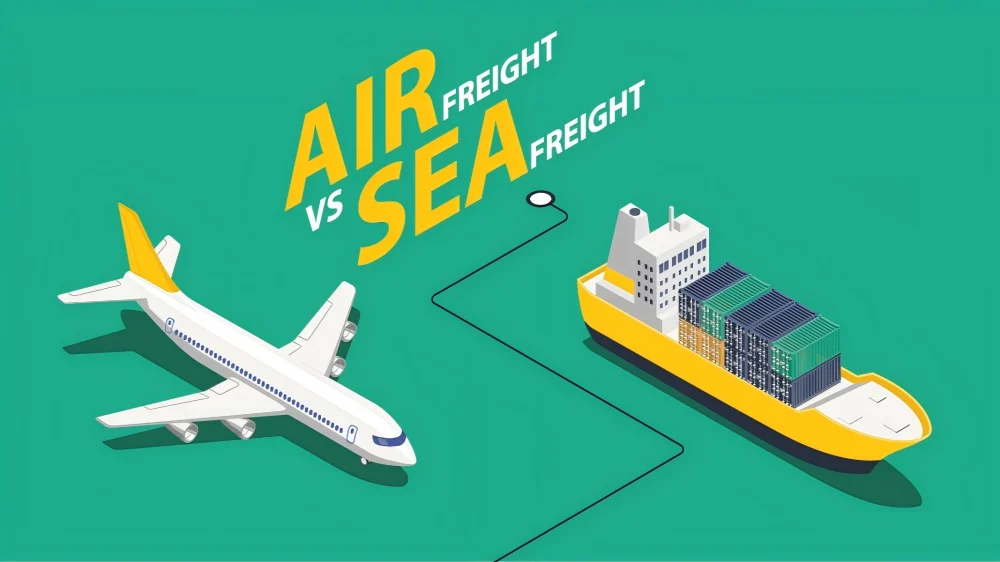
What Is Air Freight?
Air freight is the transportation of goods via commercial or cargo aircraft. When importing from China, air shipments typically depart from major hubs like Shanghai Pudong (PVG), Shenzhen (SZX), or Guangzhou (CAN) and arrive at destination airports within 3 to 7 days for standard services, or 1 to 3 days for express options.
The process works like this: goods are picked up from the factory or warehouse, consolidated at a cargo terminal, screened for security, loaded onto flights, cleared through customs at the destination airport, and delivered to the importer’s warehouse. Compared to sea freight, there are fewer handling points — which also means lower damage risk.
Air freight is billed by chargeable weight, which is the greater of actual weight (in kg) or volumetric weight (length × width × height in cm ÷ 5,000 for air). This means light-but-bulky items can become disproportionately expensive to ship by air. The mode is best suited for high-value products, small and light cargo, and time-sensitive shipments where delivery speed directly affects revenue.
What Is Sea Freight?
Sea freight moves goods inside steel shipping containers on ocean vessels. When shipping from China to USA, shipments leave from major Chinese ports — Shanghai, Ningbo, Shenzhen, Guangzhou — and arrive at US ports such as Los Angeles, Long Beach, New York, or Savannah.
There are two main service types for importers:
- Full Container Load (FCL): You book an entire container (20ft or 40ft) for your exclusive use. Best for large volumes. A 20ft container holds roughly 25–28 CBM; a 40ft container holds around 55–67 CBM.
- Less than Container Load (LCL): Your goods share container space with other shippers’ cargo. You pay by the cubic meter (CBM). This is a flexible and cost-effective option for smaller shipments that don’t fill a full box.
Sea freight’s main advantage is unit cost. Moving a full container from China to the US West Coast costs significantly less per kilogram than any air option. The trade-off is time. Door-to-door sea freight transit from China typically ranges from 20 to 45 days depending on destination port. (Source: Basenton.com, April 2026)
Air Freight vs Sea Freight: Core Differences at a Glance
| Dimension | Air Freight | Sea Freight |
| Transit time (China–US) | 3–10 days | 20–45 days |
| Cost per kg | $4–$10/kg | $0.10–$0.25/kg (FCL basis) |
| Minimum shipment size | No minimum | LCL from 0.1 CBM; FCL from ~15 CBM |
| Best for | High-value, small, urgent cargo | Bulk, heavy, low-value cargo |
| Reliability | High (fewer weather/port delays) | Moderate (port congestion, route disruptions) |
| Carbon footprint | High | Low (50× less CO2 per tonne-km) |
(Source: FreightAmigo, 2026; ExFreight, 2026)
Air Freight vs Sea Freight: Cost and Delivery Time Comparison
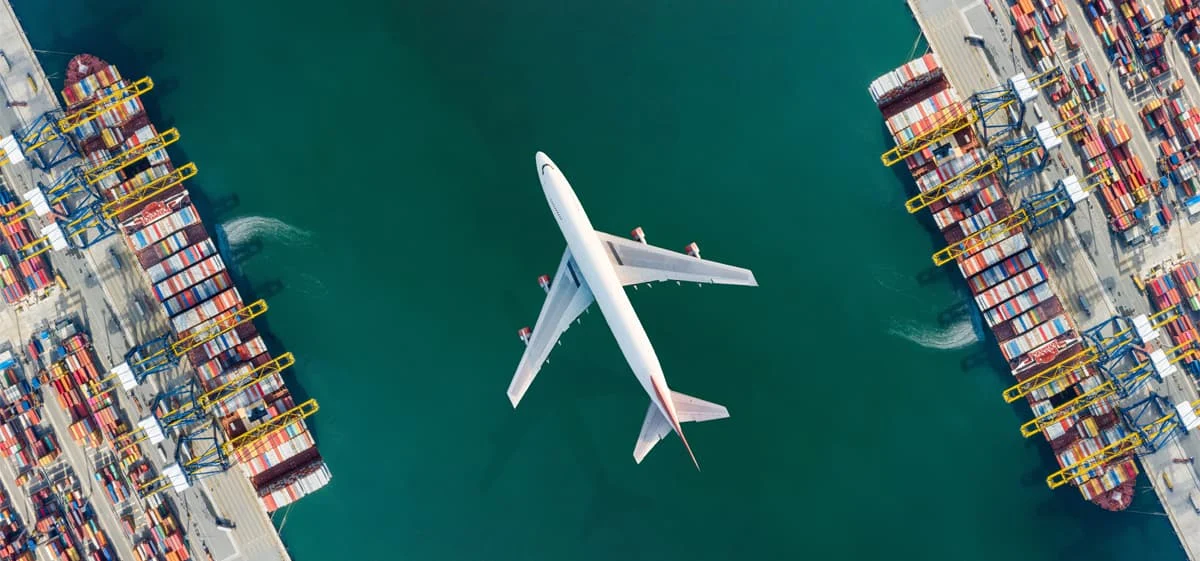
Why Does Air Freight Cost So Much More?
The price gap between air freight and sea freight is significant — and it’s not going away. Air freight is typically 5 to 15 times more expensive per kilogram than sea freight. (Source: FreightAmigo, 2026)
Three factors drive the air freight cost premium:
- Weight-based billing: Air cargo is priced by chargeable weight, and carriers use the higher of actual vs volumetric weight. A lightly packed box of plastic figurines, for example, might have a volumetric weight 3× its actual weight — meaning you pay for the space it takes, not just what it weighs.
- Fuel surcharges: Air freight surcharges add 15–25% on top of base rates and fluctuate with jet fuel prices. In 2025, Trans-Pacific air freight rates averaged $5–$8 per kg, driven partly by demand shifts from ocean route disruptions. (Source: Shapiro.com, 2025)
- Security and handling fees: Air cargo requires enhanced screening (TSA-compliant at origin), specialized handling, and airport fees that simply don’t apply to sea shipments.
The result: air freight cost for a 500kg shipment might run $3,000–$4,000. The same goods shipped by sea FCL alongside other cargo would cost a fraction of that.
Why Is Sea Freight Better for High-Volume Purchasing?
For importers moving large quantities of goods, sea freight changes the economics entirely. A 40ft container from China to the US currently costs approximately $3,000–$4,000 depending on route and market conditions, and can carry tens of thousands of units of most consumer goods. (Source: Sino-Shipping.com, May 2026)
On a per-unit basis, those numbers are hard to beat. If you’re importing bulk christmas decorations, furniture, outdoor equipment, or any large-format product at scale, sea freight is the only mode that makes the margin math work.
LCL options also offer flexibility for importers who aren’t yet moving full containers. LCL rates run approximately $100–$110 per CBM for China-to-US shipments. (Source: Sino-Shipping.com, May 2026) That allows smaller businesses to access sea freight economics without committing to a full box.
How Does Transit Time Affect Inventory Management?
This is where the air freight vs sea freight decision gets strategic, not just financial.
A 45-day sea freight transit means your capital is tied up for 6+ weeks between factory payment and warehouse receipt. For a business with tight cash flow, that’s a meaningful constraint. It also means you need to forecast demand 8–10 weeks in advance to maintain consistent stock levels — accounting for production time plus shipping.
Air freight’s 3–7 day transit window dramatically shortens that planning cycle. You can respond to a spike in demand within 10 days rather than waiting 6 weeks. For fast-moving products, this responsiveness can be worth more than the freight cost difference.
The practical implication: businesses with predictable demand should use sea freight and plan ahead. Businesses with volatile or seasonal demand need either air freight as a safety net or a hybrid strategy that combines both.
Hidden Costs You Might Be Overlooking
The freight rate is only one part of import logistics cost. Smart buyers account for the full picture:
- Warehousing costs: Sea freight’s longer transit means goods sit in transit — and in storage — longer. Every week of additional inventory in your warehouse (or 3PL) costs money.
- Stockout losses: If you run out of a key SKU because sea freight took longer than expected, you lose sales. The cost of a stockout can easily exceed the freight savings from choosing sea over air.
- Capital cost: Money tied up in transit inventory is money that could be used elsewhere. For a $50,000 shipment at 10% cost of capital, 30 extra days in transit costs roughly $400. That’s real money.
- Destination charges: Port fees, customs broker fees, drayage, and delivery to your warehouse are costs that apply regardless of which mode you use — but they’re often left out of freight quotes.
Which Products Should Use Air Freight or Sea Freight
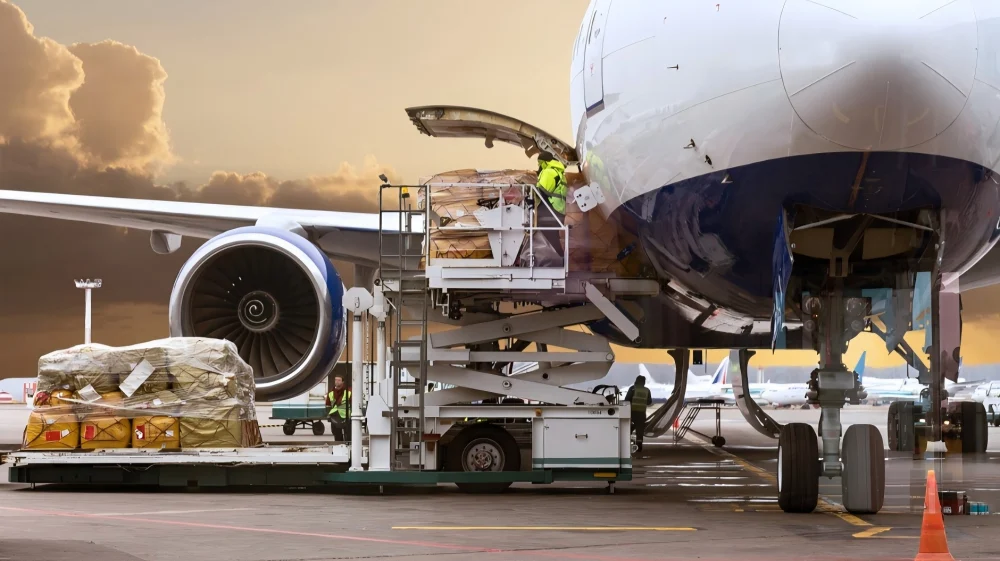
Products That Belong on a Plane
Not everything should travel by sea, even when price is a concern. Some goods are simply better suited to air freight:
- High unit value items (electronics, jewelry, luxury goods): The freight cost is small relative to product value, and the reduced transit time lowers risk of theft, damage, or obsolescence.
- Small, lightweight shipments under 200kg: Below this threshold, air freight cost per unit often competes more closely with LCL sea freight when you factor in handling and minimum charges. (Source: FreightAmigo, 2026)
- Seasonal or time-sensitive restocking: Missing the peak window for a trending product can be far more costly than the premium on air freight. This applies directly to holiday goods, fashion items, and anything tied to a specific selling season.
- New product samples and test orders: When you’re validating a new supplier or product, air freight gets samples in your hands within a week — not a month.
- Perishables or short shelf-life products: Any product with a shelf life under 30 days effectively requires air transport. (Source: FreightAmigo, 2025)
Products That Belong in a Container
Sea freight is the natural home for goods that combine high volume with lower urgency:
- Furniture, home décor, and large outdoor products: Bulky items with high CBM relative to value are almost always sea freight territory. Shipping a sofa by air is financially indefensible.
- Bulk low-margin products (garments, kitchenware, toys): These goods compete on unit cost. Sea freight is what makes the margin work.
- Stable repeat inventory: If you run a consistent business with predictable demand and adequate lead times, sea freight should be your default mode. Plan your reorder points around 45-day transit windows and the economics almost always favor the ocean.
- Industrial components and raw materials: Heavy materials with low value-to-weight ratios have no business on a plane.
The Hybrid Strategy: The Most Practical Approach
Here’s how experienced importers really operate: they don’t choose one mode exclusively. They use both, strategically.
The typical model works like this. A baseline inventory level is maintained through regular sea freight shipments — bulk orders placed well in advance, moving by FCL or LCL. When a product goes viral, demand spikes, or a sea shipment runs late, a targeted air freight top-up covers the gap.
This hybrid model keeps sea freight as the cost base and air freight as the flexibility tool. It’s not about choosing one mode over the other. It’s about using each where it makes sense — and building a supply chain that can do both.
Here’s a real-world example of how this plays out. An importer selling seasonal home décor places a bulk sea freight order in May for Q4 delivery. The container arrives in September — right on schedule. By mid-October, one SKU is selling faster than forecast. Rather than waiting 6 weeks for the next sea shipment, the importer air freights 500 units to cover demand through November. The air freight premium on 500 units is $1,500. The incremental revenue from staying in stock for those four weeks is $12,000. The math is obvious.
The key to making a hybrid strategy work is having pre-established relationships with both a reliable ocean carrier and an air freight option — so when you need to activate air freight quickly, you’re not scrambling for a new contact in the middle of peak season.
How B2B Buyers Should Decide Between Air and Sea Freight
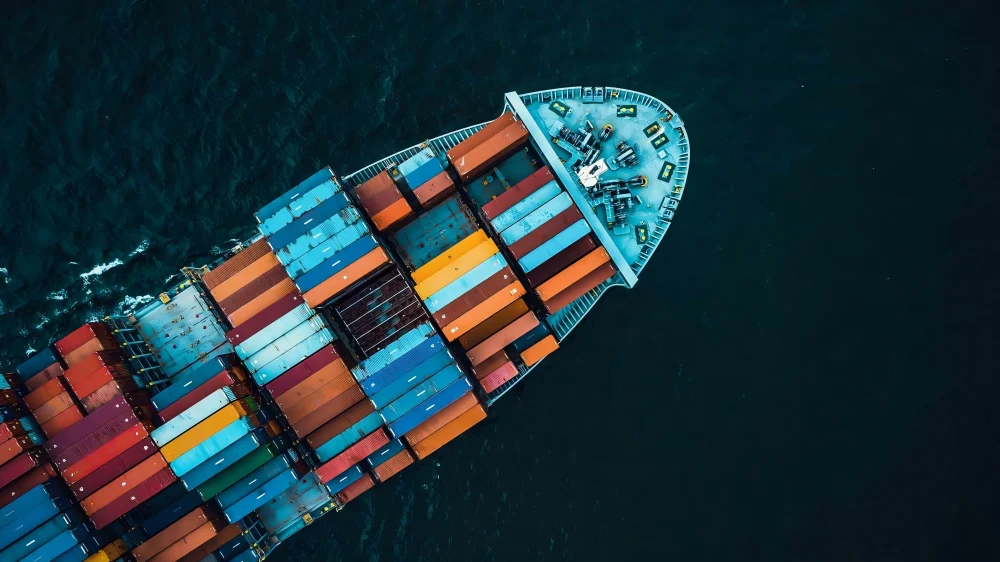
When Air Freight Is the Only Sensible Option
There are situations where the air freight vs sea freight debate is effectively already settled:
- You’re out of stock (or nearly out) of a key SKU. Every day without inventory is lost revenue. Air freight pays for itself.
- You’re running a new product launch or testing market demand. Getting inventory in quickly and turning it fast is worth the premium.
- Your product is tied to an upcoming event or holiday window. A shipment that arrives after Christmas, after a trade show, or after a promotional campaign is essentially worthless.
- Your goods are high-value enough that the freight cost is less than 5% of product value. In that range, the insurance, security, and speed advantages of air easily justify the cost.
When Sea Freight Is the Clear Choice
On the other hand, the following scenarios almost always point to sea freight:
- You have 6–8 weeks of lead time available. Use it. Sea freight economics are hard to beat with adequate planning.
- You’re moving large volumes of stable, proven products. FCL gives you the best unit economics available in international shipping.
- Your product margins are tight. If freight cost is more than 10–15% of your product value, air freight could eliminate your profit entirely. Sea freight keeps the numbers workable.
- You’re building up seasonal inventory ahead of a major selling period. Order in spring for Q4 delivery. That’s how successful importers approach the holiday season.
How to Calculate Your True Landed Cost
Too many buyers focus on the freight quote and miss the real number: landed cost. Landed cost is the total cost of getting a product from a supplier’s warehouse to your warehouse, including everything along the way.
The formula: Landed Cost = Product Cost + Freight + Customs Duties + Insurance + Handling + Local Delivery (Source: Savino Del Bene, 2025)
A practical example: a $10 product from China to the US might look like this:
| Cost Component | Amount | % of Product Cost |
| Product cost | $10.00 | — |
| International shipping | $2.50 | 25% |
| Import duties | $1.20 | 12% |
| Customs / broker fees | $0.30 | 3% |
| Insurance | $0.20 | 2% |
| Handling fees | $0.40 | 4% |
| Total landed cost | $14.75 | +47.5% |
(Source: Klavena.com)
The key insight: the product you buy for $10 actually costs $14.75 by the time it hits your shelf. Choosing sea over air might save $1.00 on freight — but if you run out of stock for two weeks, you’ve lost far more than that. The landed cost framework forces you to weigh all trade-offs, not just the shipping line item.
Why Smart Buyers Build a Mixed Shipping Strategy
The most profitable importers don’t pick a single mode and stick to it religiously. They build what amounts to a shipping portfolio: sea freight for volume and predictability, air freight for speed and flexibility.
This approach lowers supply chain risk without inflating the average shipping cost. It means you’re never fully exposed to a sea freight delay — you have an air freight option ready to activate. And it means you’re not overpaying for air freight on goods that travel just as effectively by sea.
A good rule of thumb: if more than 30% of your total import logistics spend is going to air freight on a recurring basis, something is broken upstream — in your forecasting, your supplier lead times, or your order cycle. Fix that, and you’ll spend less on airfreight automatically.
Common Mistakes When Choosing Shipping from China
Mistake 1: Looking at Freight Cost, Not Total Cost
This is the most common error in import logistics. A buyer sees a sea freight quote for $2,800 per container and an air freight quote for $5,000 for the same goods, and assumes sea freight saves $2,200. But they don’t factor in the 30-day warehouse holding cost, the capital tied up during transit, or the risk of arriving after peak season.
True cost comparison requires the landed cost framework — not just the shipping line.
Mistake 2: Underestimating Sea Freight Lead Times
Sea freight is not 30 days. Door-to-door shipping from China to USA typically runs 30 to 45 days — and that’s when things go smoothly. Port congestion, customs delays, labor disputes, and equipment imbalances can add another 1–3 weeks. Ocean freight on-time performance averaged just 50–70% in 2022–2024, improving to 70–80% in 2025–2026. (Source: ExFreight, 2026)
Importers who plan for 30 days and get 45 end up in emergency air freight mode — which is the worst possible scenario. Always plan sea freight with a minimum 15-day buffer.
Mistake 3: Over-Relying on Air Freight Long-Term
Air freight is a tool, not a strategy. For low-margin products, recurring air shipments will eventually price you out of the market. A product that costs $8/kg to manufacture cannot absorb $6–$8/kg in air freight on an ongoing basis and remain competitive.
If you find yourself repeatedly using air freight for the same SKUs, it’s a signal to revisit your replenishment cycle, improve demand forecasting, or find a China freight forwarder who can help you optimize consolidation and transit routes.
Mistake 4: Ignoring Destination Port and Customs Costs
Many importers get a freight quote from Shanghai to LA and assume that’s their shipping cost. It’s not. Additional costs at destination typically include:
- US Customs Merchandise Processing Fee (MPF): 0.3464% of customs value, min $31.67, max $614.35 per entry (Source: Camtom, 2026)
- ISF (Importer Security Filing) bond: $25–$50 per sea shipment
- Customs broker fees: $125–$250 per entry
- Port drayage (container trucking from port to warehouse): $300–$800 per container
- Section 301 tariffs on Chinese-origin goods: 7.5%–100% depending on product category
These costs are the same whether you ship by air or sea — but buyers using air freight often underestimate them because they’re quoted separately.
One more often-overlooked cost: Section 301 tariffs on Chinese-origin goods range from 7.5% to 100% depending on the product HTS code. For some product categories, tariff costs can exceed the freight cost itself. Always confirm your product’s tariff classification before building your pricing model — a surprise duty rate discovered after customs clearance can eliminate your margin entirely. Working with an experienced China freight forwarder or licensed customs broker is the most reliable way to get this right from the start.
Smart Shipping Strategy for Importers from China
How to Build a Long-Term Relationship with a Freight Forwarder
A reliable China freight forwarder is one of the most undervalued assets in an importer’s supply chain. They negotiate carrier rates you can’t access directly, secure space during peak season when the market is tight, and handle the documentation complexity that comes with cross-border import logistics.
What to look for when choosing a freight forwarder:
- Experience with your specific trade lane (China to your destination country)
- Ability to handle both FCL sea freight and air freight — so you can use one partner for your hybrid strategy
- Transparent all-in pricing — not just the ocean rate, but destination fees, customs filing, and drayage
- Clear communication on transit milestones and delay alerts
- Track record of on-time delivery during peak seasons (Q3–Q4)
Don’t choose a freight forwarder on price alone. In a peak season crunch, you want someone who can actually get your cargo on the next vessel or flight — not someone who got you the cheapest rate in January.
It’s also worth asking potential freight partners about their technology stack. The best forwarders now offer online shipment tracking, digital document submission, and instant rate comparison tools. These features matter when you’re managing multiple active shipments across different modes. A forwarder who still operates entirely by email and spreadsheets will cost you time — and time is money in seasonal import logistics.
If you’re new to importing from China, start with a forwarder who specializes in small and mid-sized importers. They’ll provide more hands-on guidance on customs documentation, product classification, and compliance requirements that larger, volume-focused operators won’t bother explaining.
How to Reduce Overall Import Logistics Costs
Even if you can’t change your shipping mode, you can reduce costs within your chosen mode:
- Consolidate shipments into fewer, larger moves. LCL is convenient but carries a higher per-CBM cost than FCL. Once your volume exceeds 13–15 CBM, moving to FCL usually saves money. (Source: DDPChain, 2026)
- Book early, especially for Q3–Q4. Peak season surcharges can add 30–50% to base rates. Importers who book space in July for October arrival pay far less than those scrambling in September.
- Optimize packaging to reduce chargeable weight. Eliminating even 10% of unnecessary packaging volume can reduce air freight cost materially.
- Use bonded warehouses where applicable. Some importers reduce duty costs by using bonded facilities for goods distributed regionally.
Aligning Inventory Planning with Shipping Cycles
The best shipping strategy in the world won’t help you if your inventory planning is disconnected from logistics reality. Effective import logistics means treating your shipping schedule as an input to your demand planning — not an afterthought.
Practically, this means:
- Set reorder points that account for full door-to-door lead time (production + shipping + customs clearance + inbound receiving)
- Track sell-through rates weekly on fast-moving SKUs so you’re never surprised by a stockout
- Build safety stock levels for sea-freight SKUs that absorb a 2-week delay without triggering an emergency air shipment
- Use your freight forwarder’s tracking data to monitor in-transit inventory as part of your available stock
The businesses that scale import operations most efficiently are those that treat logistics data as business intelligence. When you know your average sea freight transit is 38 days (not 30), your average customs clearance takes 3 days, and your warehouse inbound processing takes 2 days — you can build reorder points with real precision. That precision means fewer emergency air freight calls, lower average shipping cost, and more consistent in-stock rates.
One practical tool worth using: a simple spreadsheet that maps every active SKU to its current inventory level, reorder point, last order date, and expected arrival date. Update it weekly. The extra 20 minutes saves thousands in emergency freight costs over the course of a year.
Future Trends in International Shipping from China
The import logistics landscape is shifting fast. A few trends worth watching:
- Digital freight platforms: Real-time rate comparison, instant booking, and shipment tracking are now standard on platforms like Freightos, FreightAmigo, and Flexport. These tools make the air freight vs sea freight decision faster and more data-driven. (Source: BeeOnTrade, 2025)
- Sea-air multimodal routing: Hybrid routing — sea from China to a Middle East hub, then air to the final destination — is gaining traction as a middle ground between speed and cost. Transit times of 12–18 days at costs below full air are possible on certain lanes.
- Sustainability pressure: Sea freight already emits 40–50× less CO2 per tonne-km than air. (Source: FreightAmigo, 2026) As EU carbon regulations tighten and ESG reporting becomes standard for large retailers, the environmental cost of air freight will increasingly factor into shipping decisions.
- AI-powered demand forecasting: Better demand prediction means less emergency restocking — which means less reliance on expensive air freight. Companies investing in forecasting tools now will have structurally lower logistics costs in 3–5 years.
Conclusion: The Right Answer Is Usually Both
The air freight vs sea freight decision is not about finding the one right answer and applying it forever. It’s about building a shipping strategy flexible enough to serve your business across different scenarios, seasons, and product types.
Sea freight is your workhorse. It moves the bulk of your volume cost-effectively, keeps landed costs manageable, and forms the backbone of any serious import operation. For stable products with predictable demand, shipping from China to USA by sea should be your default.
Air freight is your safety valve. It protects you when demand spikes, sea shipments run late, or a new product needs to get to market fast. Used strategically and sparingly, the premium is easily justified.
Smart B2B buyers don’t agonize over air freight vs sea freight — they plan well enough that sea freight handles 80–90% of their volume, and they have a reliable China freight forwarder and air cargo option ready for the other 10–20%.
The importers who consistently win are not the ones who always choose the cheapest freight mode. They’re the ones who understand landed cost, respect lead times, build relationships with carriers, and use data to make smarter inventory decisions.
Start with that mindset, and the shipping method takes care of itself.