
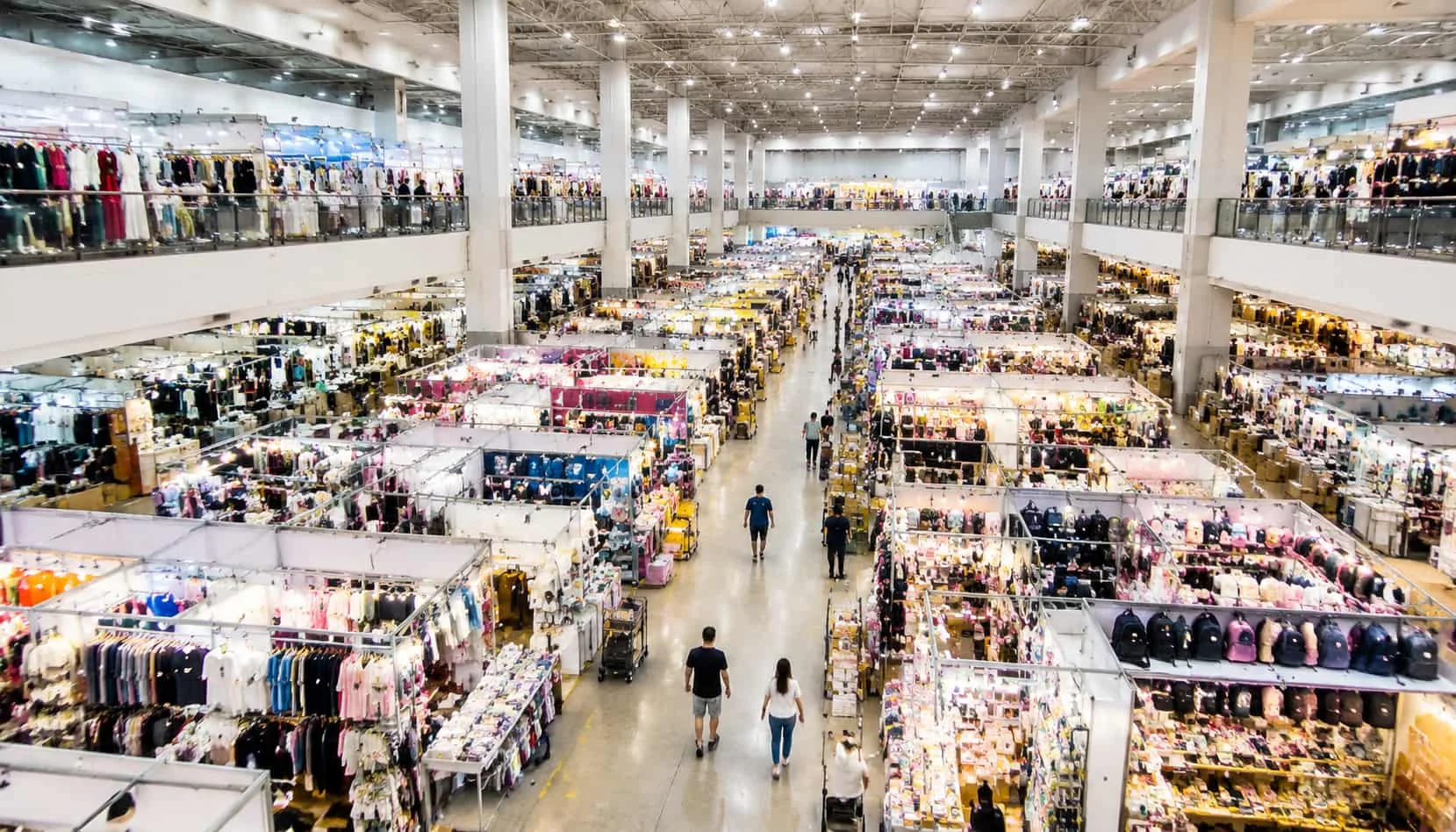
Buying from Yiwu Market means either walking the physical wholesale complex in Zhejiang province yourself, or sourcing from it remotely through an agent, an online platform, or a trading company that already operates there. Most first-time buyers assume the only way in is a plane ticket. It isn’t. The market’s 75,000-plus booths ship to buyers on every continent every day, and the majority of those buyers never set foot in China.
This guide is the starting point for someone who has never sourced from Yiwu before and doesn’t yet know which path fits their situation. If you already know what a Yiwu agent does and want to compare it to hiring your own logistics setup, the pillar guide on Yiwu agents covers that ground in more depth. This post stays one level up: what the market is, how it’s organized, the two ways to buy from it, and what actually happens between “I found a product I like” and “the product is in my warehouse.”
Key Takeaways
- Yiwu Market, formally Yiwu International Trade City, is organized into five interconnected districts, each grouping a different set of product categories, so knowing the layout in advance saves time whether you visit or not.
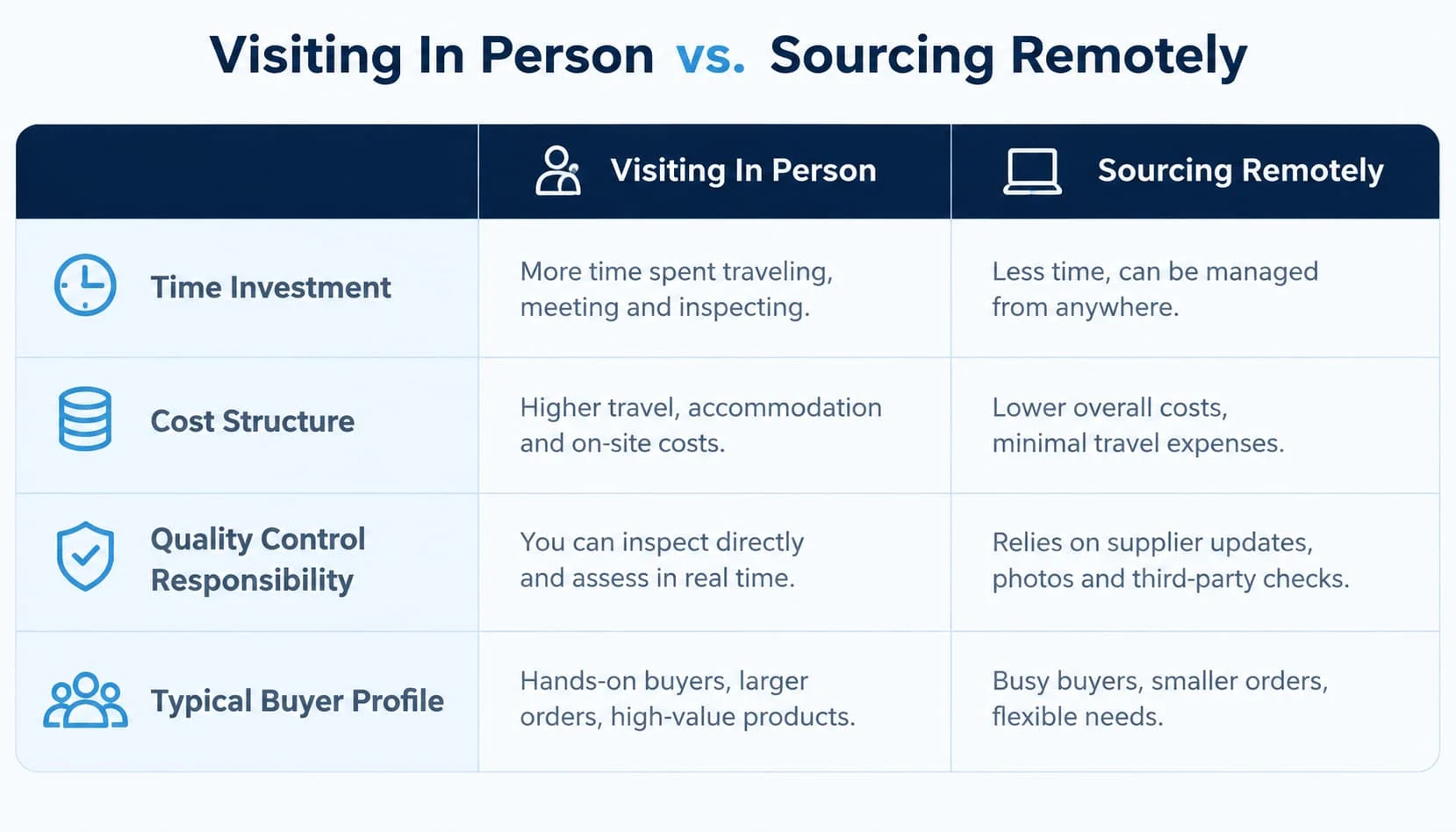
- There are two main paths to buying from Yiwu: traveling to the market in person, or sourcing remotely through an agent, a trading company, or an online storefront, without traveling at all.
- A first purchase generally follows the same sequence regardless of path: research the product, shortlist suppliers or an agent, request samples, negotiate price and MOQ, arrange quality inspection, then consolidate and ship.
- Never wire full payment upfront to an unverified supplier or agent, especially to a personal account rather than a registered business account. Partial deposits with the balance tied to inspection or shipment are the safer norm.
- A realistic first order, from initial research to goods arriving at your door, commonly takes several weeks to a couple of months, depending on production time, consolidation, and freight method.
What Yiwu Market Actually Is
Yiwu Market is not a single building. It’s a wholesale complex, formally named Yiwu International Trade City, built around five connected districts in Yiwu, a city of nearly 1.9 million people (1,859,390 at the 2020 census) in Zhejiang province. According to figures published by Yiwu China Commodities City Group, the market’s operator, the complex covers somewhere between 4 and 6.4 million square meters of floor space depending on the source, and holds more than 75,000 booths offering upward of 2.1 million types of products. The booth count and product-type figure are consistently repeated across independent coverage, including Xinhua, China Daily, and industry research such as Daxue Consulting; the floor-space figure varies more by source, which is why it’s given here as a range rather than a single number.
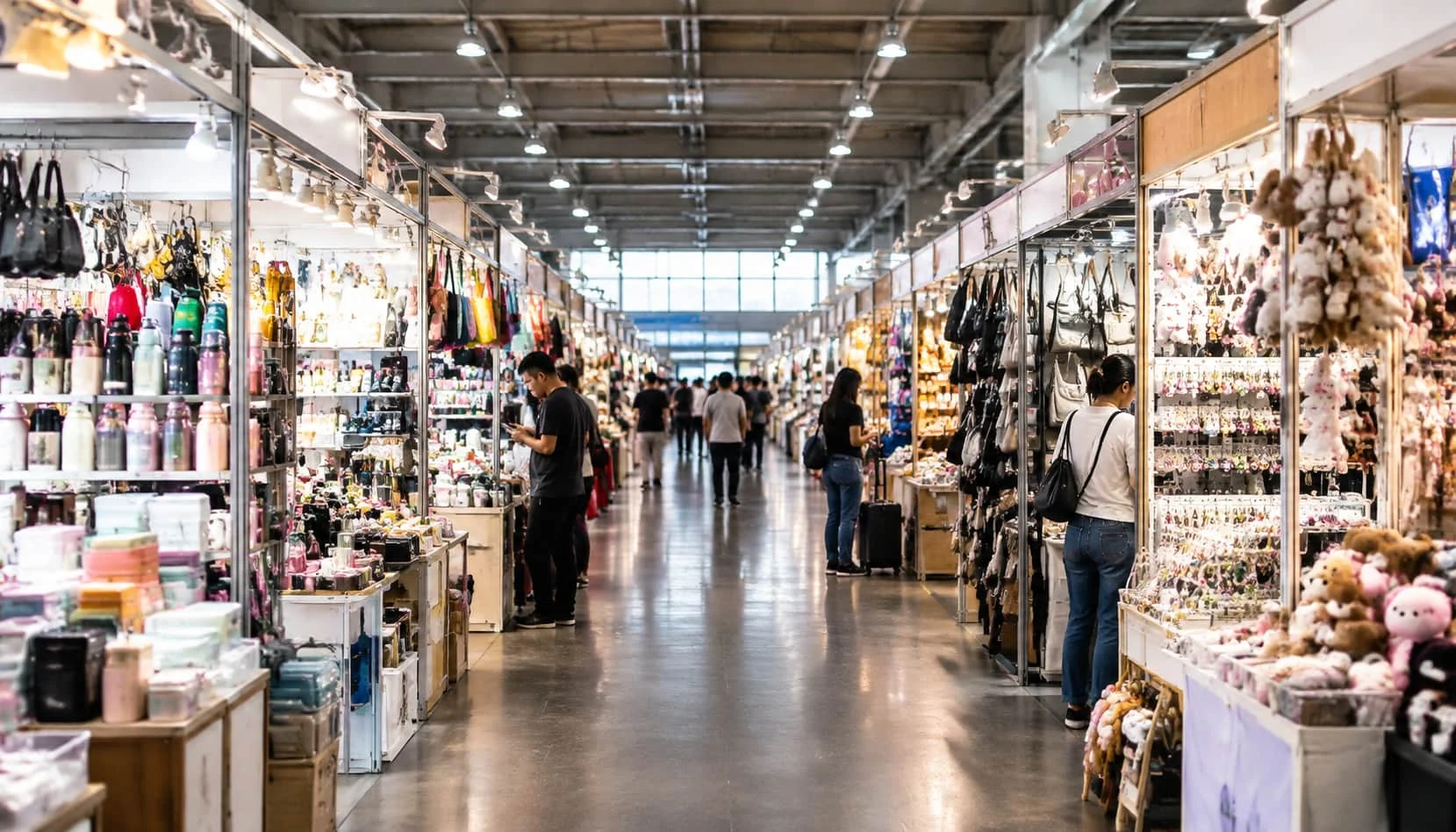
What makes Yiwu different from a typical trade show or a single factory visit is density. A buyer looking for, say, holiday decorations doesn’t visit one supplier and compare it to what they remember from a catalog. They can walk past dozens of booths carrying similar products within an hour, compare pricing and quality side by side, and negotiate against real competing options in the same aisle. That density is the market’s core value, and it’s also why buyers without local guidance often struggle: with 75,000 booths spread across five districts, finding the right ones without a map or local knowledge burns days rather than hours.
How Yiwu Market Is Organized by District
Yiwu International Trade City is split into five districts, each covering different product categories, and most first-time visitors underestimate how long it takes to properly walk even one. Knowing roughly which district holds your product category before you arrive, or before you brief an agent, saves real time.
District One generally covers small commodities such as jewelry, accessories, and craft supplies. District Two focuses on hardware, tools, and electronics accessories. District Three covers toys, gifts, and stationery. District Four is home to knitwear, socks, and textiles. District Five centers on imported goods and some furniture and household items. Category boundaries shift over time as booths change hands, so treat this as a starting orientation rather than a fixed directory. An agent who has walked the market recently, or a current market map obtained on arrival, will always be more accurate than a static list published months or years earlier.
For a buyer sourcing across several unrelated categories, which is common for buyers stocking a general store or an online shop with mixed inventory, the district layout is exactly why consolidation matters later in the process. Goods pulled from three or four districts don’t ship as one order automatically. Someone has to collect them into one place first, whether that’s you walking between districts with a suitcase or an agent’s warehouse doing the same job on your behalf.
Two Paths to Buying from Yiwu Market
There are two fundamentally different ways to buy from Yiwu, and most of the practical decisions in this guide come down to which one fits a given buyer.
Path One: Visit Yiwu Market in Person
Traveling to Yiwu and walking the market yourself gives a buyer direct access to product range and real-time pricing that’s harder to fully replicate through photos and video calls. It also means doing your own negotiation, your own quality checks at the booth, and your own arrangements for consolidating purchases from multiple booths into a shippable order.
This path suits buyers with time to spend several days on the ground, some tolerance for a language gap (Mandarin and the local Yiwu dialect are the default, though many booths handle basic English or use translation apps), and a plan for what happens to the goods after purchase, since a booth vendor typically isn’t set up to arrange international freight for you. Visiting Yiwu Market Without an Agent covers exactly what a solo visit gains and gives up, including the logistics gap that catches most first-time visitors off guard.
Path Two: Source Remotely, Without Traveling
Most buyers, including many who eventually do visit Yiwu at some point, source their first orders remotely. This works through one of three arrangements: a Yiwu agent who sources, inspects, and ships on your behalf, an online marketplace listing tied to a Yiwu-based supplier or trading company, or a direct relationship with a factory that already exports internationally.
Remote sourcing removes the travel cost and time entirely, but it shifts the burden of verification onto the buyer. Without walking a booth yourself, you’re relying on photos, video calls, and whoever is doing quality control on your behalf to confirm a product matches what was promised before it ships. This is the exact gap a Yiwu agent is built to close, and How to Find a Good Yiwu Agent walks through the verification steps that make remote sourcing safe rather than a leap of faith.
Step-by-Step: A First Purchase from Yiwu Market
Whichever path you take, a first purchase generally moves through the same six stages. The details differ depending on whether you’re doing each step yourself or an agent is doing it for you, but the sequence doesn’t change.
Step 1: Research the Product Category
Start narrower than you think you need to. “Kitchen gadgets” is too broad to research or quote accurately; “silicone kitchen tools under a specific price point” is workable. Look at what’s already selling in your target market, check for any import restrictions or certification requirements in your destination country (electronics, toys, and anything touching food or children’s products often carry specific compliance rules), and set a rough target price range before contacting anyone. Walking into supplier conversations with a defined product and price target, rather than an open-ended “what do you have,” produces faster and more accurate responses.
Step 2: Shortlist Suppliers or an Agent
If sourcing directly, shortlist several booths or factories in the relevant district, ideally three to five, so you have a real basis for comparison rather than anchoring on the first quote you receive. If working through an agent, the shortlisting happens one level up: you vet the agent instead of individual suppliers, and the agent then does the supplier-level comparison on your behalf using their market knowledge. Either way, avoid committing to a single source before you’ve seen at least one alternative quote.
Step 3: Request Samples
Never place a bulk order sight unseen. Request a paid sample from your shortlisted suppliers or ask your agent to source one. A sample confirms materials, dimensions, color accuracy, and, for anything mechanical or electronic, that it actually functions as described. Treat the cost of a sample as a small insurance premium against a much larger mistake at full order volume.
Step 4: Negotiate Price and MOQ
Pricing at Yiwu Market is rarely fixed, and minimum order quantities vary widely by product and vendor. A local negotiator, whether that’s you after some practice or an agent who does this daily, typically secures better terms than a first-time buyer negotiating cold, partly because vendors often price differently once they identify a buyer as inexperienced. If your order volume is small, Low MOQ Yiwu Sourcing covers the specific tactics that make small-batch buying viable, including how agents combine small orders across categories to meet supplier minimums.
Step 5: Arrange Quality Control
Before goods ship, someone needs to check them against your specification: correct materials, correct color and size distribution, functioning mechanisms, and intact packaging. Catching a problem at this stage costs a fraction of what it costs to catch the same problem after a container has landed in your home country and customs has already cleared it. This is one of the two or three functions where doing it yourself in person and having an agent do it remotely produce genuinely similar outcomes, provided the agent’s inspection process is documented and verifiable rather than a rushed verbal confirmation.
Step 6: Consolidate and Ship
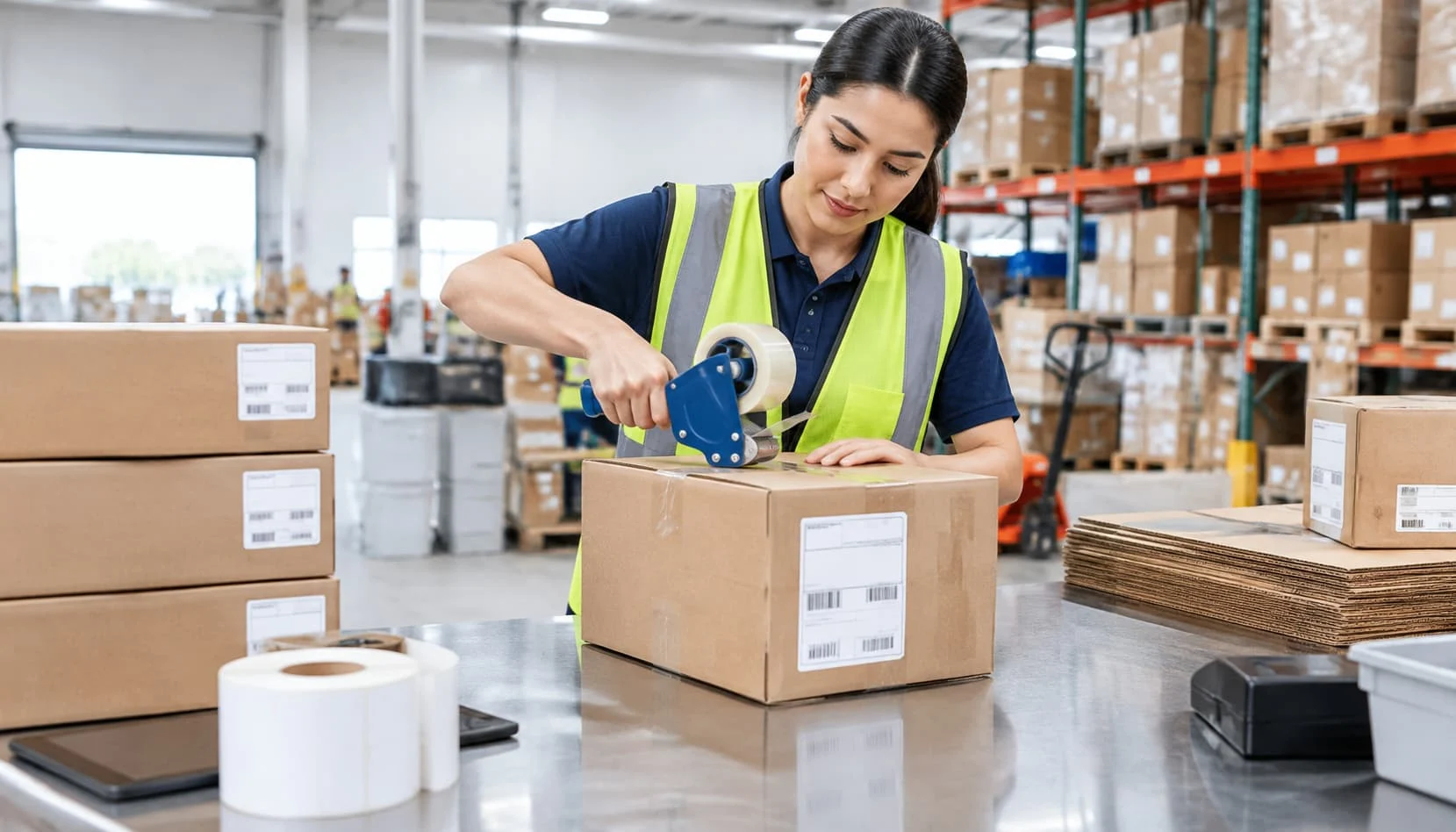
If you sourced from more than one booth or supplier, which is common for buyers ordering across several product categories, the goods need to be brought together into one shipment before freight makes financial sense. Shipping several small parcels separately usually costs more than the goods themselves. An agent’s warehouse handles this consolidation as a standard part of the service; a solo buyer either needs to arrange it through a freight forwarder or physically carry smaller purchases home as excess baggage, which only works below a certain volume.
Payment Methods and Avoiding Wire Fraud
Payment is where first-time buyers lose the most money, almost always through the same pattern: sending a full payment upfront, usually by wire transfer, to an account that turns out not to belong to a real, verifiable business.
The safer structure, standard across legitimate Yiwu sourcing relationships, splits payment into stages. A deposit, commonly a percentage of the order value, is paid to begin sourcing or production, with the balance due closer to shipment, often tied to a passed quality inspection. Before sending any payment, confirm the receiving account belongs to a registered business that matches the name on your invoice and contract, not a personal account. A supplier or agent who insists on full payment upfront to a personal account, or who resists putting payment terms in writing, is showing one of the clearest warning signs in Yiwu sourcing. How to Find a Good Yiwu Agent covers the specific verification steps, including business license checks, that catch this problem before money changes hands.
Letters of credit and escrow-style arrangements exist for larger orders and offer more protection than a direct wire transfer, though they add cost and paperwork that may not be proportionate for a smaller first order. For most first-time buyers, a documented deposit-plus-balance structure with a verified counterparty covers the bulk of the risk without the overhead of a full letter of credit.
Realistic Timeline for a First Order
A first Yiwu order rarely moves as fast as buyers expect going in. After research and shortlisting, which can take anywhere from a few days to a couple of weeks depending on how well-defined the product is, sample requests and review typically add another one to two weeks, since samples need to be produced or pulled, shipped, and evaluated before negotiation can finalize.
Once terms are agreed, production time for the bulk order depends heavily on the product and quantity, and this is usually the longest single stage. Quality inspection adds a few more days once goods are ready. Shipping time then depends on the method: air freight moves in days but costs significantly more per unit, while ocean freight is far cheaper for larger volumes but takes considerably longer and includes port and customs processing time on the receiving end. Taken together, a realistic first order, from the point research begins to goods arriving at a buyer’s door, commonly spans several weeks to a couple of months. Buyers planning around a fixed deadline, such as a seasonal sales window, should build in that full range rather than assuming the fastest-case scenario.
Frequently Asked Questions
Do I need to speak Chinese to buy from Yiwu Market?
Not necessarily. Many booths handle basic English or rely on translation apps, and buyers sourcing remotely through an agent don’t need any Chinese language ability at all, since the agent handles supplier communication directly. Language becomes more of a factor for buyers negotiating in person without any local support.
What’s the minimum order size to buy from Yiwu Market?
It varies by product and vendor, with no single market-wide minimum. Some booths accept very small trial orders, while others set higher minimums that only make sense to reach by combining several product lines into one order, which is a common reason buyers work with an agent who can help meet minimums across categories. Low MOQ Yiwu Sourcing covers this in more detail.
Is it safer to visit Yiwu Market in person or buy remotely through an agent?
Neither path is inherently safer; each shifts the risk to a different point. Visiting in person lets you inspect goods directly but requires you to handle your own logistics and negotiation. Buying remotely removes the travel burden but requires verifying whoever is inspecting and shipping on your behalf. The comparison in Visiting Yiwu Market Without an Agent lays out the specific tradeoffs.
The Bottom Line
Buying from Yiwu Market comes down to the same sequence whether you fly there yourself or run the whole process from another country: research the product, shortlist who you’re buying from, test with a sample, negotiate real terms, verify quality before shipment, and consolidate before freight. The path you choose changes who performs each step, not whether the step is necessary.
If you’re weighing whether to make the trip yourself or work through a local partner, the next practical read is Visiting Yiwu Market Without an Agent for the in-person tradeoffs, or How to Find a Good Yiwu Agent if remote sourcing through a vetted partner, such as Union Trust or a comparable agent, fits your situation better. If you’ve decided remote sourcing is the right path, Union Trust’s Yiwu agent service is where that process actually starts. For the full picture of how Yiwu sourcing works end to end, the pillar guide on Yiwu agents is the hub for the rest of this series.