

Finding a good Yiwu agent comes down to verification, not gut feeling. Buyers who lose money to bad agents almost always skip the same steps: they never confirm the agent’s business license, never see proof of a real office, and never test communication before wiring a deposit. This guide walks through the exact checks to run, in order, before you hire anyone to source or ship for you out of Yiwu.
If you are new to the idea of using an agent at all, start with Yiwu Agent: The Complete Guide to Hiring a Sourcing Agent in Yiwu Market for the full overview. This post assumes you already understand what an agent does and want to know how to pick one you can trust.
Key Takeaways
- Verify the agent’s business license on China’s official National Enterprise Credit Information Publicity System before any payment.
- Confirm a physical office through a live video call or a third-party visit, not just photos.
- Test responsiveness for 48 hours before committing: slow or vague answers now predict slow, vague service later.
- Place a small paid sample order first. Never skip straight to a full container.
- Ask for two or three verifiable client references and actually contact them.
- Be suspicious of commission rates that are dramatically below the market range: it usually means hidden markups elsewhere.
Start With the Business License, Not the Website
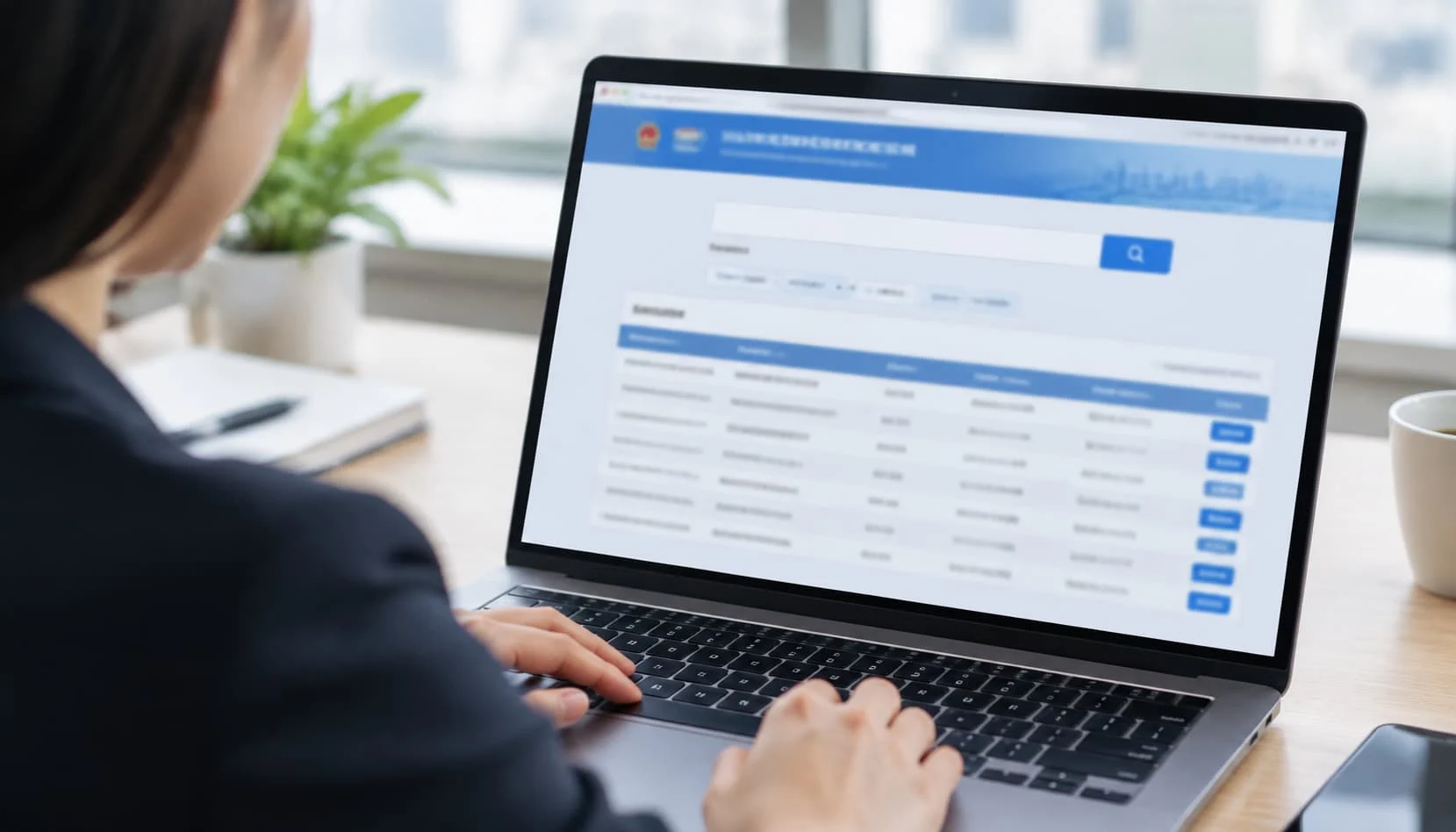
A professional website tells you nothing about whether a company is legally registered. Before any other step, ask the agent for their business license number (统一社会信用代码) and cross-check it on China’s National Enterprise Credit Information Publicity System (国家企业信用信息公示系统), the government registry that lists every legally registered business in China, including registration date, registered capital, and business scope.
What to look for on the registry entry:
- The company name matches exactly what the agent uses on invoices and contracts.
- The registered business scope includes trading, sourcing, or export agency services, not something unrelated like construction or food service.
- The registration date is old enough to suggest a real operating history, not a shell company set up weeks ago.
- The status shows as active (存续), not revoked or under investigation.
An agent who resists sharing this number, or who gives you a name that does not match the registry, is a clear early warning sign. For a longer list of warning patterns, see Yiwu Agent Scams: 12 Red Flags and How to Verify an Agent Is Real.
Confirm a Physical Office Exists
Many scam operations run entirely from a phone and a rented WeChat account. A legitimate agent has a real office in or near the Yiwu International Trade Market, with staff, desks, and a fixed address you can find on a map.
You do not need to fly to Yiwu to confirm this. Ask for a live video call where the agent walks around the office in real time. Recorded video is easier to fake or reuse, so insist on live footage where you can ask them to show specific details, like a whiteboard with today’s date or a window view matching the claimed address.
If you know anyone in Yiwu, or work with a freight forwarder who has local contacts, a short third-party visit is worth the small cost. It removes any doubt that the office is real and currently occupied.
Check Staff Identity and Roles
Once you have a contact, ask for their full name, job title, and a company email address that matches the business’s registered domain. Agents who only communicate through personal WeChat or Gmail accounts, with no company email trail, make it harder to hold anyone accountable if something goes wrong.
It also helps to ask how many staff work at the company and what languages they cover. A one-person operation calling itself a “sourcing company” is not necessarily a scam, but it does mean less redundancy if that one person is unavailable during a shipment issue.
Run a 48-Hour Communication Test
Before signing anything, send the agent a realistic sourcing request, the kind of question you would actually ask during a live project, and time how they respond over the next 48 hours.
Evaluate three things:
- Speed. Do they reply within a business day, or does it take repeated follow-ups?
- Specificity. Do they answer your actual question with numbers, options, and next steps, or do they send a generic “yes we can do it, please send deposit” reply?
- Language clarity. Can they communicate clearly enough in your working language to avoid costly misunderstandings on product specs and payment terms?
How an agent handles a free pre-sales question is a strong preview of how they will handle a real problem, like a factory delay or a quality dispute, after you have already paid them.
what makes a Yiwu agent a good fit for small orders
Place a Small Sample Order Before a Full Order
Never send a full purchase order to an agent you have not worked with before. A paid sample order, even a modest one covering a handful of products, tests the parts of the relationship that matter most:
- Do they source the item you actually asked for, at the specifications you gave them, or do they substitute something similar without asking?
- Do they disclose their sourcing price and commission clearly, or does the final invoice include vague or unexplained line items?
- Do they pack and ship the sample the way they say they will, with tracking information you can verify independently?
- Is the sample quality consistent with what was discussed, or does it arrive noticeably different?
Treat the sample order as a paid audition, not a formality. An agent who performs well on a small sample order is far more likely to perform well on a larger one.
Ask for References and Actually Contact Them
A trustworthy agent should be willing to share contact details for two or three existing clients, ideally in a similar product category or order volume to yours. Reach out to those references directly and ask specific questions:
- How long have you worked with this agent?
- Has pricing stayed consistent, or have you found hidden fees after the fact?
- How did the agent handle a problem, like a late shipment or a quality issue?
- Would you increase your order volume with them again?
References who are vague, unreachable, or oddly enthusiastic in a scripted way are worth a second look. Genuine clients usually mention at least one minor complaint alongside the positives.
Watch for Red-Flag Pricing
Commission rates for Yiwu sourcing agents vary by service scope, order volume, and product category, so there is no single correct number. What matters more than the exact percentage is whether the rate is transparent and whether it matches the value of the service.
Be cautious of an agent who quotes a commission rate dramatically below what competitors are offering for the same scope of work. In sourcing, an unusually low headline commission is frequently offset by:
- Marked-up unit prices from the supplier that the agent does not disclose.
- Hidden inspection, packing, or documentation fees added later.
- Lower-quality suppliers substituted to protect the agent’s own margin.
Ask directly how the agent makes money on your order, and get the answer in writing. A transparent agent will explain their fee structure without hesitation. For a full breakdown of what a normal fee structure looks like and how to compare rates by order size, see Yiwu Agent Fees and Commission Explained.
Questions to Ask Before You Hire
Bring this list to your first real conversation with a candidate agent:
- Can you send your business license number so I can verify it on the national registry?
- Can we do a live video call of your office this week?
- How many staff work on sourcing versus logistics versus quality control?
- What is your commission structure, and does it change based on order size?
- Can you provide two client references I can contact directly?
- What happens if a supplier misses a shipment date or fails a quality check?
- How do you handle sample orders, and what does a sample order cost?
- What payment methods and terms do you use, and are they documented in a contract?
An agent who answers all eight questions clearly, without deflecting or asking you to just trust them, has passed the first real test.
Working Independently vs. Using an Agent
Some buyers consider skipping an agent entirely and sourcing directly during a market visit. That path has real advantages, and real risks, that are worth understanding before you decide. See Visiting Yiwu Market Without an Agent: What You Gain and What You Risk for a balanced look at both routes.
Frequently Asked Questions
How long should the vetting process take?
A thorough vetting process, including a sample order, typically takes two to four weeks. Rushing it to save time is one of the most common reasons buyers end up with an unreliable agent.
Is it normal for a Yiwu agent to ask for a deposit before sourcing?
Yes, deposits for sourcing services and sample costs are standard practice. The concern is not the deposit itself, but whether the amount, purpose, and refund terms are clearly documented before you pay.
Can I verify a Yiwu agent without traveling to China?
Yes. Business license verification, live video office tours, communication testing, and reference checks can all be done remotely. A market visit is helpful but not required to complete a solid vetting process.
Next Step
Vetting an agent properly takes structure, not luck. Work through the license check, the office confirmation, the 48-hour communication test, and a paid sample order before committing to a full-scale relationship. Buyers who work with an established sourcing partner, such as Union Trust, still benefit from applying the same verification habits to any new supplier or sub-agent introduced along the way.
For the full picture of what a Yiwu agent does and how the hiring process works end to end, return to the pillar guide on hiring a Yiwu sourcing agent.