
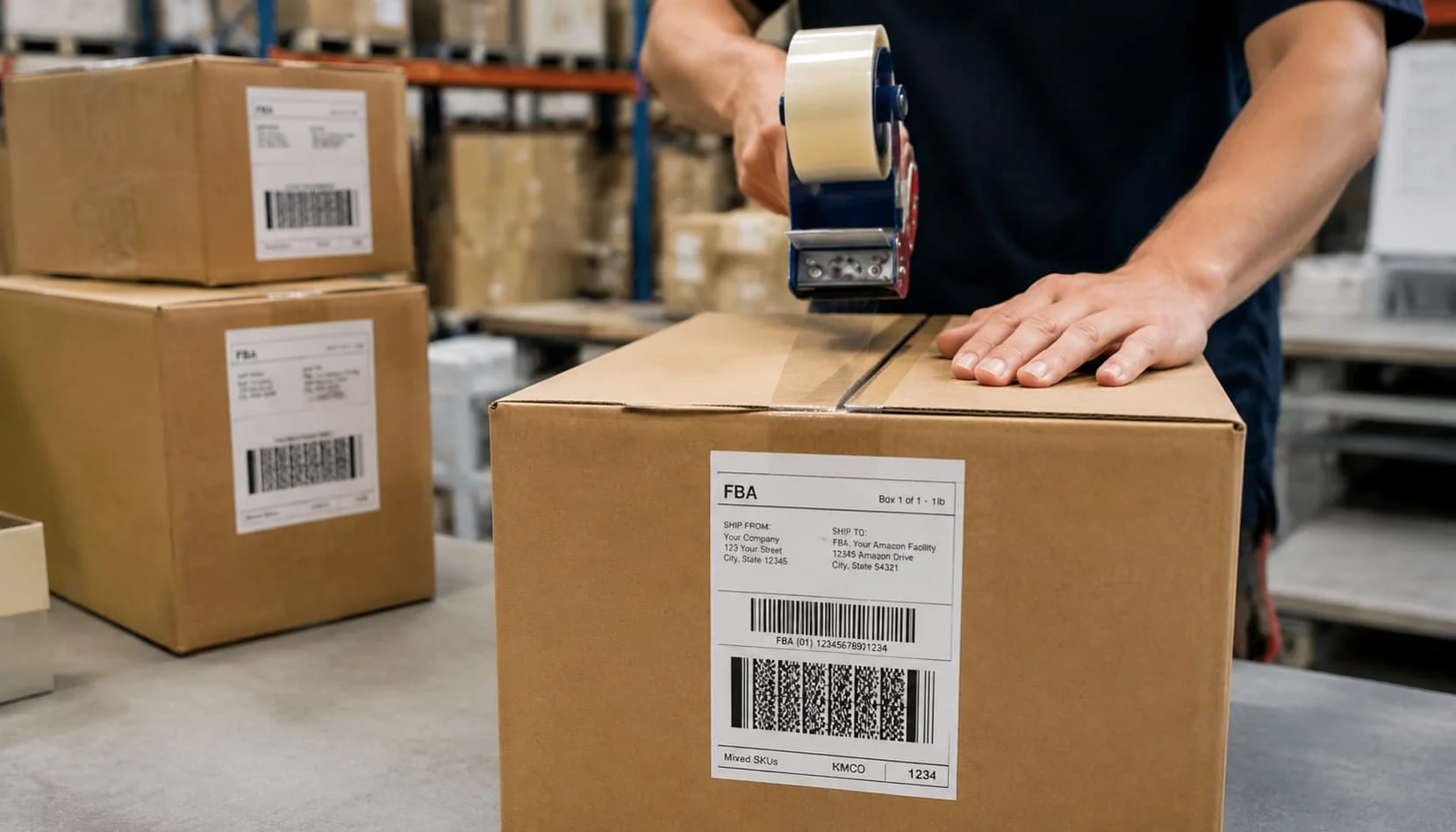
An Amazon FBA seller looking at Yiwu Market usually already knows what most general sourcing guides don’t cover: the product itself is only part of the job. Amazon adds its own layer of requirements on top of standard sourcing, from carton labeling to poly bag thickness to how many units can arrive in a single shipment plan. A Yiwu agent who understands general China sourcing but not FBA prep will get you a good product and then hand you a shipment that Amazon flags at receiving.
This guide covers where Yiwu sourcing fits an FBA business, which product categories tend to overlap well with what sells on Amazon, what an agent needs to handle specifically for FBA-bound orders, and when Yiwu sourcing through an agent makes sense compared with going straight to a factory for custom manufacturing. For the broader picture of what a Yiwu agent does and costs, see the complete guide to Yiwu agents.
Key Takeaways
- Yiwu Market’s product range, drawn from more than 75,000 booths, overlaps naturally with categories that move well on Amazon: home goods, kitchen tools, personal care accessories, seasonal and holiday items, toys, office supplies, pet accessories, and arts and crafts.
- An FBA-ready Yiwu agent needs to handle four things beyond standard sourcing: pre-shipment inspection against Amazon’s condition standards, photo documentation for dispute protection, FBA prep and labeling compliance, and coordination of shipping direct to a fulfillment center.
- Amazon’s own packaging and prep requirements, published on Seller Central, specify rules such as poly bag thickness and suffocation warnings that most Yiwu booths and small factories have never had to follow for their other customers.
- Yiwu sourcing through an agent tends to suit sellers testing multiple SKUs at moderate volume; sellers with a single proven bestseller at high, stable volume often move toward direct factory relationships and custom manufacturing instead.
- Confirming FBA experience specifically, not just general export experience, before booking an agent is the step most sellers skip and most often regret.
Why FBA Sellers Look at Yiwu in the First Place
Yiwu Market exists to supply small-batch, wide-variety buyers, which happens to describe most Amazon sellers testing new products. According to figures published by Yiwu China Commodities City Group, the market’s operator, Yiwu International Trade City covers somewhere between 4 and 6.4 million square meters depending on the source, and lists upward of 2.1 million types of products across more than 75,000 booths. That breadth means a seller can source a kitchen gadget, a pet accessory, and a seasonal item from the same city, often the same trip or the same agent relationship, rather than negotiating separate factory relationships for each.
This matters for FBA sellers specifically because product testing on Amazon rewards low-risk experimentation. A seller launching three or four SKUs to see which one gets traction doesn’t want three or four separate MOQ negotiations with three or four factories in three different provinces. Yiwu’s wholesale structure, where many booths already stock finished goods in smaller quantities, lowers the cost of testing before committing to a single winning product. The tradeoff, covered in more depth in Low MOQ Yiwu Sourcing, is that per-unit cost at small quantity runs higher than a factory-direct order once a product proves itself.
Which Product Categories Overlap Well with Amazon Bestsellers
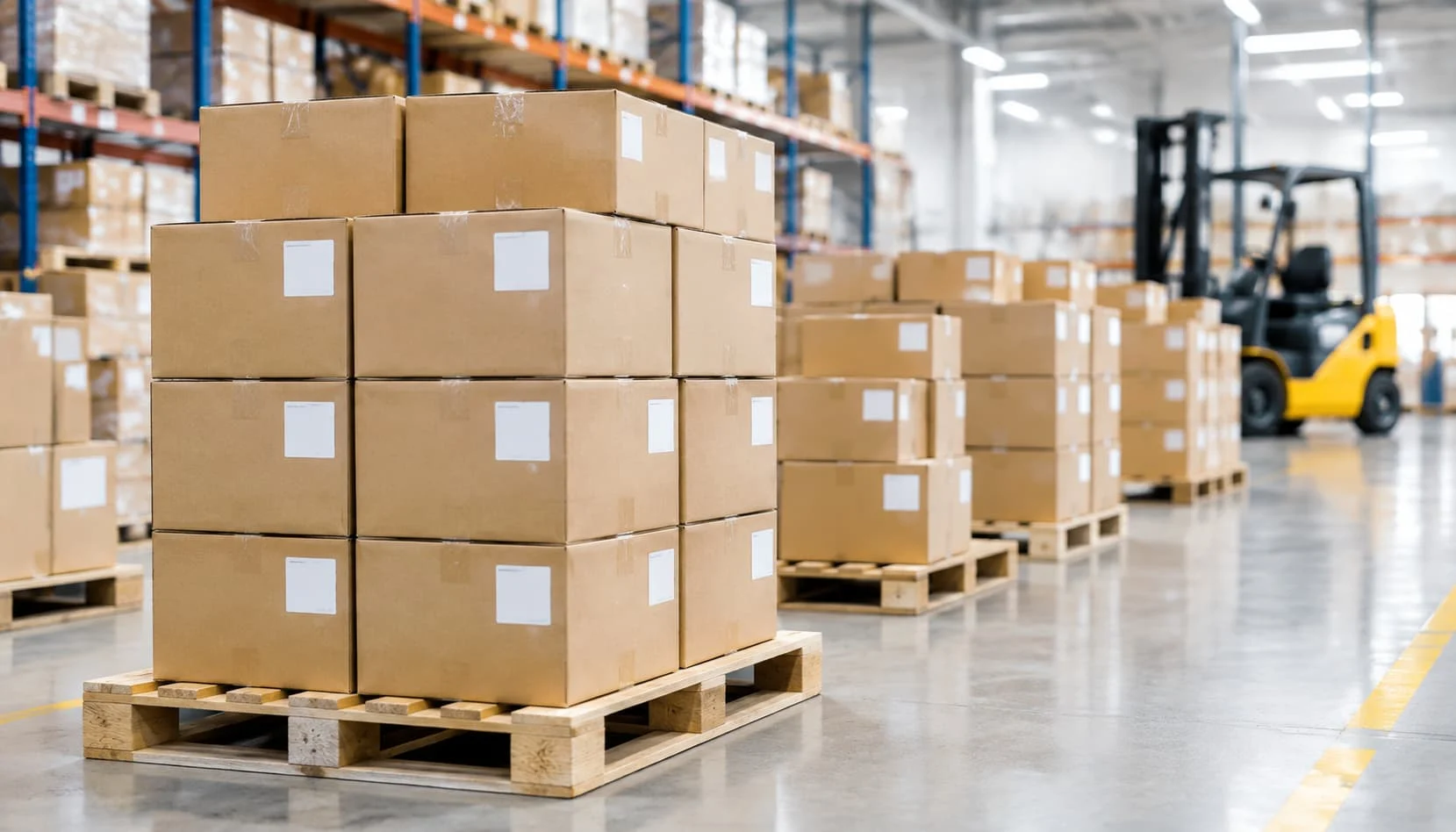
Yiwu’s category strength lines up with several of the product areas Amazon sellers most commonly launch in. This isn’t a coincidence: both Yiwu’s wholesale market and Amazon’s third-party marketplace are built around the same kind of product, low-complexity, low-cost-per-unit, high-variety goods that don’t require heavy engineering or certification to bring to market.
The categories with the strongest natural overlap include home goods and organization products, kitchen tools and gadgets, personal care accessories, seasonal and holiday items, toys, office supplies, pet accessories, and arts and crafts supplies. These are also, per Amazon’s own published Best Sellers category structure, among the most heavily populated categories on the platform, which is consistent with the general pattern that draws sellers toward Yiwu for these product types rather than toward larger custom-manufacturing suppliers.
Electronics, anything requiring UL or FCC certification, and products with strict safety-testing requirements for children (car seats, certain toy categories with battery components) are the categories where Yiwu sourcing fits less naturally, because certification and compliance testing typically require a closer, longer-term relationship with a specific factory rather than a wholesale-market purchase. Sellers in those categories are usually better served going directly to a specialized manufacturer.
What an FBA-Ready Yiwu Agent Should Handle
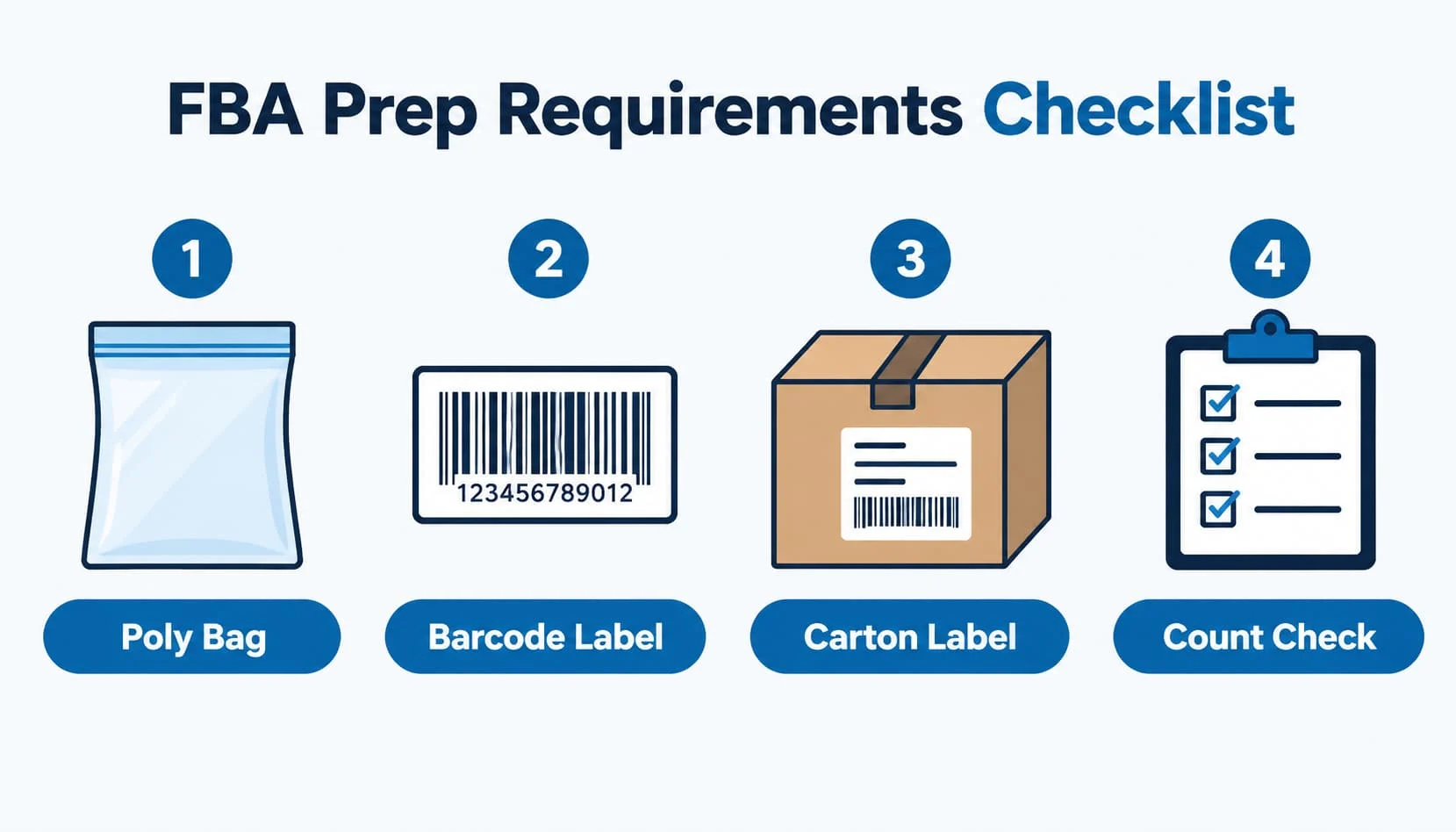
General sourcing competence is not the same as FBA competence. A seller vetting a Yiwu agent for FBA work should confirm the agent handles four specific things beyond standard sourcing and shipping.
Pre-Shipment Inspection Against Amazon’s Standards
Amazon holds sellers responsible for the condition of goods that arrive at a fulfillment center, and a damaged or defective shipment can trigger inventory removal, negative reviews, or account-level performance flags. An agent doing pre-shipment inspection for an FBA order needs to check not just general quality (materials, function, color match) but condition specifics that matter for Amazon: packaging that will survive the additional handling of Amazon’s fulfillment network, correct unit counts per carton, and product condition that matches what the listing describes as new. This is a stricter bar than inspection for a buyer who’s reselling through their own retail channel with more control over final packaging.
Photo Documentation Before the Shipment Leaves
Photo documentation of goods before they leave the warehouse protects the seller in two directions: it’s evidence if Amazon later disputes the condition or count of a received shipment, and it’s evidence if a factory or booth later disputes what actually shipped. An agent who photographs cartons opened and closed, labels visible, and unit samples before sealing gives the seller a paper trail that’s otherwise very hard to reconstruct after a container has already crossed the ocean.
FBA Prep and Labeling Compliance
This is the step general sourcing agents most often get wrong, because it’s specific to Amazon and not part of standard export documentation. Amazon’s own packaging and prep requirements, published through Seller Central, set rules that apply regardless of where a product is manufactured: poly bags with an opening 5 inches or larger on their longest side must be at least 1.5 mil thick and must carry a suffocation warning, and cartons need specific content labels so receiving staff can process them without opening every box to check what’s inside. FNSKU labeling got stricter on March 31, 2026: the option to skip FNSKU and ship under the product’s own manufacturer barcode (UPC or EAN) is now limited to Brand Registry-verified brand owners selling goods they manufacture themselves. Most sellers sourcing through Yiwu, including resellers and private-label sellers who don’t meet that bar, now need an FNSKU label applied to every unit regardless of what barcode is already printed on the packaging. A Yiwu booth or small factory that has never shipped to an Amazon fulfillment center has no reason to know any of this, which is exactly why the agent, not the factory, needs to own this step.
Shipping Direct to a Fulfillment Center
An agent experienced with FBA shipments books freight against Amazon’s shipment plan rather than a generic bill of lading, coordinates delivery appointment scheduling where a fulfillment center requires it, and knows how to split a single order across multiple fulfillment centers when Amazon’s inventory placement service assigns it that way. Sellers who’ve used an agent only for general import shipping sometimes discover, on their first FBA-bound order, that the agent’s freight partner has never handled an Amazon delivery appointment and doesn’t know the process exists.
When Yiwu Sourcing Makes Sense vs Custom Manufacturing
The honest answer is that this depends more on product stage and order predictability than on any fixed revenue number, and sellers should be skeptical of guides that hand out a specific dollar threshold as if it applies universally.
Yiwu sourcing through an agent tends to make sense during product testing and early scaling, when a seller is running multiple SKUs to find a winner, doesn’t yet have volume high enough to negotiate strong factory-direct pricing, and values speed and low commitment over the lowest possible per-unit cost. The tradeoff is real: wholesale-market pricing at moderate volume rarely matches what a dedicated factory can offer once an order reaches a scale that justifies tooling, custom packaging, or an exclusive supply agreement.
Custom manufacturing through a direct factory relationship tends to make more sense once a product has proven demand, order volume is large and predictable enough to negotiate meaningfully on price, and the seller wants product differentiation, custom molds, private branding, or packaging that a general wholesale booth can’t produce. At that stage, the agent’s commission and the wholesale markup built into Yiwu pricing both start to cost more than the savings a direct factory relationship would deliver. The comparison of total landed cost between agent-assisted sourcing and going direct is covered in more detail in Yiwu Sourcing Agent vs Alibaba, and the same logic largely applies when comparing Yiwu sourcing against a dedicated custom-manufacturing factory.
Sellers shipping into markets outside North America, including Europe, face additional layers on top of this decision around duties, freight routing, and compliance documentation, covered separately in Yiwu Sourcing Agent for European Importers.
How to Vet a Yiwu Agent for FBA Work Specifically
General agent vetting still applies here: a registered business, verifiable references, and a written fee structure before any deposit changes hands. On top of that baseline, an FBA seller should ask an agent directly for examples of past FBA shipments, not just past export shipments, and should ask how the agent handles FNSKU labeling, poly bag compliance, and carton marking without being prompted for specifics. An agent who answers those questions fluently has done this before. An agent who needs the questions explained hasn’t, and that gap tends to show up as a shipment problem after the goods have already left China rather than before, when it’s still cheap to fix.
Frequently Asked Questions
Can a Yiwu agent apply FNSKU labels before my shipment leaves China?
Many agents with FBA experience can apply FNSKU labels at their warehouse before the shipment leaves, which is usually cheaper and faster than relying on Amazon’s own labeling service after arrival. This matters more than it used to: since March 31, 2026, only Brand Registry-verified brand owners selling self-manufactured goods can skip FNSKU and ship under their own UPC or EAN. Most Yiwu-sourced orders need FNSKU applied to every unit now, so confirm this specifically before booking rather than assuming your existing barcode is enough.
Do I need a different agent for FBA orders versus regular import orders?
Not necessarily a different agent, but a different level of confirmed experience. The sourcing, inspection, and freight functions are the same; what changes is whether the agent already knows Amazon’s packaging, labeling, and shipment-plan requirements well enough to handle them without extra guidance from the seller.
Is Yiwu sourcing cheaper than using Alibaba for FBA products?
It depends on order size and how much of the QC, consolidation, and freight coordination the seller would otherwise have to arrange separately. The full cost comparison across several order scenarios is in Yiwu Sourcing Agent vs Alibaba.
The Bottom Line
Yiwu sourcing fits Amazon FBA sellers well during the testing and early-scaling stage, particularly in categories like home goods, kitchen tools, personal care items, seasonal products, toys, office supplies, pet accessories, and arts and crafts, where the market’s wholesale variety matches what Amazon buyers are already searching for. The part that separates a smooth shipment from a costly one isn’t the sourcing itself, it’s whether the agent handling the order actually understands Amazon’s prep, labeling, and fulfillment-center requirements before the goods leave the warehouse.
Before committing to an agent for FBA-bound orders, confirm specific FBA shipment experience and ask to see how they’ve handled labeling and prep on a past order. If you’re still weighing Yiwu against a larger custom-manufacturing relationship, or against ordering directly through Alibaba, the Yiwu Sourcing Agent vs Alibaba comparison is the next logical read.