
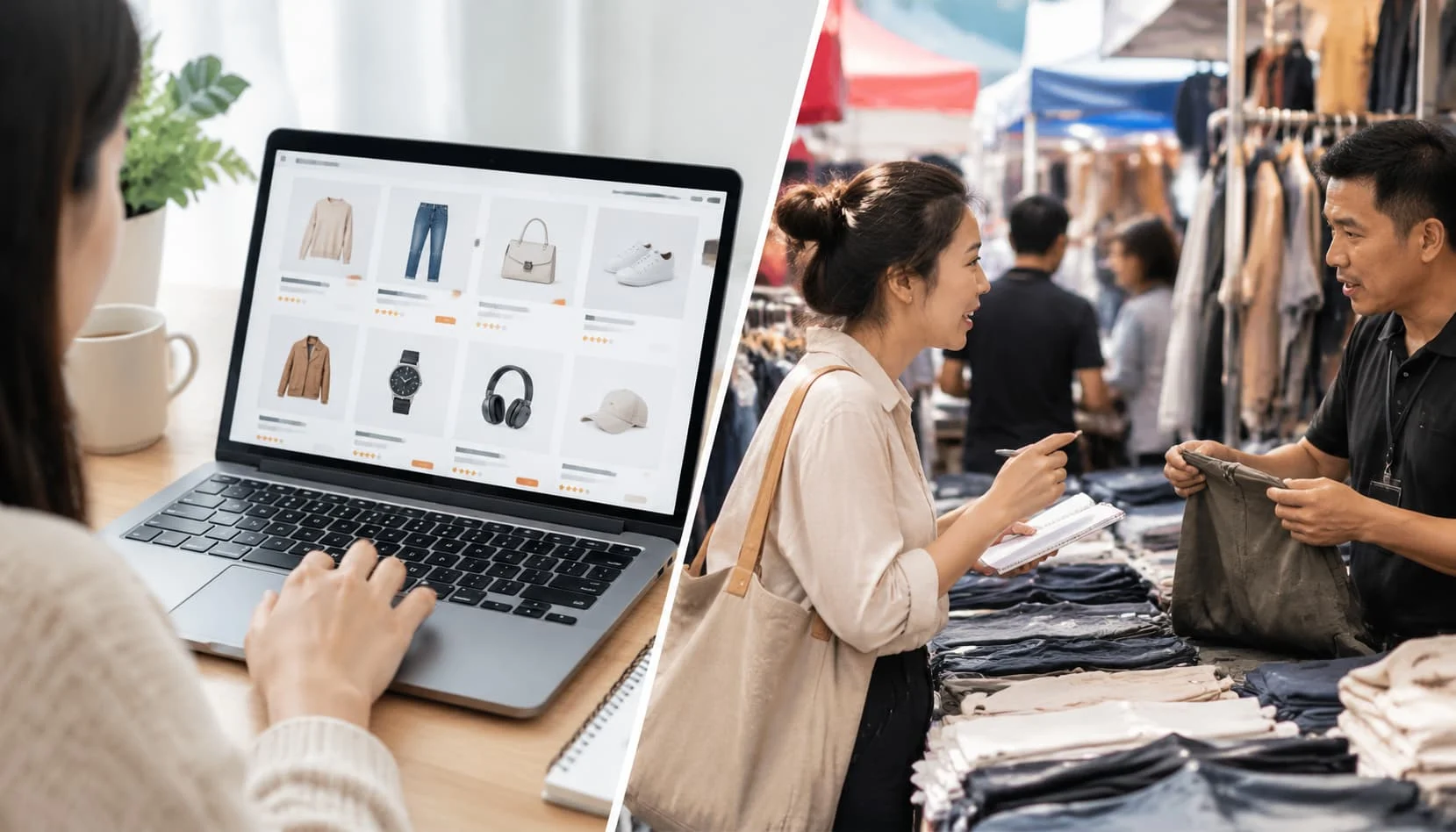
The honest answer is that neither option wins outright. Alibaba and a Yiwu sourcing agent solve different sourcing problems, and the cheaper choice depends on your order size, how many product categories you’re buying, and whether you already have a trusted factory relationship. Buyers placing one large order with a known supplier usually do better going direct on Alibaba. Buyers testing several small-batch categories, or sourcing without an existing factory relationship, usually come out ahead using an agent, once you count the costs Alibaba doesn’t show you upfront.
This isn’t a case for one platform over the other. It’s a breakdown of what each approach actually costs and where each one falls apart, so you can match the model to your order instead of picking based on which one markets itself better.
Key Takeaways
- Alibaba removes the agent’s commission but leaves negotiation, sample vetting, and pre-shipment quality control to the buyer, either done in-house or hired separately.
- A Yiwu sourcing agent typically charges 3% to 10% of order value, with agencies like Union Trust structuring commission between 3% and 6%, in exchange for market access, negotiation, in-person QC, and consolidation.
- Alibaba supplier MOQs tend to run higher and are less negotiable than Yiwu Market booth pricing, where quantities and per-unit price both flex based on in-person negotiation.
- Large single-SKU orders from a factory you already trust generally cost less through Alibaba; small mixed-category orders from unfamiliar suppliers generally cost less, and carry less risk, through an agent.
- Alibaba’s reach extends well beyond consumer goods into industrial and B2B categories that Yiwu Market, a consumer small-commodity market, doesn’t cover at all.
How the Pricing Structures Actually Differ
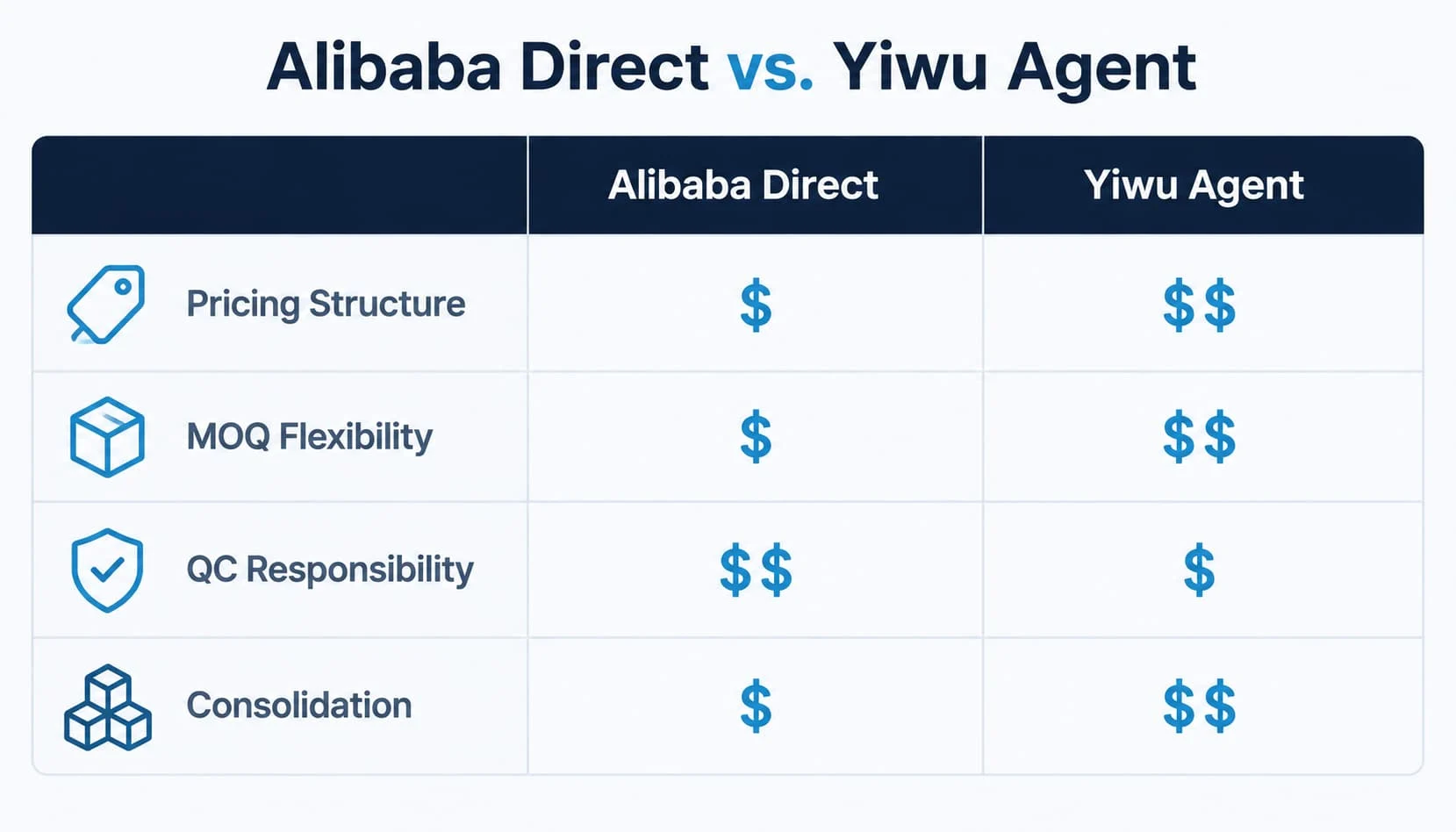
Alibaba’s listed price is what the supplier quotes directly, with no agent fee layered on top, but that price isn’t the full picture of what you’ll pay. A buyer sourcing through Alibaba without local representation still has to cover sample costs, factory visits or third-party inspection if quality matters, and their own freight arrangement, all of which an agent would otherwise bundle into one relationship. The listed unit price looks lower, but the buyer absorbs work and risk that the price doesn’t account for.
A Yiwu sourcing agent charges a commission on top of the goods price, commonly in the 3% to 10% range according to general China sourcing industry coverage, with individual agencies setting their own rate inside that band. Union Trust, for example, structures its commission between 3% and 6% depending on order profile. That fee is not free money for the agent; it covers negotiation at the booth (which frequently lowers the unit price a foreign buyer would have paid alone), sample vetting across multiple vendors, quality inspection before shipment, and consolidation of goods from many small suppliers into one shipment. The full breakdown of what’s included in that commission, and where hidden markups tend to creep in, is covered in Yiwu Agent Fees and Commission Explained.
The comparison that actually matters isn’t “listed price” versus “listed price plus commission.” It’s total landed cost, including what you’d otherwise spend replicating the agent’s negotiation and inspection work yourself. For a single large order from a supplier you already know well, that replication cost is low, so Alibaba direct tends to win. For a first-time buyer sourcing from suppliers they’ve never dealt with, the replication cost (a bad batch, a missed spec, a shipment that gets stuck because nobody checked it before it left) can easily exceed what an agent would have charged.
Minimum Order Quantity: Where the Real Gap Shows Up
Alibaba supplier listings typically state a fixed MOQ, and while some suppliers negotiate down for a serious buyer, many don’t move much below their stated minimum, particularly for factories rather than trading companies. A supplier listing an MOQ of 500 or 1,000 units rarely drops to 50 just because a buyer asks. This structure suits buyers who know exactly what they want and can commit to volume from day one.
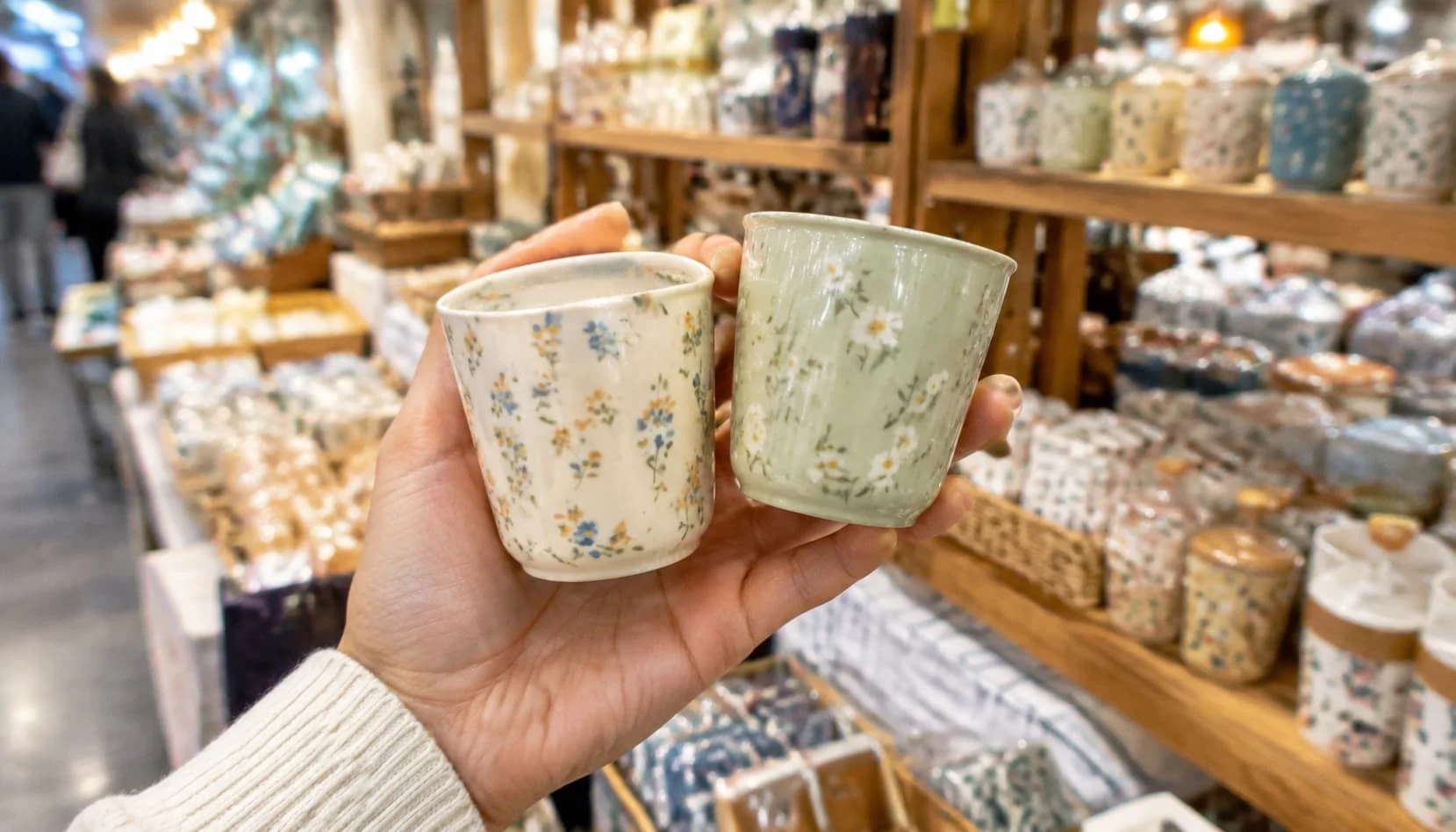
Yiwu Market operates on a fundamentally different model because it’s a physical wholesale market made up of tens of thousands of individual booths, many of which sell small quantities as a matter of normal business, not as a special accommodation. An agent working the market floor can negotiate quantities that would be impossible to get quoted online, and can mix small orders across dozens of different product categories in one trip, something no single Alibaba supplier offers since each listing represents one supplier’s own catalog.
This is the single biggest reason buyers testing a new product line, or building a mixed-category order for a shop or marketplace store, gravitate toward an agent rather than Alibaba. Placing twenty small test orders across twenty Alibaba suppliers means twenty separate negotiations, twenty separate MOQ conversations, and twenty separate shipments unless the buyer arranges consolidation themselves. An agent handles all of that as part of the service.
Quality Control: Verified in Person vs Verified Remotely
Alibaba buyers who want pre-shipment inspection have to arrange it themselves, either by hiring a third-party inspection company or by traveling to check the factory directly. Trade Assurance and supplier verification badges on Alibaba give some baseline confidence about the supplier’s business legitimacy, but they don’t substitute for someone physically checking that a specific production run matches the agreed specification before it ships.
A Yiwu agent builds inspection into the process by default, walking the market or the workshop, checking samples against the buyer’s spec, and catching problems (wrong materials, inconsistent color runs, non-working mechanisms) while they’re still fixable. This matters most for buyers who can’t travel to China themselves and have no existing QC relationship on the ground. It matters much less for buyers who already run their own inspection process or who have ordered from the same Alibaba factory enough times to trust the output without checking every batch.
The tradeoff is direct: Alibaba puts the verification burden on the buyer, and a Yiwu agent absorbs it into the fee. Neither is inherently safer; the safer option is whichever one actually gets exercised. An agent who skips inspection to save time offers no real advantage over unverified Alibaba sourcing, so vetting the agent’s actual inspection process matters as much as choosing the model.
Speed: Two Different Bottlenecks
Alibaba sourcing can move fast when a buyer already knows the supplier and product, since there’s no market visit, no multi-vendor negotiation, and no consolidation step. Placing a repeat order with an established Alibaba supplier is often the quickest path from decision to shipment.
The bottleneck on Alibaba shows up during the discovery and vetting phase, when a buyer is comparing suppliers, requesting samples from several of them, and trying to judge which listing photos and claims reflect reality. That process can drag out over weeks, especially for a buyer with no local contact to shortcut the vetting.
A Yiwu agent front-loads that discovery work by walking the market with existing supplier knowledge, which speeds up finding and comparing options for a new product. But the agent then adds consolidation and freight coordination time on the back end, especially for mixed-category orders pulled from many booths. For a single-SKU order from one factory, an agent rarely beats a direct, established Alibaba relationship on speed. For a multi-category order from suppliers a buyer has never used, an agent’s existing market knowledge usually beats cold Alibaba discovery.
When Alibaba Direct Makes More Sense
Alibaba is the better fit for large, single-SKU orders from a factory the buyer already trusts, where the buyer has in-house or contracted QC and an existing freight forwarder. In that scenario, an agent’s commission adds cost without adding much the buyer can’t already do for themselves.
Alibaba also covers ground that Yiwu Market doesn’t touch at all. Yiwu is a consumer small-commodity market: jewelry, toys, stationery, household goods, apparel accessories, and similar categories. Alibaba’s supplier base extends into industrial equipment, raw materials, private-label manufacturing at scale, and B2B categories with no meaningful presence in Yiwu Market. A buyer sourcing machinery components or bulk raw material has no real Yiwu equivalent to compare against; Alibaba, or a direct factory relationship, is the only path.
The three-way comparison between an agent, a general sourcing agent, and a trading company, including where each model actually fits, is covered in Yiwu Agent vs Sourcing Agent vs Trading Company.
When a Yiwu Agent Makes More Sense
An agent earns its commission back on orders where the buyer is sourcing across multiple small categories, doesn’t yet have a trusted factory relationship, or can’t travel to inspect goods before shipment. First-time importers testing product-market fit with small batches, and buyers assembling mixed-category orders for a retail store or marketplace listing, are the clearest fit.
Buyers often frame this as a one-time either/or choice, but the two models aren’t mutually exclusive over time. A common pattern is starting with a Yiwu agent for small mixed-category test orders across several product lines, then moving the highest-performing single SKU to a direct Alibaba factory relationship once volume justifies negotiating without an intermediary. Treating this as a single decision instead of a sourcing lifecycle misses how most buyers actually scale from a first order to a repeat one.
Amazon FBA sellers are a buyer segment where this comparison comes up constantly, since FBA sourcing often mixes a handful of proven, high-volume SKUs (candidates for direct Alibaba sourcing) with a rotating set of smaller test products (better suited to an agent’s mixed-order flexibility). Yiwu Agent for Amazon FBA Sellers: Sourcing to Fulfillment Center covers the packaging, labeling, and shipping considerations specific to that workflow.
Frequently Asked Questions
Is a Yiwu agent always cheaper than buying direct on Alibaba?
No. For a large order of one product from a factory the buyer already trusts, Alibaba direct is usually cheaper because there’s no commission and no extra negotiation layer needed. An agent tends to be cheaper in total landed cost only when the buyer would otherwise need to pay separately for inspection, negotiation, or consolidation across multiple small orders.
Can I use both Alibaba and a Yiwu agent for the same business?
Yes, and many buyers do. A common approach is sourcing proven, high-volume SKUs directly through an established Alibaba supplier relationship while using an agent for smaller test orders or mixed-category purchases where market access and flexible MOQs matter more.
Does Alibaba’s Trade Assurance replace the need for quality inspection?
Trade Assurance protects payment and covers certain dispute scenarios, but it doesn’t replace physical, pre-shipment inspection of a specific production run against a buyer’s exact specification. Buyers relying on Trade Assurance alone still carry more quality risk than buyers with someone checking goods in person before they ship.
The Bottom Line
Choosing between Alibaba and a Yiwu sourcing agent comes down to what kind of order you’re placing, not which platform sounds more trustworthy in marketing copy. A single large order from a known factory usually favors Alibaba direct. A small, mixed-category order from unfamiliar suppliers, or an order that needs someone physically inspecting goods before shipment, usually favors an agent. The most cost-effective buyers tend to use both, matching each order to the model that fits it rather than committing to one approach for every purchase.