
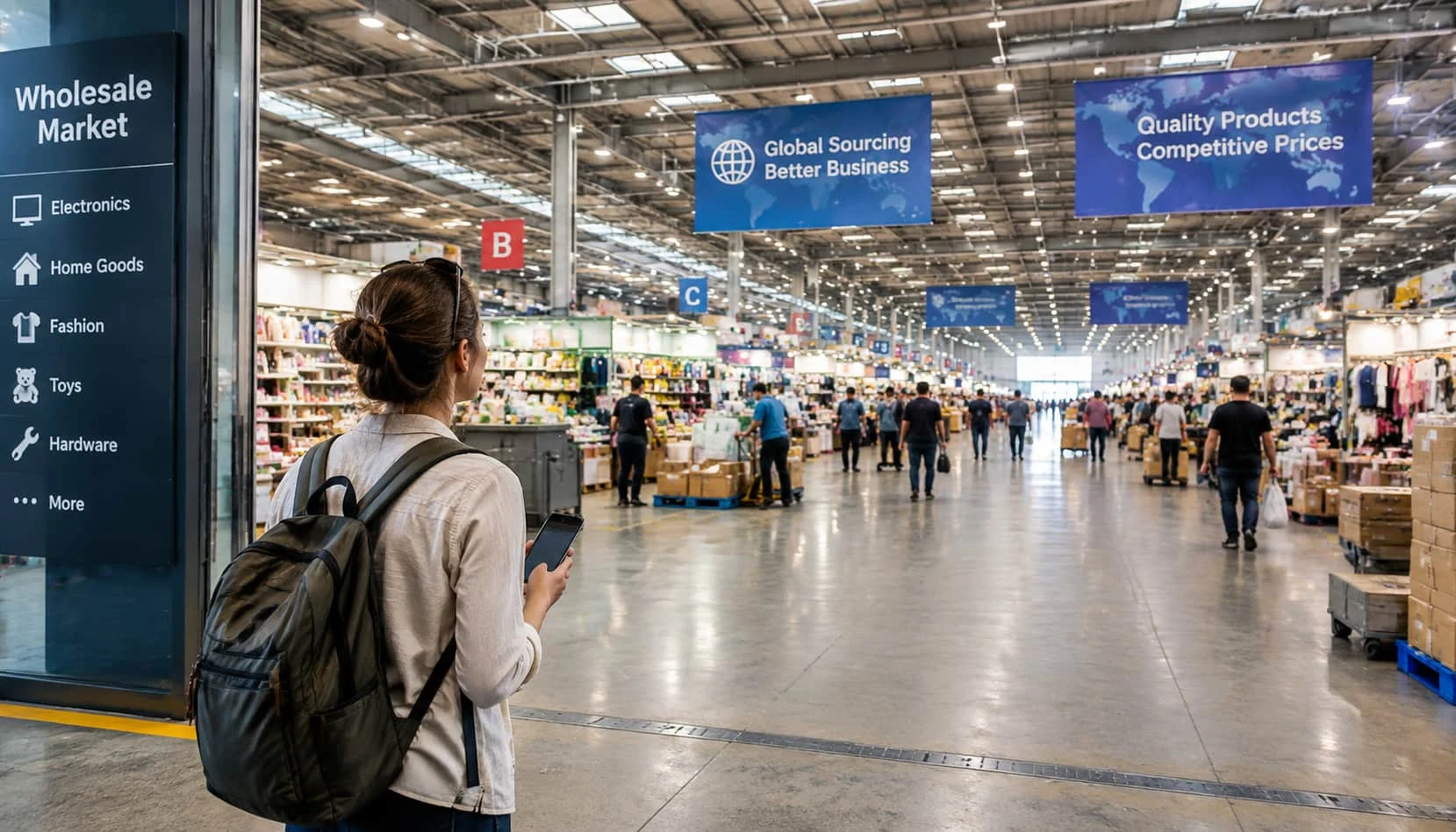
Yes, you can visit Yiwu Market without hiring an agent, and plenty of buyers do it successfully every year. Whether you should is a different question, and the honest answer depends on your experience, your language ability, and how much time you can spend inside a market with more than 75,000 booths spread across five districts.
This guide is not an argument for hiring an agent. It is a plain look at what going solo actually costs you in money saved, time spent, and risk taken on, so you can make the call yourself before you book a flight.
Key Takeaways
- Visiting Yiwu Market without an agent works best for buyers who have been before, speak basic English or use translation apps confidently, and are comfortable navigating a large, unfamiliar wholesale market on their own.
- The main financial upside is skipping the agent’s commission, commonly 3% to 10% of sourced order value depending on the agent and order profile.
- The main tradeoffs are local negotiation leverage, physical quality control expertise, order consolidation, and language mediation, all of which an agent normally handles for you.
- A short readiness checklist (translation app, backup interpreter, payment method, phrasebook, a realistic day-by-day plan) reduces the biggest risks of a solo visit.
- Neither path is universally right. The decision comes down to your order size, your experience level, and how much you value your own time versus a percentage of order value.
Who a Solo Yiwu Visit Actually Works For
A solo visit tends to go well for a specific type of buyer, and poorly for everyone else. It is not about confidence alone. It is about whether you already have the experience and tools to replace what an agent normally provides.
Buyers who have visited before. First-time visitors consistently underestimate how large and disorienting the market is. Someone who has already walked the districts once, even briefly through an agent or a trade show, has a mental map that makes a second, independent visit far more efficient than a first attempt cold.
Buyers with basic English or a working translation app strategy. You do not need to speak Mandarin. Many booth vendors in the market’s more export-oriented sections handle basic English numbers, product names, and quantities. What you do need is comfort using a translation app for anything more specific, like material composition, packaging requirements, or payment terms, and patience when a conversation takes three times longer than it would with a native-language mediator.
Buyers comfortable navigating a large, unfamiliar market alone. Yiwu International Trade City spans an estimated 4 to 6.4 million square meters depending on the source and contains more than 75,000 booths across five districts, according to figures published by its operator, Yiwu China Commodities City Group. Finding the right section for your product category, without local guidance, takes real orientation time. Buyers who travel independently often and are used to figuring out unfamiliar systems on the fly adapt faster than buyers who are used to having logistics handled for them.
If none of these describe you, a solo visit is still possible, but it will cost you more time and carry more risk than the sections below suggest.
What You Save by Going Without an Agent
The clearest, most quantifiable benefit of a solo visit is skipping the agent’s fee. Commission-based Yiwu agents commonly charge between 3% and 10% of sourced order value, with the rate depending on order size, product complexity, and how much quality control and consolidation work is involved, according to industry coverage of China sourcing services from outlets like China Briefing. On a $20,000 order, that range works out to roughly $600 to $2,000 saved if you handle sourcing, negotiation, and logistics yourself. Yiwu Agent Fees and Commission Explained breaks down how that range is actually structured and what it’s supposed to cover.
There is a second, less obvious benefit: direct pricing exposure. When you negotiate at the booth yourself, you see the actual quoted price before any markup or commission is added. Some buyers value this transparency even beyond the dollar savings, because it builds a clearer picture of true wholesale pricing for future orders, whether or not they use an agent again.
What You Give Up Without an Agent
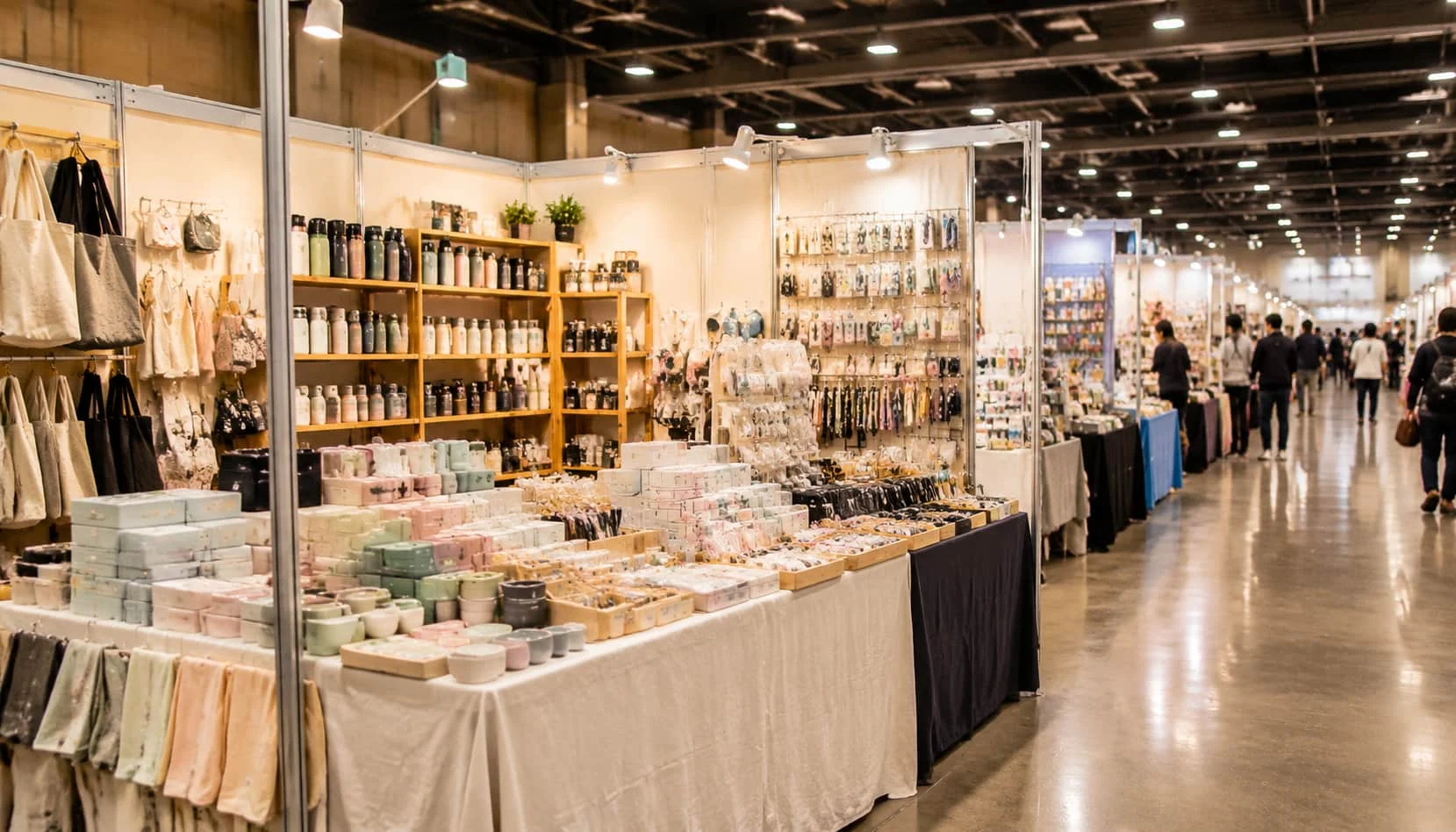
The commission you save is not free money. It is a payment for four specific things, and going without an agent means doing all four yourself, or accepting you will not get them at all.
Local negotiation leverage. Vendors at Yiwu Market frequently price differently once they identify a buyer as a first-time foreign visitor rather than a repeat local trader. An experienced local negotiator, who knows typical margins for a given product category, often secures a lower unit price than a foreign buyer negotiating the same item alone. This gap can offset a meaningful part of the commission you thought you were saving.
Physical quality control expertise. An agent or a QC team checks goods against your specification before shipment: correct materials, correct color and size distribution, working mechanisms on anything mechanical or electronic, and packaging integrity. On a solo visit, you either do this inspection yourself in real time at the booth, which requires product-specific knowledge, or you skip it and hope the shipped goods match what you saw in the sample.
Consolidation logistics. If you are sourcing from more than a handful of vendors, which is common at Yiwu given how many booths sell narrow product ranges, someone has to combine everything into one shipment. Without an agent’s warehouse and consolidation process, you are either arranging this yourself with a freight forwarder you find on the ground, or shipping smaller, less efficient parcels separately, which usually costs more per unit than one consolidated container.
Language mediation. Translation apps handle straightforward requests well. They handle less well the back-and-forth of a real negotiation, a dispute over a sample that does not match a spec, or a nuanced conversation about payment terms and delivery dates. A language mediator catches misunderstandings before they become expensive; a translation app usually just translates what was literally said, errors included.
how negotiation and quality control usually work with an agent
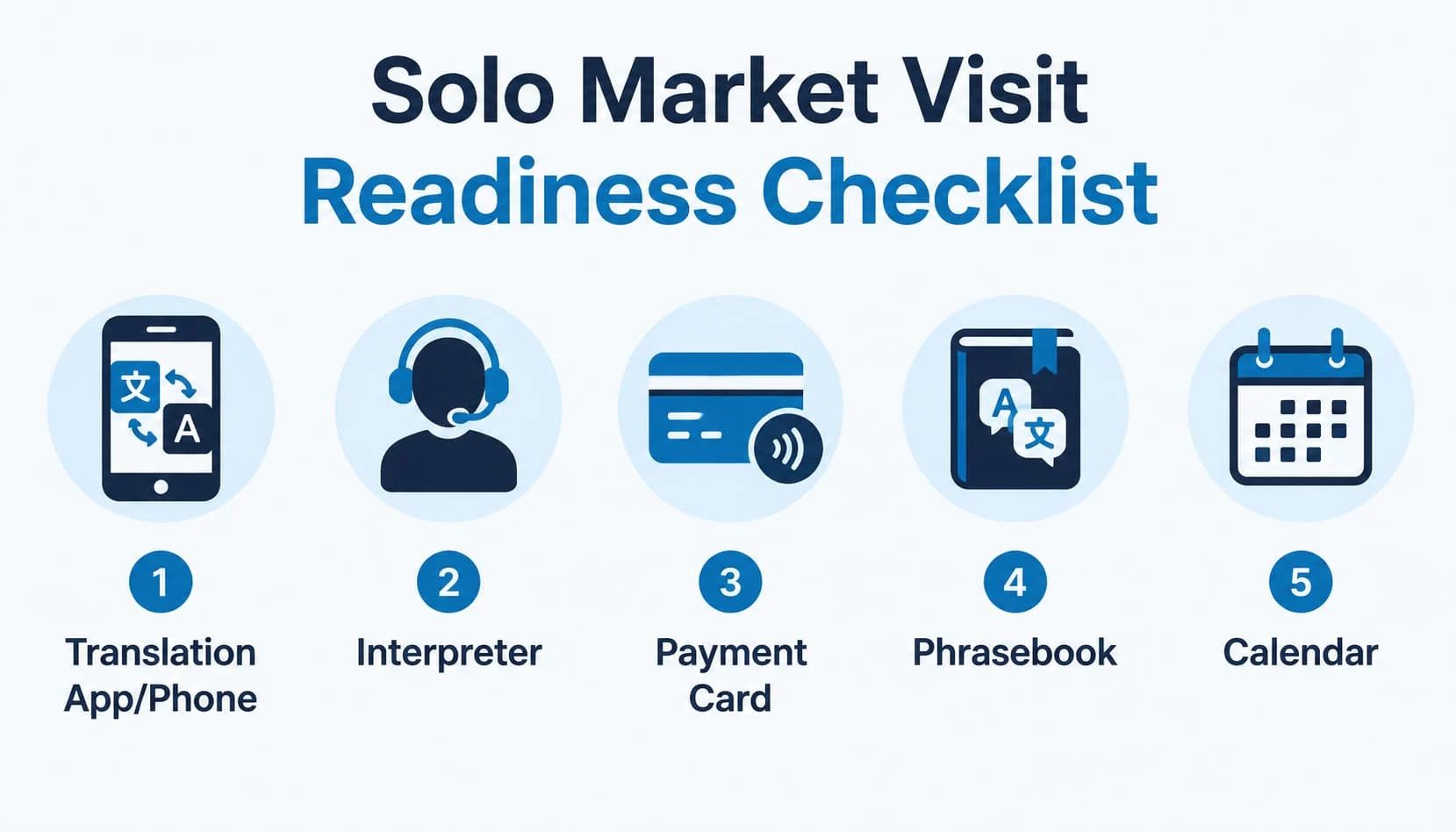
A Practical Readiness Checklist Before You Go Solo
If you have weighed the tradeoffs above and still want to visit independently, a short amount of preparation reduces most of the real risk.
- Install a reliable translation app before you land, and test it offline. Pleco and Baidu Translate both handle Mandarin well; test voice input specifically, since typing Chinese characters on the fly is impractical mid-negotiation.
- Arrange a backup interpreter through your hotel, even if you plan to rely on your app for most conversations. Many hotels near the market can provide an interpreter for a day rate, and having the option booked in advance means you are not scrambling if a negotiation gets complicated.
- Set up your payment method before you need it. Decide in advance whether you will pay by wire transfer, a China-based payment platform, or cash for samples, and understand the transfer limits and timing for each. Sorting this out mid-negotiation costs you leverage and time.
- Carry a basic phrasebook of trade-specific terms, even alongside an app. Quantities, materials, colors, and negotiation phrases you can say without pulling out your phone speed up every interaction and read as more serious to vendors.
- Build a realistic day-by-day market navigation plan before you arrive. Assign specific districts to specific days based on your product categories, and budget more time per district than you think you need. Most first-time solo visitors run out of time before they run out of market.
full market layout and first-timer walkthrough
Solo Visit vs. Using an Agent, Side by Side
| Visiting solo | Using an agent | |
|---|---|---|
| Commission cost | None | Typically 3% to 10% of order value |
| Negotiation leverage | Lower, priced as a first-time foreign visitor | Higher, local negotiator knows typical margins |
| Quality control | Done yourself, in real time, at the booth | Handled by the agent or a contracted QC team |
| Consolidation | Arranged yourself with a local freight forwarder | Handled through the agent’s warehouse |
| Language | Translation app or a hired interpreter | Handled by the agent directly |
| Time investment | High: travel, market navigation, negotiation | Lower: mostly review and approval from a distance |
| Best fit | Returning buyers with language tools and a flexible schedule | First-time buyers, large or mixed orders, tight timelines |
Making the Call
There is no universally right answer here. A returning buyer with a modest order, basic language tools, and a flexible schedule can visit Yiwu Market solo and come out ahead financially. A first-time buyer with a large order, no language ability, and a tight four-day trip is more likely to lose money to bad negotiation and missed quality issues than they would spend on an agent’s commission.
The most useful exercise before you book anything is honest, not optimistic: read through the readiness checklist above and count how many items you can genuinely check off today, not how many you could learn to handle eventually.
If you go through that exercise and decide a solo trip is not worth the risk for this order, working with a sourcing agent such as Union Trust is simply the other option on the table, not a fallback for buyers who could not manage on their own. For a full walkthrough of what an agent does day to day and how to vet one properly, see What Is a Yiwu Agent? The Complete Guide to Sourcing from Yiwu Market and How to Find a Good Yiwu Agent: A Step-by-Step Vetting Process. And whichever route you choose, How to Buy from Yiwu Market: A First-Timer’s Guide (With or Without an Agent) covers the market’s layout and practical navigation in more depth than this guide has room for.