
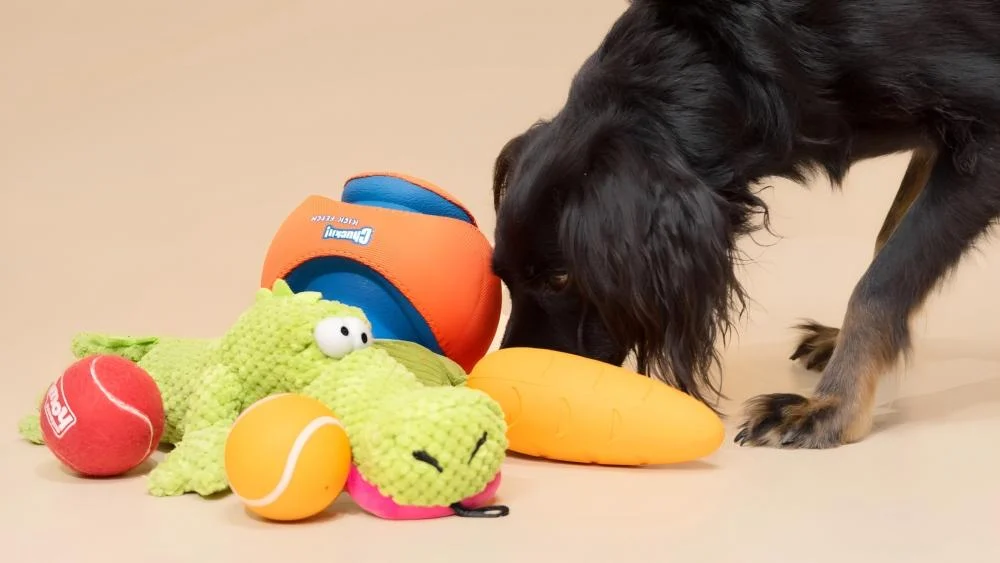
Choose wholesale dog toys from China for a defined dog size and play style, then assess how each construction could fail. A plush comfort toy, a tug product and an electronic treat dispenser need different materials and checks. “Pet safe” on a supplier listing is not a complete specification or a verified safety assessment.
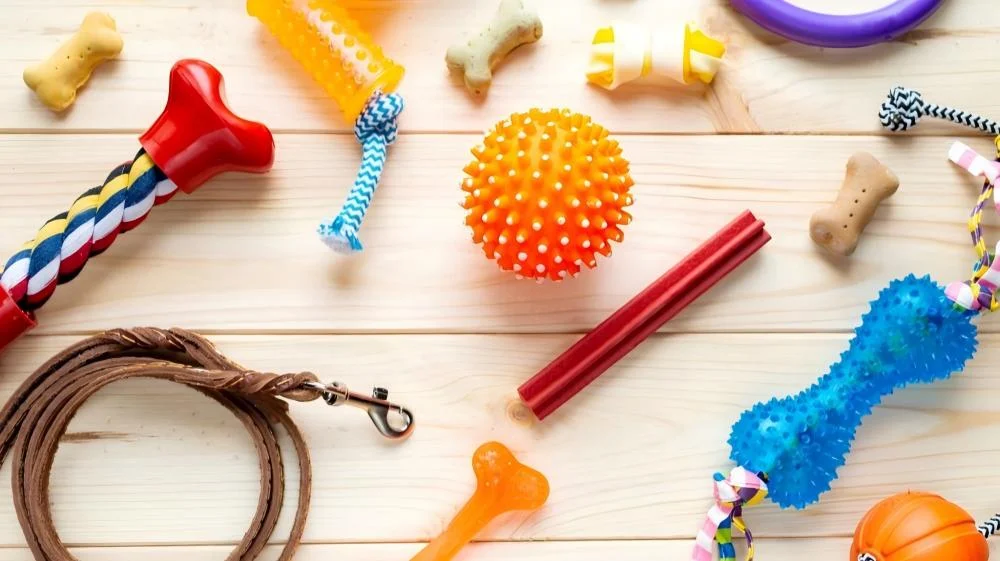
Build an assortment around use and risk
Define whether each item is for supervised fetch, chewing, tugging or another use. Record the intended dog size and the warnings or instructions your assessment requires. No ordinary toy should be described as indestructible without a defensible basis.
Separate material choices from marketing names. Ask what the polymer, fabric, filling and fastening components actually are. A description such as “natural” or “non-toxic” needs a defined scope and supporting evidence.
For a range, keep a SKU matrix of construction, dimensions, components and intended use. A single test on one product may not represent differently sized or constructed variants.
Evaluate the construction for each toy type
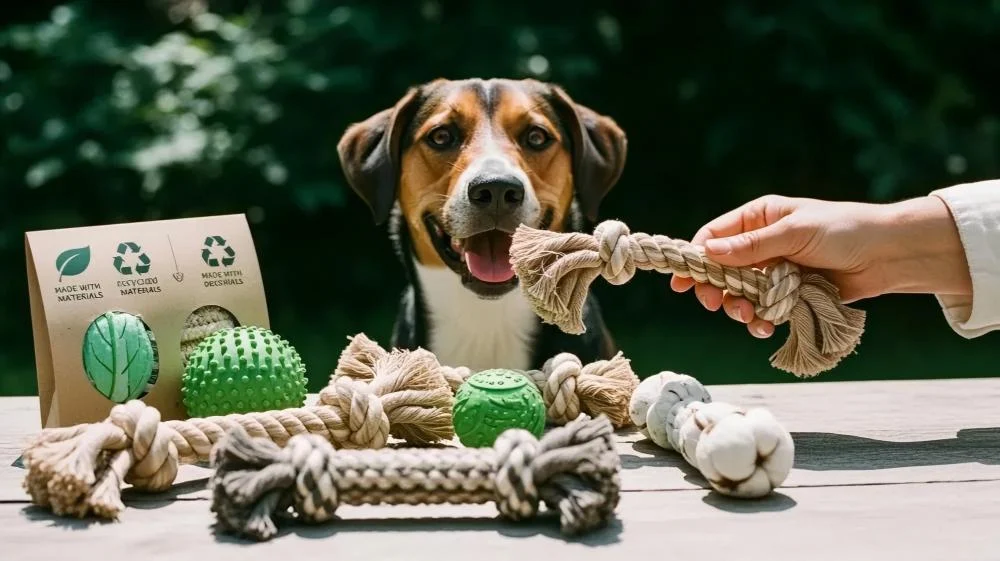
For plush, examine seam security, filling access and detachable features. For rope, review fiber release and attachments. For molded products, assess dimensions, material consistency and the potential for broken pieces during foreseeable use.
Electronic toys add issues such as battery access, charging, moisture and moving parts. Ask who supplies those components and how changes are controlled. A general plush-toy factory assessment does not establish electronics capability.
These are starting questions for a product-specific assessment, not a complete safety test protocol. Have a qualified specialist select methods and acceptance criteria appropriate to the intended item.

Do not confuse pet and children’s toy requirements
Children’s toy rules cannot automatically be used as a complete certification framework for pet products. CPSC toy guidance addresses products designed or marketed as playthings for children. Classification and other applicable obligations still need checking for your actual product.
If a product is also intended or marketed for children, that raises a separate assessment. Packaging and advertising matter alongside the supplier’s chosen category. Do not use a “pet product” label simply to avoid examining the intended use.
The EU compliance checklist helps organize market questions. CE is not a universal mark that every pet toy needs or is entitled to carry.
Choose suppliers for relevant capability
Ask which production steps the supplier performs and which are outsourced. Match its evidence to the material and construction you are buying. A large catalogue can represent several unrelated factories.
Use the supplier screening process. Verify the selling entity, production source and beneficiary. Request samples for the proposed configuration and record differences from the brief.
For private label, check rights to designs and artwork. Specify logo durability, packaging and traceability requirements. Agree whether later material or component substitutions require written approval.
Quote minimums and costs without catalogue assumptions
Request MOQ by mold, size, color, material and package. Existing stock may have different terms from a custom shape or branded assortment. The factory’s mold or material requirement does not disappear when the shipment is consolidated.
Separate tooling, samples, testing, inspection and goods prices. Identify ownership and access to custom tooling. Use the agent fee guide if a coordinator is involved, and confirm what the service covers.
Do not substitute an industry market-size forecast for evidence of demand for your assortment. Choose quantities from your customers and sales plan.
Set release and shipment requirements
Prepare a review sheet for each construction rather than a single “passed” box for the range. Include the material reference, intended play, assembled dimensions, accessible components, proposed checks and limitations of the evidence. The sheet should identify who reviews a failure and whether the supplier can propose a change without a new sample.
For a plush item with an internal sound component, for example, ask how the component is retained and what evidence supports the intended use. For an electronic dispenser, ask separately about the enclosure, moving mechanism and power arrangement. These examples identify questions to investigate; they are not complete safety protocols.
Keep customer-facing claims within the evidence reviewed. A supplier describing a product as “tested” should identify what was tested, on which version and against which criteria. Do not turn that phrase into a broad durability or safety guarantee on the package.
Approve the inspection scope, functional checks, labels and packaging before production. Define how failures are isolated and who can authorize dispatch. Visual inspection does not establish every material property.
The quality checklist supports that plan. Keep batch references connected to reports and cartons so a complaint can be traced after receipt.
Measure packed cartons and obtain freight and import estimates for the actual goods. Send product details, intended use, quantities and destination through the enquiry form when requesting sourcing support.