

Most “trending products” lists repeat the same 10 items you have already seen three times this quarter. The global e-commerce market is on track to hit $6.88 trillion by the end of 2026, according to eMarketer data (cited via Shopify, 2026), and that scale means the categories worth stocking rarely come down to a single viral product. They come down to whether a category has durable demand, a margin that survives freight and duties, and a supplier base you can actually verify before you send a deposit.
This guide ranks 30 products across six categories using three filters: sustained demand signal, realistic margin at achievable MOQs, and verified sourcing accessibility in China right now. A handful of picks are also cross-checked against our own 90-day search demand data for products we already move for clients, which we flag as we go. You will also find a dedicated section on what changes if you are selling into Latin America or Eastern Europe, since almost none of the trending-products content aimed at U.S. sellers accounts for those markets.
Key Takeaways
- Home goods, pet supplies, beauty accessories, and consumer electronics accessories remain the most reliable 2026 e-commerce categories because they combine recurring or replacement-driven demand with manageable sourcing complexity.
- Accessory categories (phone accessories, gaming peripherals, beauty tools) consistently outperform the core product they attach to on margin-to-complexity ratio for smaller importers.
- Latin America’s retail e-commerce sales surged 12.2% to $191.25 billion in 2025, making it the world’s fastest-growing regional market (eMarketer, 2025). Almost no trending-products guide adjusts its picks for that buyer.
- Trending products carry more supplier-quality risk than staple SKUs, because factories scale up fast to meet a spike and quality control is usually the first thing that slips.
How Did We Pick These 30 Products?
A product earns a spot on this list only if it clears three filters, in this order. First, demand signal: is search and marketplace interest holding steady, or is it a spike that is already fading? Second, margin logic: does the landed cost, after freight and duties, leave enough room for a realistic resale price? Third, sourcing accessibility: can this actually be produced at a MOQ a small-to-mid importer can absorb, from a supplier base that is verifiable today?
That third filter is the one most trending-products lists skip entirely. A product can look great on Google Trends and still be a poor pick if the only factories making it require a 5,000-unit minimum or are clustered in a region with weak export infrastructure. Where a pick below is marked validated by our own search data, it means the product also shows up in our own 90-day buyer search demand. That’s a first-hand signal most competing guides don’t have access to, since it comes from real inbound requests rather than public trend tools alone.
We also weighted categories against how easily a small-to-mid importer can verify a factory before committing a deposit. A product with strong demand but a supplier base concentrated among two or three unverifiable manufacturers scored lower than a product with slightly softer demand but a deep, competitive supplier pool. That trade-off is deliberate: a list of “hot” products that leaves you stuck with a single, unverifiable factory is not actually useful for planning inventory six months out.
The table below reflects typical ranges from our own sourcing desk, not a published market report. Treat it as a planning starting point, since actual MOQ and certification requirements vary by factory and specific product.
| Category | Typical MOQ | Certification Burden | Margin Tier |
|---|---|---|---|
| Home & Kitchen | 500-2,000 pieces | Low (except smart home add-ons) | Moderate |
| Pet Supplies | 500-1,500 pieces | Low-Moderate (material safety docs) | Moderate |
| Beauty & Personal Care Accessories | 300-1,000 pieces | Low (higher for LED devices) | High |
| Electronics Accessories | 500-2,000 pieces | Moderate-High (batteries, UL/CE) | High |
| Fashion & Jewelry | 200-1,000 pieces | Low | Moderate-High |
| Seasonal & Holiday | 500-2,000 pieces | Low | Moderate |
Home & Kitchen Products Buyers Are Restocking in 2026
Home and kitchen goods stay near the top of every major 2026 e-commerce category list, and the reason is structural rather than trendy: replacement and upgrade cycles are short, and most items in this category ship at a favorable weight-to-value ratio compared with furniture or large appliances.
- Kitchen organization and storage sets: steady reorder category, low regulatory friction, works well as a private-label item.
- Ergonomic desk accessories (stands, wrist supports, cable organizers): rides the ongoing home-office replacement cycle rather than a single spike.
- Whiteboard marker sets, OEM branding available. Validated by our own search data: this is a live GSC-ranked query for us, not a guess.
- Transparent/acrylic storage staplers and desk tools: validated by our own search data; low unit cost, favorable shipping weight, and a wide factory base in Zhejiang.
- Smart home add-ons (smart plugs, small sensors, app-connected lighting): higher regulatory and certification overhead than the rest of this list, so budget more time for compliance testing before committing to a large first order.
In our experience sourcing this category, most items on this list run a landed cost between $2 and $15 per unit at MOQs of 500-2,000 pieces, which keeps the barrier to entry low even for a first-time importer testing the category. These are typical ranges we see, not published market data, and your actual cost will depend on materials, customization, and the specific factory. The exception is smart home add-ons. Certification testing alone can add several weeks and several hundred dollars to your first order before a single unit ships, so budget for that cost upfront rather than discovering it mid-negotiation.
For a deeper look at sourcing mechanics in this category, see our guide on choosing the right sourcing platform for your product type, and our cookware and bakeware category for a working example of what a well-stocked kitchen category page looks like.
Pet Supplies Sellers Keep Reordering
Pet products carry a demand pattern that most trending categories do not: they are recurring-purchase, not novelty-purchase. A buyer who orders a pet bed or a set of toys once is a much better bet for repeat orders than a buyer chasing a one-time viral gadget, which makes this category lower-risk for a seller planning inventory six months out.
- Durable chew toys and enrichment toys: consistent reorder rate; watch for material-safety documentation requirements in Western markets.
- Pet travel carriers and car seats: benefits from seasonal spikes around holiday travel, but sells year-round.
- Grooming tools (deshedding brushes, nail grinders): strong margin, low shipping weight.
- Feeding mats and slow-feed bowls: low unit cost, easy private-label customization.
- Pet apparel for small breeds: seasonal but predictable, spikes ahead of winter in Northern Hemisphere markets.
Material-safety documentation is the one step buyers most often skip in this category, and the one that causes the most returns. Chew toys and pet apparel sold into the U.S. and EU both carry specific material-safety expectations, and a factory that cannot produce test reports on request is a factory to keep shopping past, regardless of how attractive its unit price looks.
If you already sell in this category, our guide on wholesaling dog toys from China walks through supplier vetting specific to pet products, and our Pet Supplies category page lists current SKUs across these five subcategories.
Beauty & Personal Care Accessories With the Best Margins
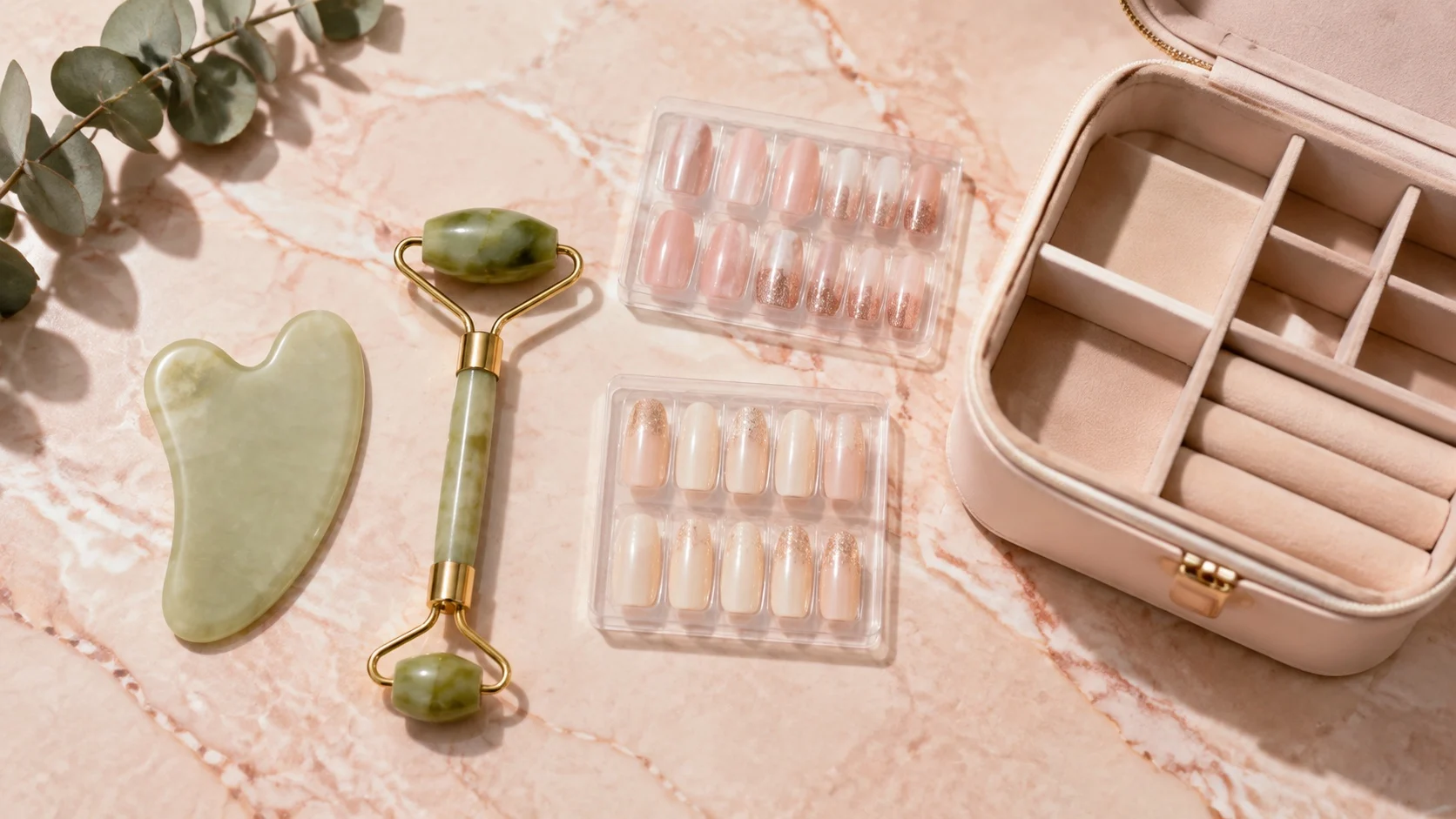
The worldwide beauty and personal care market is projected to generate $698.38 billion in revenue in 2026, with online sales contributing an estimated 30.6% of that total (Statista Market Insights, 2026). The accessory layer of that market (tools and applicators, not formulated cosmetics) is where a smaller importer gets the best margin-to-regulatory-friction ratio. Accessories generally skip the ingredient certification and labeling requirements that formulated products carry.
- Press-on nail sets and application tools: low cost, high perceived value, strong social-commerce fit.
- Hair styling tools (mini straighteners, curling wands): check voltage/plug certification per destination market before your first order.
- Facial massage and skincare tools (gua sha, jade rollers, LED masks): LED devices carry higher compliance requirements than manual tools; budget accordingly.
- Makeup organizers and travel cases: steady demand, minimal certification burden.
- Reusable skincare application pads: rides the ongoing sustainability/reusable-goods trend without formulation risk.
One caution worth flagging before you order: the line between “accessory” and “formulated product” is not always where a factory tells you it is. LED skincare masks, for example, sit closer to a regulated device in several destination markets than a simple manual tool, so confirm the compliance category with an inspector before assuming an item skips certification entirely.
Which Consumer Electronics Accessories Are Worth Stocking?
Accessories consistently outperform the core electronics category they attach to on margin-to-complexity ratio, because the accessory itself usually does not carry the certification burden of the device it supports. A seller stocking phone accessories or gaming peripherals inherits demand from a device category without inheriting that device’s compliance overhead.
- Phone cases and MagSafe-compatible accessories: one of the largest and most consistent accessory sub-categories; differentiate on material or print rather than competing on price alone.
- Fast-charging cables and multi-port chargers: recurring-purchase item with low return rates when sourced from a factory with UL/CE test reports on file.
- Gaming accessories (controller grips, headset stands, RGB peripherals): the global market is projected to grow from $12.6 billion in 2026 to $26.17 billion by 2034, a 9.57% CAGR driven by esports and mobile gaming (Fortune Business Insights, 2026).
- Portable power banks: strong demand, but carries battery-shipping and certification requirements that add lead time; confirm UN38.3 documentation before ordering.
- Webcam and ring-light accessories: content-creator-driven demand that has proven more durable than a typical trend cycle.
Battery-containing products are the one sub-category here that behaves differently at every stage: sourcing, testing, and freight. Power banks and any device with a built-in lithium battery require UN38.3 test documentation before they can ship by air or sea. Drop any factory that can’t produce this documentation on request, regardless of price. Incomplete battery paperwork is one of the most common causes of a shipment held at customs.
Fashion, Jewelry & Seasonal Products That Move Fast
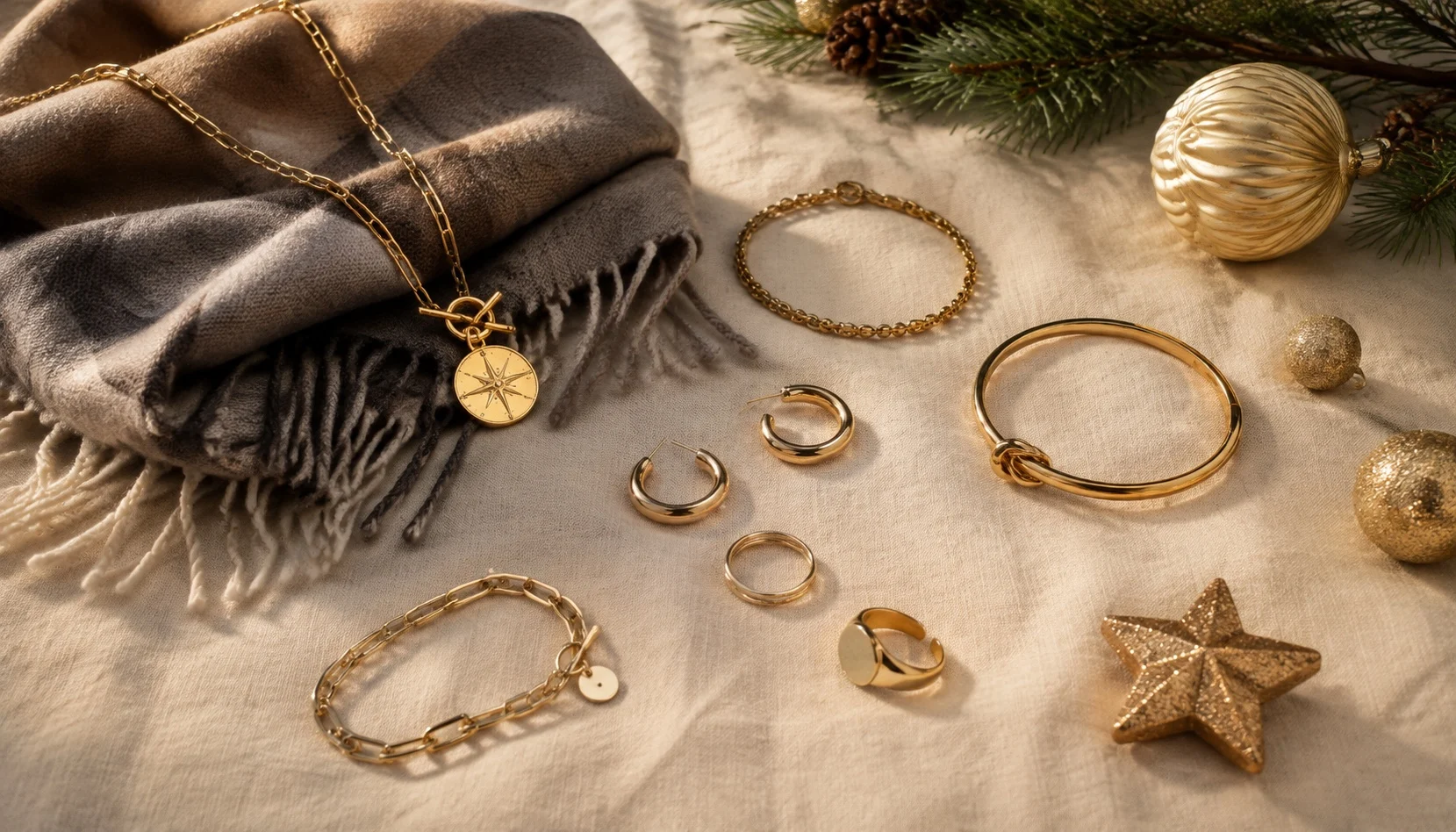
Two different demand patterns sit inside this category, and it pays to source them differently. Fashion jewelry and accessories move on a slower, ongoing trend cycle; seasonal products spike hard and predictably, rewarding sellers who order ahead of the season rather than reacting to it.
- Waterproof, non-tarnish fashion jewelry: outperforming standard costume jewelry on repeat purchase rate, driven largely by Gen Z demand for pieces that survive daily wear; low shipping weight makes it forgiving on freight cost.
- Oversized apparel accessories (scarves, layering pieces): a reliable entry point for sellers new to the apparel category.
- Children’s down jackets and cold-weather apparel: validated by our own search data; seasonal but recurring every year.
- Quiet books and soft educational toys for kids: validated by our own search data; steady demand independent of holiday spikes.
- Pickleball and padel accessories: spikes predictably in warmer months; order six to eight weeks ahead of the seasonal window to avoid missing peak demand.
- Holiday and event-specific decor (Christmas, major sporting events): the most seasonal entries on this list, and the ones where lead time matters most. See our guides on preparing for the Christmas decor sales window and sourcing World Cup merchandise for category-specific timing.
What Changes If You’re Selling Into Latin America or Eastern Europe
Nearly every trending-products guide is written from a U.S. or Western European vantage point, and it shows. Latin America’s retail e-commerce sales surged 12.2% to $191.25 billion in 2025. That’s 1.5 times faster than the global average, and enough to reclaim its position as the world’s fastest-growing regional e-commerce market (eMarketer, 2025). If you’re sourcing for buyers in Mexico, Brazil, or Argentina, or for Eastern European markets like Poland, the products above are still the right categories. Three things change, though.
Compliance documentation is different from the U.S. market. Eastern European buyers typically need CE, UKCA, or REACH documentation depending on destination and product type. Our CE, UKCA & REACH compliance checklist and real CE marking example for a European buyer walk through what to request from a factory before you order.
Payment and freight consolidation matter more too. Smaller regional buyers often can’t absorb the full freight cost of a container alone, so they benefit more from order consolidation than a large U.S. buyer would.
The biggest bottleneck, though, is supplier communication. Factories rarely have native Spanish, Russian, or Polish speakers on staff, and that gap is one of the most common reasons a promising product order stalls at the negotiation stage for a Latin American or Eastern European buyer working without local support.
How Does a Sourcing Agent Reduce Risk on a Trending Product?
Trending products carry more supplier-quality risk than staple SKUs you’ve ordered before. Factories scale production up fast to meet a spike in orders, and quality control is usually the first thing that slips when a production line runs faster than usual. A sourcing agent’s job on a trending pick is narrower than on a staple item: verify that the specific factory you’re quoted has actually scaled its QC process along with its output, not just its output.
In practice, that means a few things. We verify the factory against its business license and export history rather than trusting a marketplace “verified” badge. We negotiate price based on what the category is actually costing other buyers right now, not the first quote a factory sends. Quality control gets scheduled after at least 80% of production is complete, the threshold we use on our own inspections. And if you’re testing more than one product from this list at once, we’ll often combine orders across factories into a single shipment, which can get you below any single factory’s MOQ.
Our commission for this kind of sourcing support runs 3-6% of order value depending on scope, with a $10,000 minimum order amount across the products we handle. For a full breakdown of how sourcing agent fees work, see our guide to China sourcing agent fees and hidden traps, or talk to our team about which of these 30 products fits your current supplier network.
Frequently Asked Questions
What are the most profitable products to sell online in 2026?
Beauty and personal care accessories tend to carry the strongest margins on this list, since they skip the ingredient-certification overhead of formulated cosmetics while riding a market projected at $698.38 billion in 2026 (Statista Market Insights). Electronics accessories and pet supplies follow closely, both combining low certification burden with recurring-purchase demand.
How do I know if a trending product will still be selling in six months?
Check whether demand is recurring-purchase (pet supplies, beauty accessories) or novelty-purchase (a single viral gadget). Recurring-purchase categories are far more likely to still be selling in six months than a product whose entire demand curve is tied to one viral moment.
What products are best sourced from Yiwu specifically versus other Chinese manufacturing regions?
Yiwu remains one of the strongest markets for small commodities, fashion accessories, home goods, and seasonal products at low MOQs. Electronics and higher-complexity gaming accessories are more commonly sourced from Shenzhen and Dongguan, where the supply chain for components and assembly is denser.
Is dropshipping from China still profitable in 2026?
It can be, but the model has shifted. Sellers now work with a sourcing agent or fulfillment partner rather than sourcing directly from wholesale-only suppliers, since many Yiwu-based factories still operate on a wholesale model built around bulk orders, not per-order dropshipping.
Do trending products sell differently in Latin America or Eastern Europe than in the U.S.?
The product categories themselves largely overlap, but compliance documentation, payment structure, and supplier communication all differ. See the “What Changes If You’re Selling Into Latin America or Eastern Europe” section above for specifics on CE/UKCA/REACH documentation and why local-language supplier support matters more for these markets.
Conclusion
The 30 products above are grouped by category so you can scan to what fits your store, but the methodology matters more than any single item on the list: demand signal, margin logic, and verified sourcing accessibility, in that order. Home goods, pet supplies, and beauty accessories carry the most durable demand for 2026, while electronics and seasonal picks reward sellers who plan lead time carefully. If you are selling into Latin America or Eastern Europe, treat compliance documentation and local-language supplier communication as part of your product selection, not an afterthought. Get in touch with our team to talk through sourcing for any product on this list.